T Mobile packaging has two practical jobs: protecting a device and helping customers identify what they received. For paperboard packaging, success starts with the structure of the box, the fit of its insert and the clarity of its printed information. A good looking carton still needs to survive handling without letting the phone or accessory slide around.
This guide covers paperboard boxes for phones, accessories, and home internet equipment in the United States. It explains material choices, printing, package tracking, returns and recycling. Service subscriptions sometimes appear under searches for T Mobile packages, but a monthly plan is separate from the physical packaging discussed here.
Packaging formats vary by product and supplier. The recommendations below describe sound packaging practice rather than one verified specification used for every T Mobile shipment.
What T Mobile Packages Look Like
Retail Boxes and Shipping Cartons
A retail box presents the product, holds its components and carries identification information. A shipping carton protects that retail box during transportation. These layers do two separate job, so their materials and closure systems may differ.
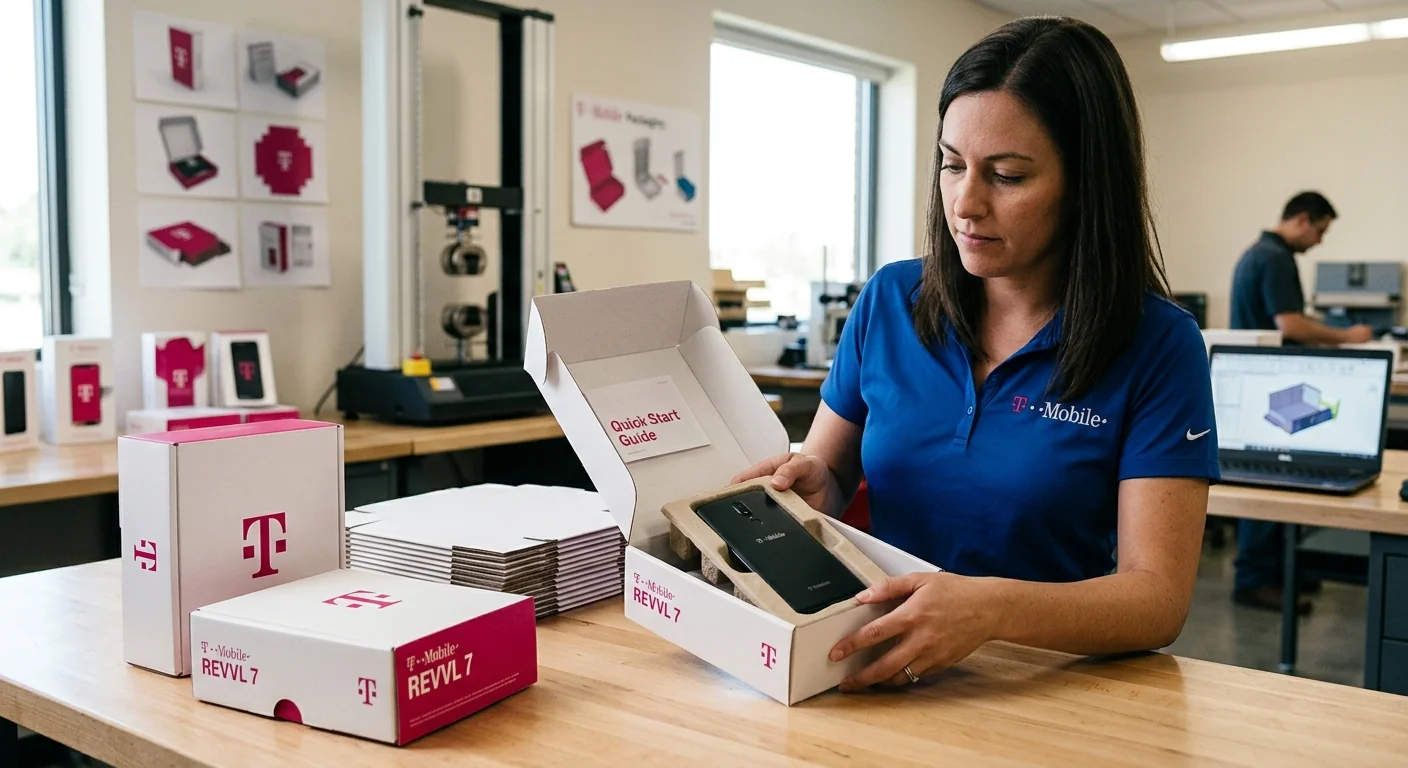
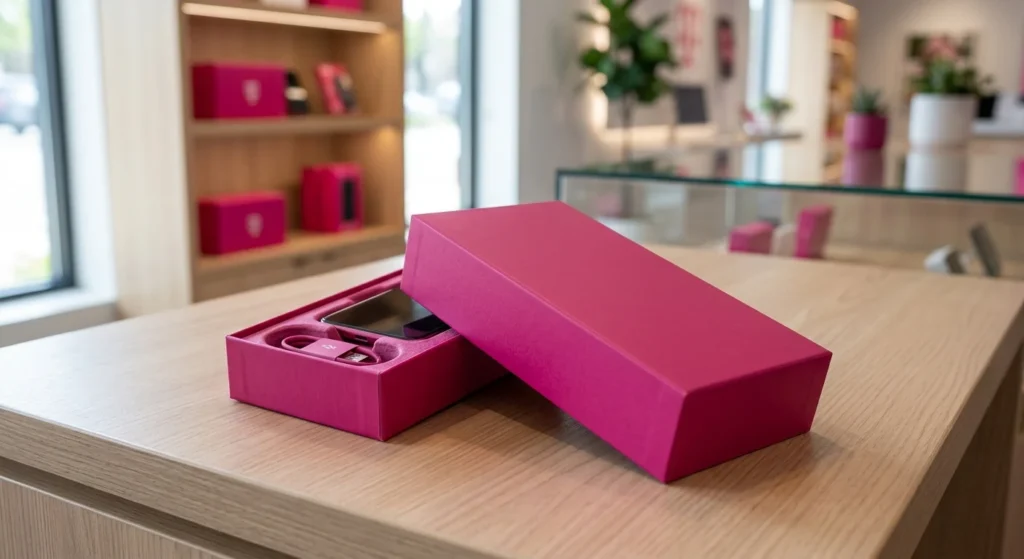
Paperboard retail packaging can include a folding carton, a sleeve or a rigid box wrapped with printed paper. The external design may feature magenta branding, product illustrations and model information. An outer shipping carton may have a plain surface and a delivery label. Color alone cannot confirm authenticity or identify every shipment.
Customers asking what does a T Mobile package look like should compare the delivery with their actual order. Look for matching product details, intact closures and the correct quantity.
Paperboard Materials for Device Packaging
Folding Carton Board
Solid bleached sulfate, often called SBS, offers a white surface suitable for detailed printing. Coated recycled board uses recovered fiber and can serve many retail carton applications. Unbleached kraft board offers a brown appearance associated with a more natural material presentation.
These are material options for packaging development, rather than confirmed board grades across T Mobile products. Board selection depends on product weight, box dimensions, printing requirements and the intended recycling route.
Thickness alone does not predict performance. Fiber composition, stiffness, moisture exposure and folding direction affect how a carton behaves. The Packaging Engineer should evaluate filled samples rather than approve a material from appearance alone.
Corrugated Protection and Paper Inserts
Corrugated board has a fluted layer between liner sheets. It is a different construction from solid carton board and is often suitable for the outer shipping layer. Smaller flutes can support compact packaging, subject to the required strength.
Folded paperboard inserts separate a phone from its cable and paperwork. Molded fiber trays are another paper based option, with their own forming process and surface characteristics. The insert keep components from moving into each other. Fit needs checking with actual products, including any protective sleeves used during assembly.
How Paperboard Packaging Is Made
From Layout to Finished Carton
Production begins with a structural drawing called a dieline. It defines panels, folds, tabs and glue areas. The packaging team builds a sample to test product clearance, opening access and the amount of material needed.
After approval, sheets are printed, cut, creased and folded. Adhesive joins selected panels. Some cartons ship flat to an assembly location; other structures arrive formed.
Registration between artwork and cutting matters. A barcode placed too close to a fold may become difficult to scan. A tab that needs too much force can tear during opening. A good dieline makes assembly easier and reduces the chance of packing the wrong component into the wrong compartment.
Printing and Surface Finishes
Offset printing suits detailed graphics at substantial production volumes. Digital printing can serve samples or shorter runs. Aqueous coatings can protect printed surfaces, but their suitability for recycling needs assessment with the complete packaging structure.
Large areas of magenta require approved color references and production checks. Excess ink coverage can show rubbing during transport. Plastic film lamination and decorative foil may complicate material recovery, so a designer should weigh the appearance against practical recycling requirements.
T Mobile Packaging Quality and Protection
Testing the Complete Pack
T Mobile packaging quality should be judged with the product inside. Packaging tests can examine drops, vibration, stacking pressure and exposure to changing humidity. Test conditions should reflect the expected distribution route and product fragility.
A folding carton is not automatically suitable as a shipping container. A delivery system needs enough strength and cushioning for the device, rather than just a nice printed surface. More paper does not always solve damage; better positioning can reduce movement with less material.
Useful inspection points include:
- Secure tabs and adhesive seams.
- Adequate space around fragile edges.
- Inserts that hold components without excessive pressure.
- Legible model details, serial labels and barcodes.
- Opening access that does not require a blade near the device.
- Matching contents against the approved packing list.
These detail help separate cosmetic damage from a structural failure. A small rub on a carton and a crushed corner pressing against a device require different responses.
Gateway and Accessory Packaging
T Mobile gateway packaging needs a structure matched to a larger device. Weight distribution, projecting parts and the placement of the adapter influence insert design. T Mobile 5G gateway packaging should leave components accessible without allowing the adapter to strike the gateway during shipping.
A T Mobile accessory pack may contain several small items, depending on the purchased product. Paperboard partitions can organize cables and accessories. For a battery pack, shipping requirements depend on battery type, condition and configuration. Paperboard packaging by itself does not establish compliance with battery transportation rules.
Labels QR Codes and Customer Information
Product identification and setup instructions serve different purposes. A serial number or IMEI identifies equipment. A shipping barcode supports transportation. A T Mobile packaging QR code, if present, may direct customers to setup information or product support.
Customers should verify the destination before entering account information. A code printed on a box should not be treated as proof that a webpage is legitimate. The instruction are easier to follow when the printed label explains what the code opens.
For accessible packaging, use readable type, strong text contrast and clear opening instructions. One can make a carton very attractive and still make its small print really hard to read.
T Mobile Package Tracking and Delivery
How to Check an Order
For T Mobile package tracking, start with the official order status page. It requests an order number, last name and billing ZIP code. The order number identifies the purchase; a T Mobile package tracking number identifies a shipment through its delivery carrier. They are different references.
To review a delivery:
- Open the official order status page directly.
- Enter the requested purchase information.
- Review the shipment details available for the order.
- Use the carrier tracking link or number when supplied.
- Save the order confirmation until the contents are checked.
The shipping estimate and delivery estimate can differ. Product availability, processing and the selected shipping service influence timing. Questions such as when is my T Mobile package coming or who delivers T Mobile packages are best answered from that shipment’s current record.
Missing Damaged or Stolen Packages
For a T Mobile package not delivered, compare the delivery address and tracking event with your order confirmation. Check permitted delivery areas and ask household members whether they accepted it. Contact official T Mobile package customer service for an unresolved delivery issue.
If a carton arrives damaged, photograph its exterior, label and contents before discarding anything. Avoid posting labels publicly; they may expose personal information. For a T Mobile package stolen or lost, retain the tracking record and follow the instructions provided for the case. A torn seal deserves attention, but it does not prove theft by itself.
Paperboard Packaging for Returns
Keeping the Original Components
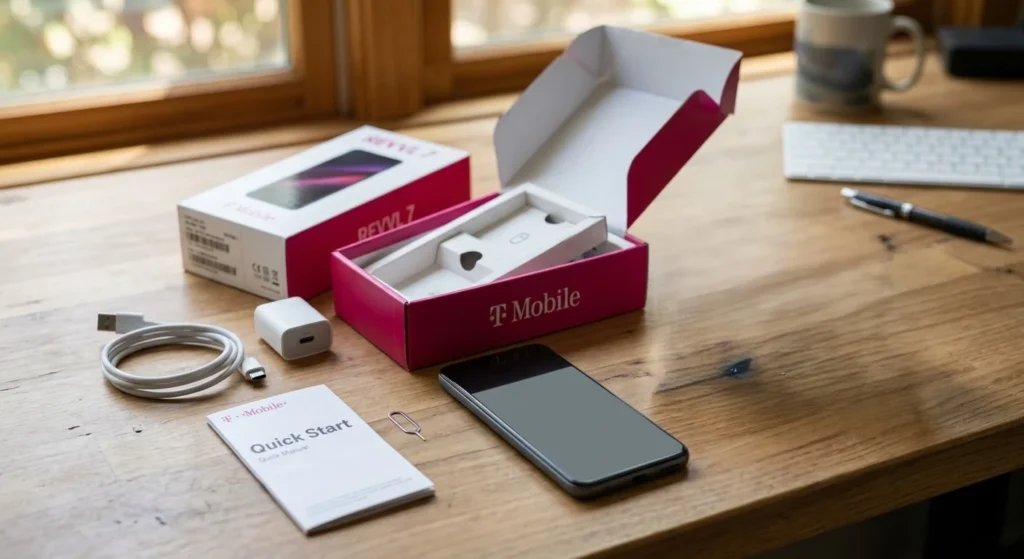
Keep the original box, inserts and included accessories until you have checked the product and the applicable return terms. T Mobile’s published policy describes a 14 day window for standard retail purchases and a 20 day window from shipment for phone or online purchases. Purchase channel and location can affect the applicable rules.
The policy requests the device in its package with its contents and receipt. Confirm the instructions for your purchase before preparing a T Mobile phone return package. Gateway returns, trade ins and device exchanges may follow different processes; do not assume a single deadline covers every transaction.
Preparing a Return Shipment
Use the supplied instructions and authorized return label. Retain a suitable outer carton if the retail box needs shipping protection. An insert resting on a uneven base can leave the device tilted and vulnerable to movement.
Remove or cover old shipping labels on the outer carton. Keep required product identification intact. Photograph the packed contents, save the acceptance receipt and retain the tracking number until the return is resolved. We really get better records this way, and the paperwork is easier to find later.
Recycling T Mobile Paperboard Packaging
What US Research Shows
The US Environmental Protection Agency reports an overall recycling rate of 80.9 percent for paper and paperboard packaging in 2018. This historical category includes corrugated boxes and other paper packaging. It is not a recycling rate for T Mobile boxes or proof that every coated carton is accepted locally.
T Mobile’s Responsible Sourcing Policy addresses efficient fiber use and recycled content where technical requirements and availability permit. It calls for independent certification for virgin wood fiber sources and discusses reducing plastic in products and packaging. These supplier requirements describe sourcing expectations, rather than the exact composition of a particular box.
How to Sort the Materials
Check your local recycling program before placing a carton in the bin. Separate paper inserts from plastic films and other components. Keep accepted paper packaging dry and free from contamination. Flatten cartons when your program requests it.
A T Mobile paper bag may have handles or coatings that need separate attention. Customers who recieve replacement equipment can reuse suitable packaging for the authorized return, then recycle remaining accepted materials.
Packaging Quotes and Purchasing Decisions
A useful T Mobile packaging quote needs more than a requested color. A packaging buyer should provide dimensions, product weight, order quantity, board requirements, print coverage and the intended shipping route. Include insert needs and any testing expectations.
Ask whether pricing includes tooling, samples, packing labor and freight. Affordable packaging comes from an efficient specification, rather than a weak carton that creates replacement costs. Any supplier proposing branded packaging needs permission to use the relevant trademarks.
Questions About T Mobile Packaging
Can T Mobile Packaging Be Recycled
Many paperboard components can enter accepted paper recycling streams. Coatings, attached materials and local collection rules affect acceptance. Separate the components and check local guidance.
Where Is T Mobile Packaging Made
Manufacturing locations can vary by product and supplier. A US delivery address or retail store does not identify the factory that produced its carton. Check available product documentation or ask support for verified information.
Are T Mobile Package Deals the Same as Packaging
No. T Mobile package deals, T Mobile packages for seniors and T Mobile package plans refer to service offers. Physical packaging refers to the box, insert, shipping carton and related printed materials.
Does Packaging Determine Insurance or Warranty Coverage
No. Questions about what does T Mobile phone insurance cover or what does T Mobile warranty cover depend on the applicable coverage terms. Packaging condition can document a delivery problem, but it does not define policy benefits.
Should I Save the Box
Save it through inspection and any applicable return period. The original insert can help protect the device during an authorized return. After that, reuse suitable components or follow local recycling guidance.