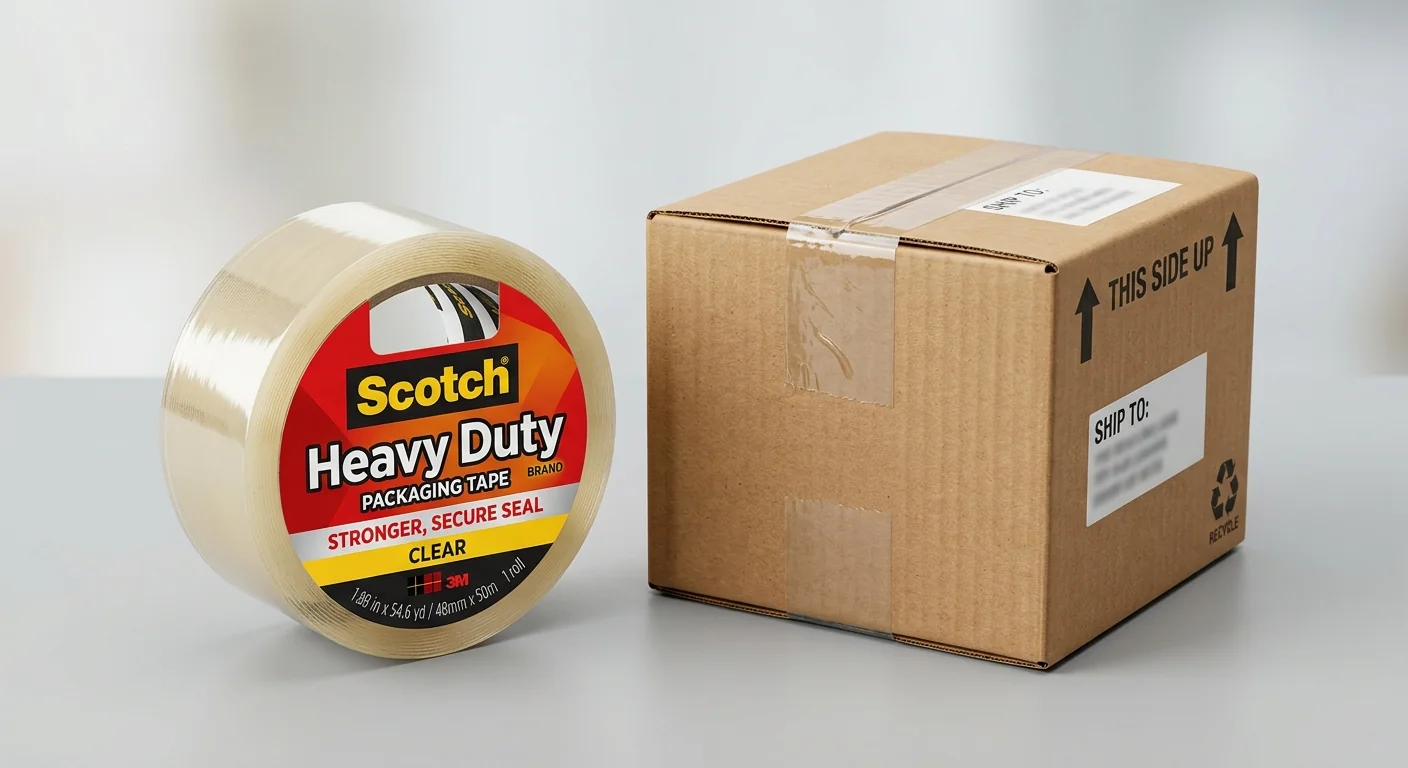
Scotch heavy duty packaging tape is a popular sealing solution for cardboard boxes, shipping cartons, moving supplies and storage packaging. A good packaging tape keeps boxes securely closed during handling and transportation. For businesses using corrugated paperboard boxes, selecting a suitable sealing tape is an important part of the packaging process.
Heavy duty packaging tape is developed to provide strong adhesion and reliable carton closure. It is commonly used for sealing corrugated boxes containing household products, retail goods, office supplies and other packaged items. The tape is available in different roll sizes, thicknesses and dispensing formats.
Paperboard packaging businesses need tape that bonds properly with cardboard surfaces. Weak adhesive, incorrect application or poor storage conditions can cause carton flaps to open during shipping. Scotch heavy duty packaging tape offers several options for common shipping and moving applications, though performance depends on the exact product and packaging conditions.
This guide explains Scotch heavy duty packaging tape materials, adhesive properties, roll sizes, carton sealing methods, shipping applications, costs and practical buying considerations.
What Is Scotch Heavy Duty Packaging Tape?
Scotch heavy duty packaging tape is a pressure sensitive adhesive tape used to seal cardboard boxes and shipping cartons. It belongs to a range of packaging products intended for moving, mailing, storage and general carton sealing.
The tape typically contains a plastic film backing and an adhesive layer that bonds to the carton surface when pressure is applied.
Different products in the range may use different adhesive formulations, film thicknesses and performance specifications.
How Does Heavy Duty Packaging Tape Work?
Heavy duty packaging tape uses a pressure sensitive adhesive that forms a bond with the surface of the cardboard.
When the tape is pressed firmly against a carton, the adhesive contacts the paperboard fibers and creates a holding force.
The quality of this bond depends on several factors, including carton surface, adhesive formulation, application pressure and environmental conditions.
A properly applied tape helps keep the top and bottom flaps closed during normal package handling.
Features of Scotch Heavy Duty Packaging Tape
Scotch heavy duty packaging tape is commonly selected for its convenient application and carton sealing performance.
Strong Adhesive Bond
The adhesive is intended to bond with compatible cardboard surfaces.
A strong bond helps reduce the risk of carton flaps opening during shipping and storage.
Durable Film Backing
Many heavy duty packaging tapes use polypropylene film backing.
The film provides tensile strength and helps the tape resist tearing during ordinary packaging operations.
Convenient Application
Packaging tape can be applied manually or using compatible dispensers.
This makes it practical for home moving and commercial packing stations.
Clear Packaging Appearance
Clear tape allows printed carton information and packaging graphics to remain visible through the tape.
Brown or tan tape may be preferred for certain industrial packaging applications.
Types of Scotch Heavy Duty Packaging Tape
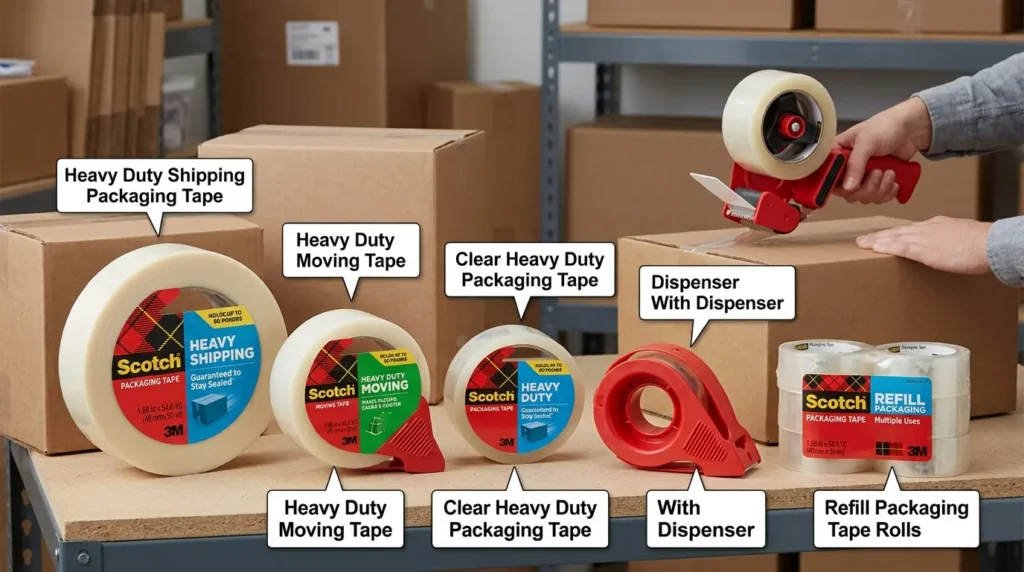
Different tape formats are available for various sealing requirements.
1. Heavy Duty Shipping Packaging Tape
Heavy duty shipping tape is used for sealing cardboard boxes prepared for parcel transportation.
It is suitable for many corrugated shipping cartons containing properly packed products.
The selected tape should match the carton weight and expected shipping conditions.
2. Heavy Duty Moving Tape
Moving tape is commonly used for sealing boxes containing household items, clothing, books and office supplies.
It is designed for typical moving and storage applications.
Heavy cartons may require additional reinforcement or a different closure method.
3. Clear Heavy Duty Packaging Tape
Clear packaging tape provides a transparent sealing surface.
It is useful for retail shipping boxes and printed paperboard cartons where the appearance of the packaging matters.
4. Packaging Tape With Dispenser
Some packaging tape products are supplied with handheld dispensers.
These dispensers help users apply tape more conveniently and cut it at the required length.
5. Refill Packaging Tape Rolls
Refill rolls are designed for use with compatible packaging tape dispensers.
They are practical for businesses that seal boxes frequently.
Materials Used in Heavy Duty Packaging Tape
Packaging tape contains different material layers that contribute to its performance.
Polypropylene Film Backing
Polypropylene is widely used for carton sealing tape.
It provides flexibility, strength and relatively low material weight.
The film backing helps support the adhesive during application.
Pressure Sensitive Adhesive
The adhesive is responsible for bonding the tape to the carton surface.
Different packaging tapes may use acrylic or other adhesive formulations.
Adhesive performance depends on temperature, surface condition and the intended application.
Release Coating
Some tape constructions contain a release treatment that allows the tape to unwind from the roll.
This helps maintain convenient dispensing during packaging operations.
Scotch Heavy Duty Packaging Tape for Cardboard Boxes
Corrugated cardboard boxes are widely used for shipping and storage.
Heavy duty packaging tape is commonly applied along the carton seams to hold the flaps together.
Sealing Corrugated Shipping Boxes
Corrugated boxes contain fluted paperboard between linerboard layers.
The outer liner provides the surface where packaging tape is applied.
A suitable adhesive must bond effectively with the linerboard without lifting during normal handling.
Sealing Kraft Cardboard Boxes
Brown kraft cartons are commonly used for commercial shipping.
Packaging tape can bond to suitable kraft paperboard surfaces, though recycled fibers, dust and surface treatments may affect adhesion.
Sealing Printed Paperboard Cartons
Printed paperboard cartons may contain coatings, inks or laminated surfaces.
These finishes can affect adhesive performance.
Testing the tape on the actual printed carton is useful before large packaging orders.
Scotch Heavy Duty Packaging Tape Sizes and Thickness
Packaging tape is available in different widths, lengths and thicknesses.
The correct specifications depend on the carton dimensions and packaging requirements.
Common Tape Widths
A common packaging tape width is approximately 1.88 inches.
Wider tape formats may be available for selected applications.
The tape should cover the carton seam and provide enough contact with both adjoining flaps.
Tape Roll Length
Packaging tape rolls may be supplied in different lengths depending on the product format.
Shorter rolls are convenient for occasional packing.
Longer rolls are useful for commercial packaging operations where frequent replacement can interrupt work.
Tape Thickness
Tape thickness is commonly measured in mils.
One mil equals one thousandth of an inch.
Heavy duty packaging tapes may use thicker film and adhesive constructions than certain lightweight sealing tapes.
The actual thickness should be checked against the product specifications.
How to Apply Scotch Heavy Duty Packaging Tape
Correct tape application is important for reliable carton sealing.
Step 1: Prepare the Cardboard Box
Assemble the corrugated carton according to its design.
Check that the flaps align properly and the carton is not damaged.
Step 2: Check the Carton Surface
The surface should be dry and free from loose dust or excessive contamination.
Moisture and debris can reduce adhesive contact.
Step 3: Position the Tape
Place the tape across the main carton seam.
Keep the tape centered so it contacts both adjoining flaps.
Step 4: Apply Firm Pressure
Press the tape against the cardboard surface.
Consistent pressure helps the adhesive make better contact with the paperboard.
Step 5: Extend Tape Over the Edges
For a standard center seam closure, extend the tape beyond the seam and onto the carton end panels.
This helps secure the closure.
Step 6: Inspect the Seal
Check that the tape is attached without loose sections or excessive wrinkles.
The carton should remain securely closed before shipping.
Best Carton Sealing Methods
Different carton sealing patterns are used according to package weight and transportation requirements.
Center Seam Sealing
Center seam sealing involves applying tape along the main opening where the carton flaps meet.
This method is commonly used for lightweight packages.
H Sealing Method
The H sealing method involves applying tape along the center seam and across both end seams.
This creates a sealing pattern resembling the letter H.
It can provide additional closure security for many corrugated shipping boxes.
Reinforced Carton Sealing
Heavier packages may require extra tape or specialized closure materials.
Tape alone should not be expected to compensate for weak cardboard construction.
Uses of Scotch Heavy Duty Packaging Tape
Heavy duty packaging tape is used in residential and commercial packaging operations.
Moving and Relocation
Moving boxes often contain clothing, books, kitchen accessories and household supplies.
Heavy duty tape helps keep properly packed cartons closed during relocation.
Retail Shipping
Retail businesses use packaging tape to seal corrugated cartons before delivery.
It helps maintain package closure throughout ordinary parcel handling.
Warehouse Storage
Packaging tape is used to close boxes containing inventory and stored products.
The tape should be selected according to storage duration and environmental conditions.
Office Packaging
Offices use heavy duty tape for mailing documents, equipment accessories and business supplies.
Paperboard Packaging Operations
Packaging businesses use carton sealing tape during final packing and shipment preparation.
It can be applied to many corrugated shipping boxes and compatible paperboard surfaces.
Benefits of Scotch Heavy Duty Packaging Tape
Heavy duty packaging tape offers several advantages for shipping and storage.
Reliable Carton Closure
A suitable adhesive helps maintain the closure of properly assembled cardboard boxes.
Convenient Handling
Tape rolls can be used with handheld dispensers, making routine packaging work easier.
Affordable Sealing Material
Packaging tape is commonly available in individual rolls and larger quantities.
The cost per carton can be relatively low when tape consumption is controlled.
Flexible Applications
Heavy duty tape can be used for moving boxes, retail cartons and general storage packaging.
Professional Packaging Appearance
Properly applied tape creates an organized carton closure.
Clear tape can help preserve the visibility of printed paperboard graphics.
Scotch Heavy Duty Packaging Tape vs Regular Tape
Heavy duty packaging tape and ordinary household tape are intended for different applications.
| Feature | Heavy Duty Packaging Tape | Regular Household Tape |
| Main purpose | Carton sealing | Lightweight household tasks |
| Backing | Packaging film | Varies by product |
| Adhesive | Formulated for packaging applications | Depends on tape type |
| Common use | Shipping and moving boxes | Paper and small items |
| Roll width | Usually wider | Often narrower |
| Carton sealing | Suitable grades available | Often unsuitable |
Heavy duty packaging tape is a more appropriate option for many corrugated carton sealing applications.
How Much Does Scotch Heavy Duty Packaging Tape Cost?
Scotch heavy duty packaging tape prices depend on roll dimensions, product specifications, packaging format and purchasing quantity.
Individual rolls may have a higher unit cost than multipack options.
Products supplied with dispensers may have different prices than refill rolls.
Factors Affecting Tape Prices
- Tape width and roll length.
- Film thickness and adhesive formulation.
- Clear or colored tape format.
- Dispenser inclusion.
- Number of rolls per package.
- Retail or bulk purchasing quantity.
- Supplier pricing and availability.
Businesses should compare usable tape length and cost per sealed carton rather than focusing on the roll price alone.
Common Packaging Tape Problems
Packaging tape performance can be affected by incorrect application and unsuitable storage conditions.
Tape Not Sticking to Cardboard
Poor adhesion may occur when the carton surface contains dust, moisture or incompatible coatings.
Check the surface and apply sufficient pressure.
Tape Peeling From Cartons
Tape may lift when the adhesive is unsuitable for the paperboard surface or application temperature.
Testing different tape grades can help identify a suitable option.
Tape Splitting During Application
Film splitting can occur through excessive tension, damaged tape edges or incorrect dispenser adjustment.
Tape Not Unwinding Properly
Some rolls may be difficult to dispense when stored incorrectly or used with incompatible dispensers.
Carton Flaps Opening
Flaps may open when the tape is too short, insufficient pressure is applied or the carton is overloaded.
These problem should be reviewed before shipping valuable products.
Storage Tips for Heavy Duty Packaging Tape
Proper storage helps maintain tape usability.
Store at Suitable Temperatures
Keep tape in conditions recommended by the manufacturer.
Excessive heat or cold may affect adhesive behavior.
Avoid Direct Sunlight
Long exposure to sunlight can affect certain tape materials.
Keep Rolls Protected
Store unused rolls in their original packaging where practical.
Rotate Packaging Inventory
Using older stock before newer deliveries can help reduce unnecessary material aging.
Environmental Considerations for Packaging Tape
Many conventional packaging tapes use plastic film backing.
This affects how taped paperboard boxes are processed during recycling.
Tape and Cardboard Recycling
Some cardboard recycling facilities can separate limited amounts of conventional tape during processing.
Local recycling requirements vary.
Reducing Tape Waste
Applying the correct amount of tape can reduce unnecessary material consumption.
Choosing Suitable Carton Strength
Strong corrugated boxes and correct closure methods may reduce the need for excessive tape reinforcement.
Final Thoughts on Scotch Heavy Duty Packaging Tape
Scotch heavy duty packaging tape is a practical option for sealing corrugated cardboard boxes used in shipping, moving and storage.
The tape’s performance depends on adhesive quality, film construction, carton surface and application method.
For paperboard packaging businesses, selecting the correct tape width, roll length and sealing technique can help improve packaging consistency and reduce closure problems.
Heavy duty packaging tape works best when combined with suitable corrugated box strength and proper packing methods.
Choosing the correct tape for the intended application can support secure carton closure, convenient handling and more efficient packaging operations.
Frequently Asked Questions About Scotch Heavy Duty Packaging Tape
What is Scotch heavy duty packaging tape used for?
It is used for sealing cardboard boxes during shipping, moving, storage and general packaging operations.
Is Scotch heavy duty packaging tape suitable for corrugated boxes?
Yes. Compatible heavy duty packaging tape products are intended for sealing corrugated cardboard cartons.
What is the common width of heavy duty packaging tape?
A common width is approximately 1.88 inches, though available dimensions depend on the specific product.
Can heavy duty packaging tape be used for moving boxes?
Yes. It is commonly used for sealing properly packed moving boxes.
Is clear packaging tape stronger than brown tape?
Tape color does not determine strength. Adhesive formulation, backing material and product specifications are more important.
Can Scotch heavy duty packaging tape be used in cold temperatures?
Performance depends on the exact tape grade and application conditions. Check the manufacturer’s temperature specifications before using it in cold environments.
Does packaging tape stick to recycled cardboard?
It can bond to many recycled corrugated surfaces, but adhesion depends on surface quality, fiber composition and contamination.
What is the best way to seal a heavy cardboard box?
Use a suitable corrugated carton and compatible sealing tape. The H sealing method may provide additional closure security for certain shipping applications.