Vacuum packaging removes air from a package before sealing it. Food producers, retailers and households use this method to limit exposure to oxygen, manage storage space, and protect suitable products. The results depend on the product, packaging material, seal quality and storage conditions.
For businesses selling products in paperboard cartons, vacuum packaging works as part of a complete packaging system. The inner pouch provides the sealed barrier. The outer carton supports handling, product information and retail presentation. Both parts need to work together, with neither expected to perform the other’s job.
What Is Vacuum Packaging?
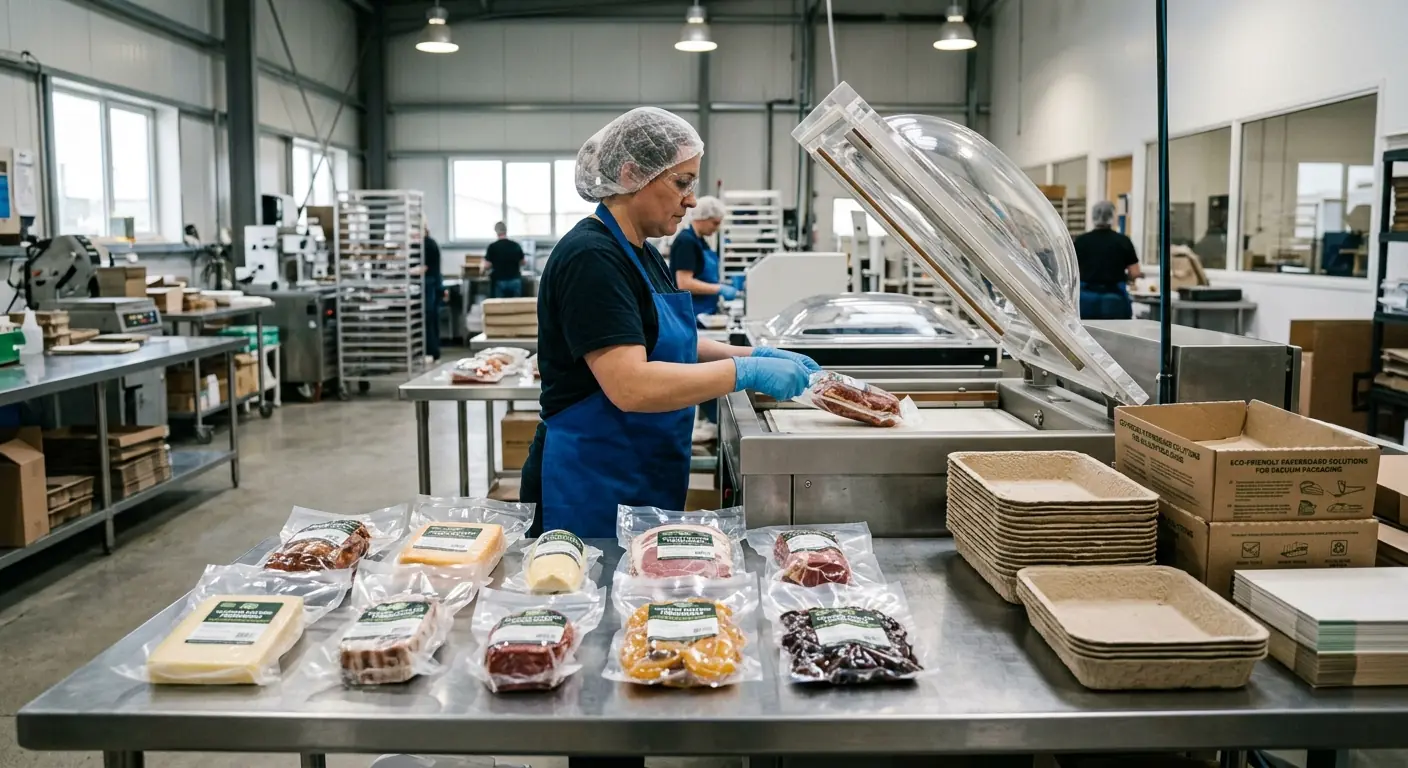
Vacuum packaging, often called vacuum packing or vacuum sealing, involves placing a product inside suitable packaging, extracting air, and closing the package with a secure seal. Removing air reduces the oxygen available inside the pack.
This can slow oxidation and the growth of certain spoilage organisms. It does not sterilize the contents or remove every trace of oxygen. Product freshness at the time of packing still matters, and perishable food still needs appropriate temperature control.
How Vacuum Packaging Works
A typical process follows five steps:
- Place the product inside a compatible pouch or package.
- Keep the sealing area free of moisture, grease and product particles.
- Position the package in the vacuum equipment.
- Extract air using the appropriate settings.
- Seal the opening and inspect the finished pack.
A pouch may look tightly wrapped yet have a small leak. Visual checks help identify obvious defects, but commercial operations need suitable seal testing and documented process controls.
How Paperboard Fits Into Vacuum Packaging
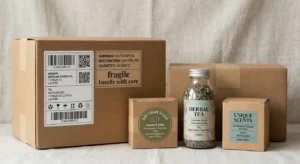
Ordinary paperboard is porous and cannot hold a vacuum by itself. Folding cartons, sleeves and paperboard boxes usually act as outer packaging around an airtight inner pouch.
This distinction matters during purchasing. A paperboard box may protect a vacuum packed product from rubbing, organize several portions or provide room for instructions. The barrier film remains responsible for restricting oxygen and moisture movement.
Paperboard Cartons and Sleeves
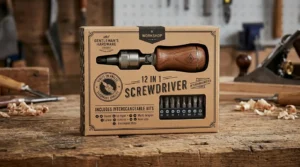
Folding cartons provide space for product names, ingredients, storage directions and barcodes. Sleeves offer a smaller printed surface and can leave part of the inner package visible.
Carton dimensions should match the packed product after air removal. An oversized carton allows movement. A carton that fits too tightly can press against seals or stress the pouch during insertion.
Some carton layouts needs extra clearance around the sealed edges. That small allowance can make packing easier and reduce damage.
Paperboard Supports and Shipping Protection
A paperboard insert or backing card can support a flexible pouch and help it sit consistently inside a carton. Edges should be smooth enough to avoid puncturing the film.
For heavier products, a folding carton may need a separate corrugated shipping case. Paperboard retail packaging and corrugated transport packaging serve different purposes. Distribution trials help establish the right combination for stacking, vibration and handling.
Types of Vacuum Packaging
Different vacuum packaging systems suit different products. Product shape, moisture content, fragility and production volume influence the choice.
Flexible Vacuum Pouches
Flexible pouches are common for suitable meat portions, cheese, dry ingredients and other products. Many use multiple material layers, with separate functions for strength, oxygen resistance and heat sealing.
Embossed bags frequently work with external suction machines. Smooth pouches commonly work with chamber machines. Compatibility must be checked before ordering either style.
Vacuum Skin Packaging
Vacuum skin packaging uses film that closely follows the product’s shape and seals to a compatible support surface. It can hold the product in place and provide a clear view at retail.
Certain systems use specially treated paperboard supports. These require compatible coatings or films and validated sealing performance. A plain printed backing card does not automatically become an airtight package.
Formed Packs and Rigid Containers
Thermoforming equipment creates a pocket in a lower web, receives the product, and applies a sealing film. The system may remove air before sealing.
Rigid vacuum containers offer another option for compatible products. They need suitable lids, valves and seals. Their size and shape can be less convenient for folding cartons than a flexible pouch.
Choosing Vacuum Packaging Materials
Film selection affects package performance more than appearance alone. A suitable pouch must tolerate the product, equipment, storage environment and expected handling.
Barrier Properties and Film Strength
Oxygen transmission rate describes how much oxygen passes through a material under stated test conditions. Water vapor transmission rate describes moisture movement. Comparing values requires matching the test conditions.
Polyamide can contribute toughness and puncture resistance. Polyethylene commonly provides a heat sealing layer. Other barrier materials may be used for products needing greater resistance to oxygen.
Thicker film is not automatically the best choice. Material structure, seal behavior and puncture resistance all need evaluation.
Food Contact and Temperature Suitability
Food packaging materials must suit the intended food contact application. Suppliers should provide relevant documentation for the proposed use.
A pouch suitable for freezer storage may not suit cooking. Sous vide applications require material rated for the intended temperature and duration. Reusable storage bags for clothing should never be treated as food packaging.
Selecting a Vacuum Packaging Machine
The best vacuum packaging machine depends on the task. A household packing small portions has different needs from a processor running repeated production cycles.
External Suction and Handheld Machines
External suction machines remove air through the open end of a bag before sealing it. They can suit occasional use with compatible bags.
Wet products can draw liquid toward the seal or equipment. Suitable settings and preparation methods help manage this problem.
Handheld systems usually operate with compatible valves or containers. They offer convenience, but the resealable closure and valve become additional areas to inspect.
Chamber Vacuum Machines
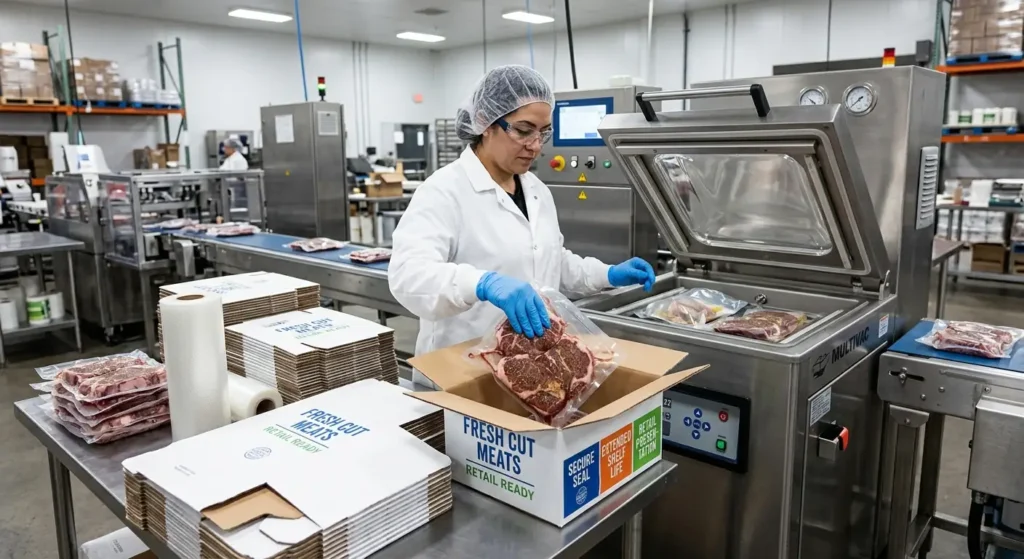
Chamber machines reduce pressure around the package and inside it. Suitable models can handle liquid products more effectively than many external suction systems.
They require more space and a larger initial investment. Chamber dimensions, seal bar length, maintenance access and production capacity should match the intended products.
Some machine feature gets more attention than practical maintenance. Replacement seals, service availability and routine care deserve a place in the buying decision.
Practical Buying Criteria
Compare equipment using:
- Maximum pouch size and product dimensions.
- Expected daily production volume.
- Suitability for dry, moist or liquid products.
- Adjustable vacuum and sealing settings.
- Bag compatibility and ongoing material costs.
- Maintenance requirements and service support.
A second seal may offer redundancy, but two poor seals still make a poor package.
Vacuum Packaging Advantages and Disadvantages
Vacuum packaging offers useful benefits when the product and process suit the method. It has limitations that should be considered before changing an existing package.
Advantages
Reduced exposure to oxygen can help preserve the quality of suitable products. Vacuum packaging can limit moisture loss during frozen storage and keep individual portions organized.
It can reduce the bulk of compressible nonfood products. Clothes and bedding are familiar examples, provided the items tolerate compression.
A closely fitted pouch can make a product easier to place inside a paperboard carton. Consistent pack dimensions may improve carton utilization, though the actual savings depend on the product.
Disadvantages
Soft foods may lose their shape under vacuum. Sharp bones or hard edges can puncture film. Liquid in the sealing area may cause leaks.
Equipment, consumables and maintenance add costs. Some barrier structures are difficult to recycle through household collection programs.
A very tight pack can look reassuring, but appearance alone does not confirm food safety or seal integrity.
Vacuum Packaging Food Safety in the United States
Vacuum packaging does not make perishable food safe at room temperature. Removing oxygen changes the package environment, and some harmful bacteria can grow in low oxygen conditions.
USDA guidance states that perishable vacuum packaged foods must remain refrigerated at or below 40°F or frozen at 0°F. Refrigerated meat and poultry should be used within a few days or according to the manufacturer’s recommended use date. Vacuum packing is not a substitute for safe canning or dehydration.
Seafood Requires Particular Care
FDA guidance identifies Clostridium botulinum as a hazard in reduced oxygen packaged seafood. Commercial seafood processors need hazard analysis and appropriate controls through their HACCP plans, meaning Hazard Analysis and Critical Control Points.
Seafood storage and thawing instructions must match the validated product process. A general vacuum packaging article cannot provide one safe storage period for every fish product.
Shelf Life Must Be Established
Claims that every vacuum sealed food lasts a fixed number of times longer are unreliable. Shelf life varies with the food, initial microbial condition, barrier material, process and storage temperature.
Commercial shelf life claims need appropriate evidence. Food safety directions should appear clearly on the consumer pack, with paperboard labeling supporting the instructions on the inner packaging.
Common Vacuum Packaging Applications
Vacuum packaging examples include suitable meat cuts, cheese portions, selected dry foods and compressed textiles. Each application presents different packaging needs.
For meat, film must resist punctures and accommodate moisture. For dry goods, moisture control and barrier performance may guide material selection.
Coffee needs attention to roast freshness and gas release. Freshly roasted beans release gas, so the packaging process must account for that behavior. Vacuum sealing is not automatically the right choice for every coffee product.
Textile storage bags use valves and closures suited to compression. Some storage bag loses vacuum through a worn valve or poorly closed opening. Clothing bags and food pouches are separate product categories.
Vacuum Packaging Versus Nitrogen Packaging
Vacuum packaging removes air and often pulls flexible film against the product. Nitrogen packaging replaces much of the air with nitrogen and can leave protective space around fragile contents.
A product that crushes easily may benefit from a gas filled package rather than direct compression. Other products suit a close fitting vacuum pouch.
The choice depends on oxygen targets, product structure, barrier material and equipment. Both methods require sound seals and suitable storage conditions.
Sustainability and Paperboard Packaging
Environmental performance should be assessed across the whole package. Food protection, material quantity, distribution efficiency and disposal options all contribute.
Separating a paperboard carton from its plastic pouch can make disposal instructions easier to follow. Coatings, windows and attached films may affect paperboard recyclability.
Paperboard supplier offer different grades, finishes and recycled content options. Request documentation and check whether the package is accepted by the intended recycling system. Avoid broad environmental claims that lack evidence.
Frequently Asked Questions
Does Vacuum Packaging Prevent Freezer Burn?
It can reduce exposure to air and moisture loss when the package remains intact. USDA guidance identifies proper freezer packaging as a way to maintain quality and prevent freezer burn. A damaged seal can reduce that protection.
Can Vacuum Packed Food Go Bad?
Yes. Food can deteriorate or become unsafe through unsuitable storage, contamination or package failure. Vacuum sealing does not replace temperature control.
Can Paperboard Hold a Vacuum?
Ordinary paperboard cannot. A vacuum packaging system needs a suitable barrier pouch, film or specially engineered coated structure. The outer carton usually provides support and information.
Does Vacuum Packing Save Space?
It often saves space for compressible items. Dense products may show little change. Reduced size does not reduce the product’s weight.
What Makes a Good Vacuum Packaging System?
A good system matches the product with compatible film, reliable equipment, verified seals and appropriate storage. For paperboard packaging, the carton should protect the pouch and communicate the information customers need.