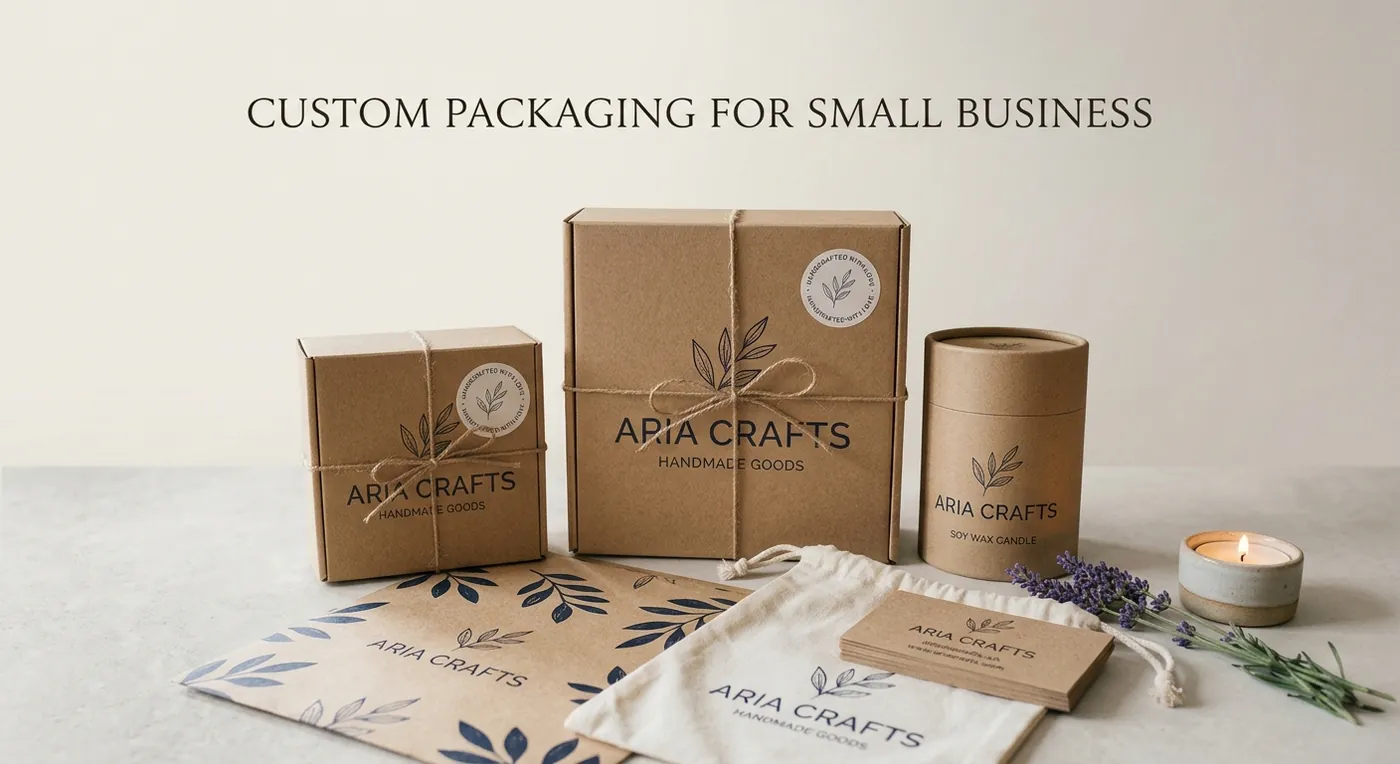
Getting custom packaging for a small business can start much simpler than many owners expect. You do not need to order thousands of boxes on the first day or spend a huge part of your startup budget on packaging. A small company can begin with stock paperboard boxes, printed labels and inserts, then move into fully custom printed packaging after sales become more predictable.
For a US small business, the process normally starts with the product. Measure it, decide how much protection it needs, select a suitable paperboard structure and work out how many packages you actually need. From there, you can compare local packaging companies, online custom box suppliers, printers and manufacturers.
This approach applies to ecommerce stores, Shopify brands, Etsy sellers, Amazon sellers, jewelry companies, clothing brands, gift businesses and many other product companies. The keyword research for this article shows particular interest in affordable packaging, logos, US suppliers, online ordering and small business packaging quantities. Pasted text
What Is Custom Packaging for a Small Business?
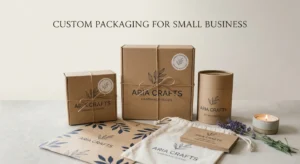
Custom packaging is packaging developed or decorated for a particular product or business. Customization may involve box dimensions, paperboard material, structure, printing, logo placement, inserts or a combination of these elements.
It does not always mean a completely custom box.
A startup could buy plain folding cartons and apply branded labels. Another company may order a printed sleeve that goes around a standard carton. An established ecommerce business might have a folding carton made to the exact dimensions of its product.
Common options include:
- Custom paperboard boxes
- Folding cartons
- Printed mailer boxes
- Product sleeves
- Gift cartons
- Jewelry boxes
- Paper inserts
- Labels and stickers
- Printed tissue paper
- Shipping cartons
The better option depends on budget, product size and sales volume.
Start With Your Product, Not Your Logo
One of the easiest packaging mistakes is beginning with graphics before the physical package has been worked out.
Measure your product in Length, Width and Height. Then determine whether it needs cushioning, an insert or extra clearance.
A bottle, candle and jewelry item have very different packaging needs. Clothing can use a flexible package in some cases, yet a delicate cosmetic bottle might require a paperboard carton plus an insert.
Your packaging needs to physically work before it needs to look good.
Measure the Product
Record the maximum dimensions of the actual item rather than relying entirely on a supplier specification.
Measure:
- Length
- Width
- Height
- Weight
- Any projecting components
If several products will be sold as one kit, arrange the full kit first and measure it together.
Think About Product Protection
Ask what happens between packing the product and the customer opening it.
A retail carton placed on a store shelf has different transportation demands from an ecommerce package traveling through a parcel delivery network.
The product may need an insert, tissue, paper cushioning or a corrugated outer shipping carton.
This part sometimes get skipped, then businesses try fixing protection after damaged orders begin arriving.
Choose the Right Paperboard Packaging
Paperboard packaging comes in several forms. Small businesses should select material based on the product rather than simply ordering whatever looks affordable online.
Folding Cartons
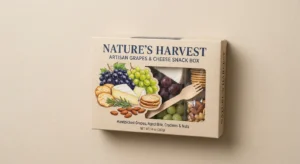
Folding cartons are commonly used for cosmetics, skincare, candles, supplements, food products, small accessories and other retail goods.
They are shipped flat and assembled before filling. This can reduce storage requirements compared with boxes that remain fully assembled.
Paperboard Gift Boxes
Gift packaging can use folding structures or more substantial box formats. Jewelry, specialty foods, promotional products and personal care products are common applications.
An insert can hold the item in a fixed position and make the interior feel more organized.
Corrugated Shipping Boxes
Corrugated material is usually the more suitable choice for transportation packaging. A brand might use a printed paperboard carton around its retail product, then place several retail cartons into a corrugated shipper.
Those are two packaging jobs, and trying to make one carton perform both can sometimes create unnecessary cost.
How to Get Custom Packaging Made
Once the product dimensions and packaging format are known, prepare a basic specification for suppliers.
You do not need to know every manufacturing term. A good packaging supplier can help turn your requirements into a carton specification.
Send information such as:
- Product dimensions
- Product weight
- Desired box dimensions
- Quantity
- Paperboard preference
- Printing requirements
- Number of colors
- Insert requirements
- Delivery ZIP code
- Target date
Ask whether dimensions are being quoted internally or externally. This little distinction matters a lot with product fit.
Request a Dieline
A dieline is the flat structural template for the carton. It identifies panels, fold areas, cut areas and glue sections.
Your designer places artwork around this structure.
Do not randomly download a similar dieline online and assume it will match your manufacturer’s equipment. Get the final production dieline from the supplier that will produce your boxes.
Make a Prototype
Request a sample or prototype where your budget permits.
Put the real product inside. Open and close the package several times. Check whether the product moves, whether tabs lock properly and whether the customer can remove the item without fighting the box.
A prototype can look pretty ordinary sitting on a desk, but it may save hundreds of wrong boxes later.
Custom Packaging for Small Business With Logo
Logo printing is one of the most common customization requests, which is reflected directly in the supplied search research. Pasted text
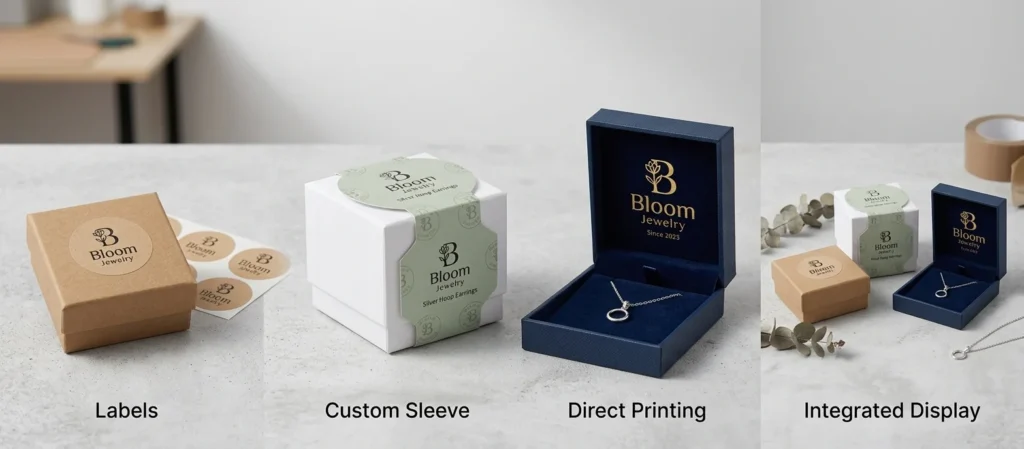
There are several ways to add a logo without immediately ordering fully printed packaging.
Printed Labels
Labels are affordable for very small quantities. Buy a plain carton and place a printed logo label on it.
The result may be simple, but it allows a new business to change packaging without throwing away hundreds of outdated printed cartons.
Custom Sleeves
A printed paperboard sleeve can wrap around a plain box.
This gives more printable area than a sticker and can work well for product variations. One stock box may support several products by changing the sleeve.
Direct Printing
Direct printing puts the artwork on the carton itself.
This makes more sense once your box size, branding and product information are stable enough for a larger production run.
How to Get Cheap Custom Packaging for Small Business
Cheap packaging should mean efficient packaging, not packaging that fails.
One of the best ways to control cost is reducing unnecessary customization during the early stage.
A new company could start with:
Plain stock carton plus logo label plus paper insert
Later it could move to:
Custom size carton plus direct printing plus custom insert
This lets the company spend more after order volume supports it.
Keep Box Dimensions Efficient
Oversized boxes consume more material and create unused interior space. They can require extra filler too.
Measure the product and make the carton reasonably close to its actual size.
Reduce Printing Requirements
A carton covered in ink is not automatically better than a simple design.
A strong logo, product name and useful information can produce a professional package without printing every available surface.
Compare Cost Per Complete Package
Do not compare carton prices alone.
Calculate:
Box plus insert plus label plus packing material plus assembly labor plus delivery
A 55 cent carton that needs 40 cents of extra material may be less economical than an 80 cent box that works without much filler.
Small Quantity Custom Packaging
Minimum order quantity, often called MOQ, is a major issue for small businesses.
A traditional packaging manufacturer may require hundreds or thousands of units depending on the carton, printing process and equipment. Digital production can make smaller quantities practical with some suppliers.
The supplied research includes direct demand around small quantity custom packaging, wholesale packaging and packaging costs. Pasted text
Ask every supplier:
- What is your MOQ?
- Can I order a printed sample?
- What is the unit price at several quantities?
- Are there setup charges?
- Is shipping included?
- Can you repeat the same order later?
Do not order 5,000 cartons merely to reach a low unit price if your business sells 100 products each month. Cash tied up in packaging is still cash tied up.
Custom Packaging for Small Business Under $500
A budget under $500 can still produce useful packaging, particularly for a young business.
Instead of trying to commission a complex production run, use stock components strategically.
For example, your budget might go into plain paperboard cartons, professionally printed labels, tissue and a small printed insert.
Another option is ordering a limited number of digitally printed boxes if a supplier offers quantities and pricing suitable for your budget.
The goal at this stage is to look consistent without buying more packaging than the business can realistically use.
How to Make Small Business Packaging at Home
DIY packaging can work for Etsy sellers, handmade businesses and companies processing small order volumes.
Buy plain boxes in a suitable size and personalize them using labels, stamps, printed cards or sleeves.
A small operation might assemble twenty packages this way without much difficulty. At 500 packages a week, the labor became a different story.
Track how long assembly actually takes. Packaging that costs very little in materials can become expensive if someone spends several minutes decorating every order.
Where to Get Custom Packaging for Small Business
US businesses have several supplier options.
Local packaging distributors can be useful when you want personal assistance or need stock cartons quickly. Folding carton manufacturers are suited to custom paperboard production. Online packaging suppliers make it easier to compare sizes and upload artwork remotely.
Search for terms such as:
custom folding carton manufacturer near me
paperboard packaging supplier
custom box manufacturer USA
small quantity custom packaging
custom printed cartons
The supplied research shows location based demand across Texas, California, Florida, New York, New Jersey, Dallas, Houston and Jacksonville. Pasted text
Location can matter for freight. Empty boxes do not weigh much compared with many products, but they occupy considerable space.
Custom Packaging Made in USA
Buying packaging made in the United States can make sense for companies prioritizing domestic sourcing, shorter supply chains or easier communication with a manufacturer.
Do not assume that a company with a US website manufactures every product domestically. Ask where your particular carton will be produced.
Questions worth asking include:
- Is this packaging manufactured in the USA?
- Where is the production facility?
- Where is the paperboard sourced?
- What is normal production time?
- What quantities can you produce?
- Can I review a sample before production?
Get important specifications written into the quotation.
Custom Packaging for Amazon Sellers
Amazon sellers need to think about both product packaging and shipping requirements.
Your branded paperboard carton may serve as primary product packaging, but products entering Amazon fulfillment channels may need additional preparation, labeling or shipping packaging depending on the item and fulfillment method.
Amazon requirements can change, so sellers should check the current requirements for their product category and fulfillment program before producing large quantities.
Do not print thousands of cartons around an assumed marketplace requirement without verifying it.
Packaging for Shopify and Etsy Businesses
Shopify is a commerce platform, so packaging choices remain largely with the merchant and its fulfillment arrangement.
A Shopify business shipping directly to customers can use custom mailers, folding cartons or corrugated shipping boxes depending on its product.
Etsy businesses often begin at smaller volumes. Stock cartons combined with labels and inserts can be a practical starting setup.
The supplied keyword research includes packaging queries for Amazon, Etsy, eBay and Shopify, showing that marketplace sellers form an important part of small business packaging demand.
Custom Packaging for Clothing Brands
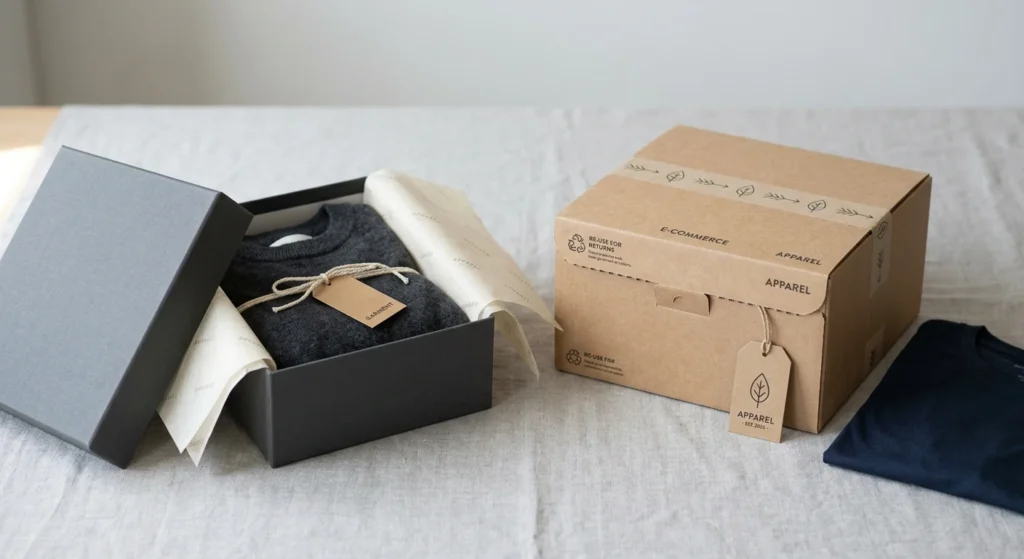
Clothing usually needs less rigid protection than fragile goods, which gives a brand several packaging choices.
A premium garment may use a paperboard apparel box with tissue. Ecommerce clothing can use another shipping format depending on the product and desired presentation.
Think about returns too. Apparel has a relatively high possibility of being returned compared with some product categories. Packaging that customers can reopen and manage easily can make operations smoother.
For accessories such as belts, ties or smaller garments, folding paperboard cartons may provide a good balance between presentation and storage.
Custom Packaging for Jewelry
Jewelry packaging depends heavily on internal presentation.
A small paperboard jewelry carton can contain a card, folded paper insert or another holding structure. The insert keeps earrings, necklaces or bracelets from moving around.
A jewelry business should test the actual product inside every package size. One necklace may sit perfectly and another with a larger pendant may not.
Small products makes sizing errors especially visible. An oversized box around a tiny item can feel wasteful.
Custom Packaging for Food and Health Products
Food, supplements and health related products require more attention than ordinary gift packaging.
Material suitability, labeling and regulatory requirements can depend on the product and whether the paperboard contacts the contents directly.
Work with a supplier that knows the intended application. Do not assume every paperboard, coating, adhesive or ink is suitable for food contact.
For US regulated products, packaging design should be reviewed against applicable current federal and state requirements before production.
Packaging Design and Printing
Once the structural carton is approved, move to artwork.
Request the manufacturer’s dieline and build graphics around it. Keep text away from cuts and awkward folds. Check where the front, back, top and bottom panels will appear after assembly.
Review:
- Logo position
- Product name
- Barcode
- Legal copy
- Instructions
- Color
- Panel orientation
- QR code
Print a full size paper mockup if possible. A flat computer file can hide surprisingly obvious mistakes.
How Much Does Custom Packaging Cost?
There is no single standard price.
Cost depends on carton dimensions, paperboard, quantity, printing process, artwork coverage, inserts, finishing and freight.
Small quantity orders commonly have a higher unit price. Larger orders can lower unit cost since setup expenses are spread across more cartons.
Ask for pricing at several quantities, such as 250, 500, 1,000 and 2,500 units if those volumes make sense for your business.
Do not look only at the lowest number. Compare the same board, dimensions, printing and delivery terms.
Common Small Business Packaging Mistakes
New businesses sometimes spend too much money before the product has proven itself.
Avoid these common problems:
- Ordering huge quantities too early
- Choosing a box before measuring the product
- Forgetting shipping cartons
- Making packaging much larger than necessary
- Approving artwork without a physical sample
- Ignoring assembly time
- Using too many packaging components
- Ordering based entirely on unit price
- Forgetting storage space
- Changing branding immediately after buying printed inventory
A package should help the business operate, not create a warehouse problem.
Building a Packaging System That Can Grow
Getting custom packaging for a small business does not need to begin with an expensive carton and a giant production run. Start with the product, decide what physical protection it needs and build the packaging from there.
For a startup, a stock paperboard carton with a logo label might be perfectly good. Once sales become steady, custom dimensions can reduce wasted space and direct printing can create a more consistent retail appearance. At larger quantities, working directly with a folding carton manufacturer may provide better pricing and production control.
Keep the system practical. Measure carefully, compare complete costs, request samples and do not buy more boxes than your business can use. Packaging should grow with the company rather than running ahead of it, and that simple approach can save a lot of money and headache.
Frequently Asked Questions
How do I get custom packaging for my small business?
Measure your product, choose a packaging structure, estimate order quantity and request quotes from paperboard packaging suppliers. Review a dieline and sample before production.
Where can I get custom packaging near me?
Search for local folding carton manufacturers, packaging distributors, commercial printers and paperboard packaging companies.
Can I get custom packaging with my logo?
Yes. Your logo can be printed directly onto a carton, sleeve, label or other packaging component.
What is the cheapest way to get branded packaging?
For very small quantities, plain stock boxes with custom printed labels or sleeves can be more affordable than producing a completely custom carton.
Can I get custom packaging with a small quantity?
Yes. Some suppliers offer low quantity digital printing. Minimum orders vary widely, so ask suppliers about their MOQ before developing artwork.
How much does custom packaging cost?
Pricing depends on size, material, printing, quantity, structure, inserts and delivery. Request quotes at several quantities to compare actual unit costs.
Should a startup order custom boxes immediately?
Not always. Stock cartons with branded labels can make more financial sense until product dimensions and sales volume become stable.
Do I need custom packaging for Shopify?
Shopify does not mean every merchant needs a custom carton. Packaging should be selected around the physical product, fulfillment process and brand requirements.