Pactiv foodservice food packaging covers a broad purchasing need, from the box holding a restaurant meal to the tray supporting a bakery order. For businesses focused on paperboard, the right package must handle the food, move through the kitchen without trouble and reach the customer in good condition. A low unit price means little if the bottom softens or the closure opens during delivery.
This guide focuses on paperboard within Pactiv food packaging. It explains material choices, food contact documentation, practical applications, shelf life limits, recycling questions and distributor purchasing. The best starting point is your actual menu and service routine. Packaging decisions gets easier once those details are written down.
What Pactiv Paperboard Foodservice Packaging Includes
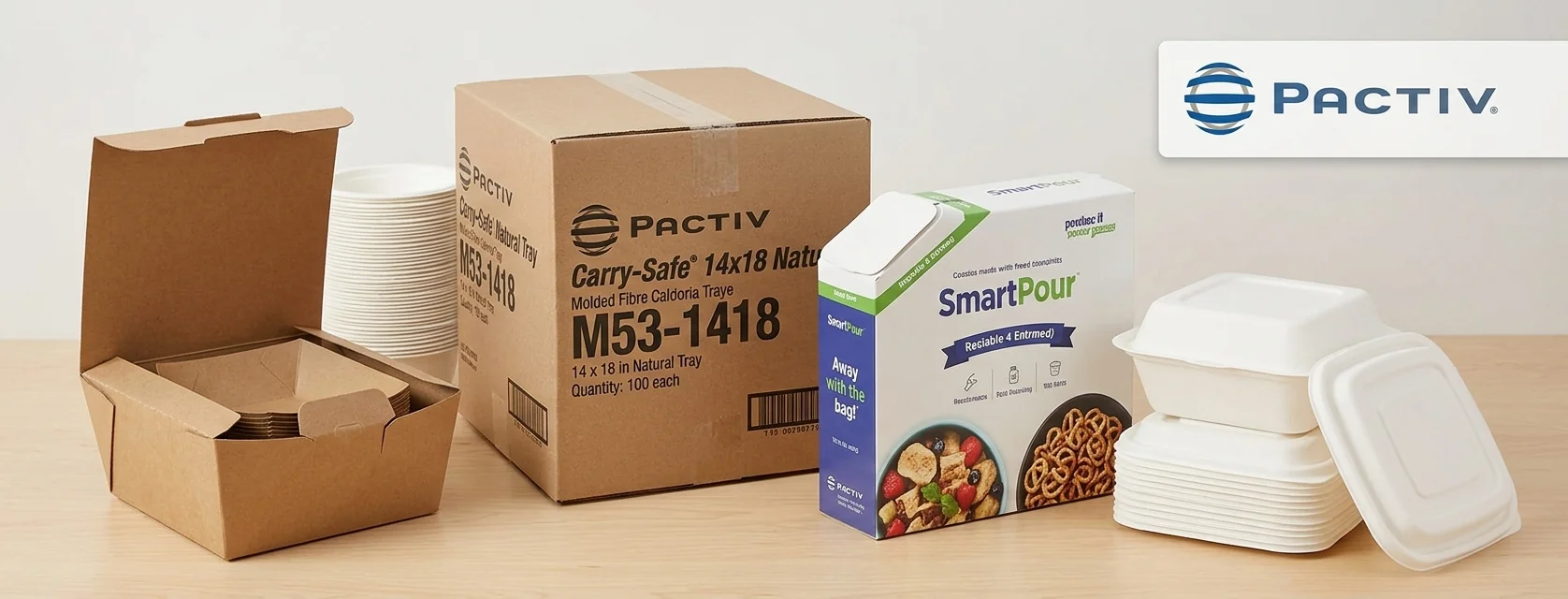
Pactiv paperboard packaging serves takeout, counter service, catering and beverage transport. Its published catalog includes paperboard food trays, fry cartons, cup carriers and takeout containers. These formats serve different jobs, so one material description cannot tell you everything about performance. [1][3][8][9]
Boxes Containers and Trays
Closed boxes help contain meals during transport. Open trays make food accessible at concession stands and service counters. Fry cartons hold smaller portions with a shape that supports quick filling. Cup carriers stabilize beverages, reducing the awkward balancing that happens with multiple drinks.
Pactiv lists a tamper evident paperboard OneBox container with recycled paperboard, a closure intended to reveal access and ventilation features. Its product page states commercial compostability with facility limitations. Treat these as claims for that listed product, rather than a description of every Pactiv foodservice container.
Paperboard Materials and Barrier Choices
Paperboard consists of a relatively stiff sheet of cellulose fibers. Thickness, fiber composition and forming methods affect rigidity. Common grades in the packaging industry include solid bleached sulfate, coated unbleached kraft and coated recycled board. Availability varies by product, and buyers should request the actual material specification rather than assume a grade from its color.
Coatings and Food Resistance
Bare paperboard absorbs moisture and oils. A suitable barrier slows that absorption, helping the container retain its shape during service. Possible barrier systems across the industry include polyethylene, polylactic acid and water based coatings. The coating on a particular Pactiv product must be confirmed from its documentation.
Grease resistance and water resistance address separate conditions. Hot steam may soften a lid or collect inside the box. Salad dressing may travel along a folded corner. A container can perform well with oily food and still fail with a large amount of free liquid.
The coating matter just as much as the board beneath it. Kraft color does not prove recycled content, compostability or the absence of plastic. White board does not prove a particular food contact status either.
Board Strength and Storage
Board caliper means thickness, not a complete strength rating. Fold direction, corner construction, seams and moisture exposure affect the assembled package. A heavier board may support a larger meal, yet excessive material can increase cost and storage volume without solving a weak closure.
Store cartons in dry conditions, away from pests and contamination. Leave unused containers protected in their original shipping cases where practical. Crushed corners and damp storage can reduce performance before the first meal is packed.
What Is Food Grade Packaging
Food grade packaging is suitable for its intended contact with food under stated conditions. That description includes the food type, temperature, contact duration and any intended reheating. It does not mean that a package is suitable for every food or every appliance.
FDA guidance explains that the regulatory status of a food contact article depends on its individual substances. Relevant compliance routes can include applicable regulations and effective Food Contact Notifications. Paperboard components appear in 21 CFR Part 176, with other rules potentially relevant to adhesives, coatings and polymers. [4]
Ask the supplier for documentation supporting the exact intended use. A food contact letter should identify the product and relevant restrictions. A generic statement saying ‘food safe’ gives a buyer very little information about hot oil, extended refrigeration or microwave use.
US Requirements and PFAS
Food packaging requirements involve material compliance, sanitary handling and accurate product claims. State rules may add restrictions that affect purchasing in a particular location. Review the destination states and the product documentation before making a broad compliance claim.
In February 2024, FDA announced that PFAS substances used as grease proofing agents on paper food packaging were no longer being sold into the US market. In January 2025, the agency reported that 35 related Food Contact Notifications were no longer effective following abandonment of those uses. These developments address particular food contact uses; they do not establish a universal claim about every chemical in every package. [5]
For procurement, request a current PFAS declaration and ask what the statement covers. A claim about no intentionally added PFAS differs from a claim supported by testing with a stated detection limit. Safety documentation should be reviewed separate from appearance and marketing language.
Pactiv Foodservice Packaging Applications
Menu matching is very practical. Start with the heaviest meal, the wettest ingredient and the longest delivery route. Then test ordinary orders too, since a package that performs only under one careful loading method may create trouble during a busy shift.
Takeout Delivery and Catering
Paperboard boxes suit many sandwiches, pastries, fried items and prepared meals when the selected product supports those foods. Keep sauces in suitable separate containers if the box is not rated for free liquids. Ventilation can reduce trapped steam around fried foods, with a possible tradeoff in heat retention.
Tamper evident features help customers see whether the closure has been disturbed. They cannot prevent every form of access or replace proper staff handling. The closure still needs to work after a box is filled and placed in a delivery bag.
Counter Service and Beverage Transport
Open food trays offer direct access for snacks and concession portions. Cup carriers support beverages, with fit depending on cup shape and size. Check the carrier with the actual cups used in your restaurant, including full drinks and fitted lids.
Staff needs a simple packing routine. Give employees clear directions on fill levels, closure checks and bag placement. For packaged retail foods, review applicable labeling requirements separately, including ingredient and allergen obligations where relevant.
Food Packaging and Shelf Life
Paperboard packaging can protect food from physical damage and help preserve serving quality during a defined service period. It cannot make an unsupported shelf life claim valid. A takeout box is not automatically a hermetic package or an oxygen barrier.
Freshness Depends on the Whole Process
Food quality changes with moisture movement, oxygen exposure, handling and temperature. A bakery item can lose texture inside a poorly matched container. A hot meal can develop condensation in a tightly closed box. Venting and barrier choices should match the result you want for that particular food.
For refrigerated retail products, establish shelf life through an appropriate validation process. Recipe, sanitation, storage conditions and the complete package system all affect the outcome. Packaging alone cannot replace temperature control or safe food handling.
Temperature and Reheating Limits
Confirm freezer, microwave and oven suitability for the exact item. These permissions are separate. A stated operating temperature range does not, by itself, authorize use in an oven or microwave. Pactiv product guidance calls for testing under the customer’s actual conditions.
A packaging manager should record the product code and instructions for approved uses. The product label give staff a starting point, with supplier documentation resolving any uncertainty. Avoid copying reheating instructions from a similar looking container.
Recycling Composting and Packaging Waste
Paperboard has an established place in paper recovery, but foodservice packaging presents extra questions. Food residue, coatings and local sorting practices affect acceptance. A fiber based package cannot be called recyclable everywhere simply from its material name.
US Recycling Data and Local Acceptance
EPA reports that paper and paperboard represented 23.1 percent of US municipal solid waste generation in 2018. Those figures cover a broad material category, including items far beyond restaurant boxes. They cannot be used as a recycling rate for Pactiv food packaging or a forecast for your local collection program. [6]
Ask the local recycler whether it accepts the exact coated paperboard format. Remove leftover food as directed by the program. If a package includes components made from different materials, follow local guidance for separating them.
Some local programs accepts coated cartons and others reject them. The right disposal message follows the actual collection route, rather than a broad promise printed beside a recycling symbol.
Commercial Composting and Environmental Claims
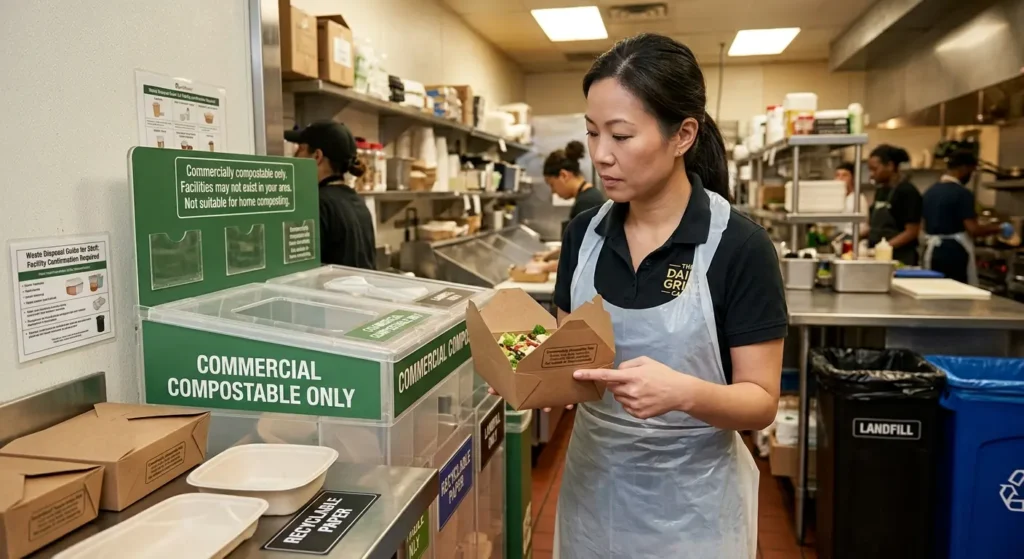
Commercial compostability differs from home compostability. Pactiv’s listed tamper evident OneBox product states that commercial facilities may not exist locally and that the item is unsuitable for home composting. Confirm facility acceptance before presenting composting as an available disposal option.
The Federal Trade Commission Green Guides address environmental marketing claims. Be specific about recycled content, disposal conditions and the part of the package covered by a claim. Avoid calling packaging environmentally beneficial without explaining the basis.
Waste reduction starts before disposal. Better sizing, fewer damaged containers and realistic inventory levels can reduce unused material. A sturdy package can limit spills, yet the benefit must be evaluated against material use and the operation’s actual results.
Buying Pactiv Food Packaging in the USA
Searches such as food packaging services near me often lead buyers to distributors, packaging suppliers and local wholesale businesses. For Pactiv food services purchasing, confirm the seller’s product codes, current availability and delivery coverage. A nearby location is useful only if it stocks the package your operation needs.
Distributor and Cost Checklist
Compare total service cost rather than carton price alone. Include freight, storage space, staff handling time, damaged units and order minimums. Buyers should confirms case quantities before comparing quotes.
Match dimensions and usable capacity to real portions.
Request food contact and barrier documentation.
Verify intended temperatures and appliance permissions.
Check case pack, lead time, freight and return terms.
Confirm local recycling or composting acceptance.
Test filled samples before placing a volume order.
Custom printing and label options depend on the product and supplier. Ask about minimum quantities, artwork requirements and approved ink placement. A restaurant logo should remain readable without interfering with closure points or food contact surfaces.
A Simple Performance Trial
Pack several representative meals, close the containers and carry them through the usual delivery routine. Inspect corners, lid security, grease marks and the food itself. Record the results under actual service conditions, including stacked bags and typical waiting times.
Questions and Answers
Can Fast Food Packaging Be Recycled
Some paperboard food packaging can enter local recycling programs. Acceptance depends on the format, coating, food residue and collection rules. Verify the exact item with your recycler.
What Are Common Food Packaging Materials
Common materials include paperboard, corrugated board, plastic, aluminum and glass. For this guide, paperboard is the focus. Material selection depends on food contact conditions, required protection and disposal access.
Who Packages Food in a Restaurant
Restaurant staff place prepared food into purchased containers using the operation’s packing procedures. Pactiv supplies packaging products; the restaurant manages filling, handling and service.
Are All Packaged Foods Processed
Packaging does not determine how extensively food has been processed. Fresh produce and prepared meals can both be packaged. Evaluate the food itself and its preparation method.
What Makes the Best Pactiv Paperboard Package
The best option fits the menu, protects the meal and has documented suitability for the intended use. Test samples, review supplier records and choose a size your team can use consistently. That’s a very useful place to start.