A packaging tape dispenser holds, feeds and cuts tape for closing packages. That sounds simple, yet the dispenser affects application pressure, material waste and the appearance of the finished carton. A poorly matched tool can leave wrinkles, loose ends or damaged paperboard surfaces.
For paperboard packaging, the right choice starts with the carton construction and surface finish. A lightweight folding carton needs a different sealing approach from a large shipping case. The dispenser, adhesive and paperboard should work as one system.
What Is a Packaging Tape Dispenser?
A packaging tape dispenser supports a tape roll and presents the material for application. Depending on the design, it may guide tape onto a carton, cut measured strips or moisten an adhesive before dispensing.
Common names include packing tape gun, carton sealing dispenser, desktop dispenser and gummed tape machine. These terms describe different tools, so checking the actual functions matters more than relying on the product name.
Why Paperboard Needs Special Attention
Paperboard cartons can have printed, varnished, laminated or uncoated surfaces. Those finishes affect how tape bonds and how the surface responds during removal.
Thin panels can bend under excessive roller pressure. Strong adhesive may tear printed fibers, making the carton unsuitable for presentation or reuse. Test the intended combination before approving it for regular packing.
Main Types of Packaging Tape Dispensers
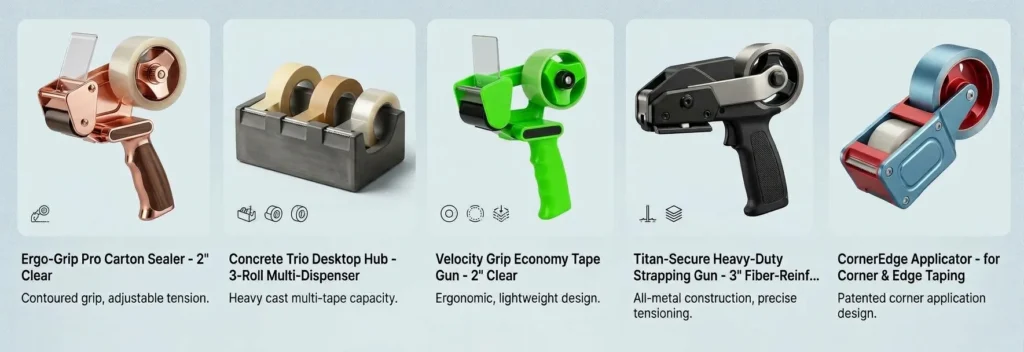
Different dispensers suit different packing tasks. Daily volume, carton size and tape construction should guide the choice.
Handheld Tape Guns
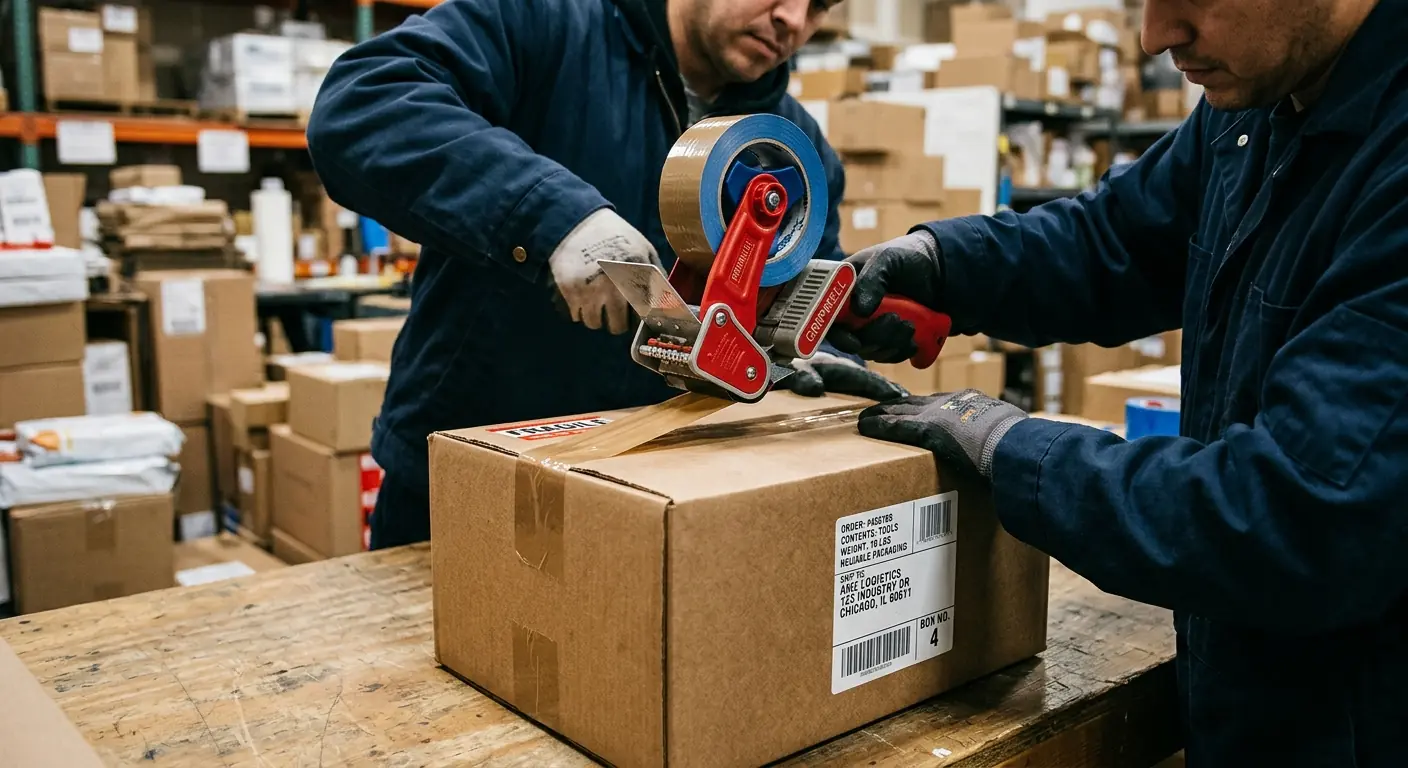
A handheld tape gun applies pressure sensitive tape directly to the carton. It usually includes a roll holder, tension control, application roller and cutting blade.
This format suits mobile packing and packages large enough to support the roller. Small folding cartons may need a narrower tool or a separate strip application method.
Desktop and Bench Dispensers
Desktop dispensers hold the roll at a workstation and let the operator pull and cut individual strips. Weighted or mounted versions help resist movement during use.
A stable base reduce unwanted sliding. This is really useful for short seals on cosmetic cartons, gift boxes and small retail packages.
Manual Water Activated Dispensers
A manual water activated tape dispenser feeds paper tape through a moistening system and cuts it to length. The operator usually controls feeding through a lever or similar mechanism.
These machines need compatible gummed tape. Ordinary pressure sensitive tape does not belong in the same feed and moistening system.
Electric Tape Dispensers
Electric dispensers can provide preset strip lengths and repeated dispensing. Models may handle pressure sensitive tape or water activated tape, depending on their construction.
Preset lengths can reduce variation between operators. Electric dispensing does not mean the machine automatically applies tape to the carton.
Carton Sealing Machines
A carton sealing machine moves packages through tape application heads. Some equipment handles consistent carton dimensions, with other systems adjusting for different sizes.
A tape head is one component of that equipment. Automated machinery intended for shipping cases should not be assumed suitable for delicate folding cartons.
Match the Dispenser to the Tape
Tape compatibility involves more than width. Core diameter, roll diameter, backing material and adhesive behavior influence feeding and cutting.
Pressure Sensitive Packaging Tape
Pressure sensitive tape bonds through contact and application pressure. Common backing materials include polypropylene film, PVC film and paper.
Adhesive options include acrylic, hot melt and natural rubber formulations. Their suitability depends on the carton surface, application conditions and storage environment.
Water Activated Paper Tape
Water activated tape uses an adhesive that becomes active after moistening. Reinforced versions contain strengthening fibers or other reinforcement.
It often suits receptive paper surfaces, but coated folding cartons need testing. A dispenser cannot make an unsuitable adhesive bond reliably to a resistant surface.
Specialty Sealing Tapes
Printed tape, security tape and narrow carton seals may require different feeding or cutting arrangements. Filament tape can need equipment suited to its reinforced backing.
Double sided tape and adhesive transfer tape use different application methods. A standard packing tape gun should not be treated as a universal dispenser.
Tape Width, Core Size and Roll Capacity
Confirm the dispenser’s supported tape width before ordering supplies. Common packaging widths include approximately 2 inches and 3 inches, but the actual metric dimensions can differ.
Check core diameter and maximum roll diameter too. A roll may have the right width yet still fail to fit the holder or housing.
Wider Tape Is Not Always Better
The wider rolls adds material across the carton surface. That can cover artwork, complicate opening and increase consumption without solving the original seal problem.
Choose width according to the flap geometry and required bond area. Lightweight paperboard packaging may need a small closure seal rather than a broad shipping tape strip.
Features That Affect Daily Performance
Useful features should solve a real packing problem. A long feature list means little if the tool feeds poorly with the intended tape.
Look for the following:
• Adjustable unwind tension
• A roller suited to the carton surface
• Compatible roll and core dimensions
• Guarded cutting features
• Comfortable grip and balanced weight
• Accessible replacement parts
• Clear loading instructions
• Repeatable length settings where needed
Tension Control
The brake controls resistance as tape unwinds. Too little resistance can cause loose feeding, with excessive resistance making application difficult or stretching the tape.
Adjust tension gradually using a sample carton. These small adjustment can make feeding more consistent without forcing the operator to pull harder.
Application Roller
The roller presses tape against the package. Good contact helps the adhesive reach the surface rather than bridge over gaps or wrinkles.
Use enough pressure for the tape system without crushing the carton. Supporting the panel from inside may help during sample evaluation.
How to Load a Packaging Tape Dispenser
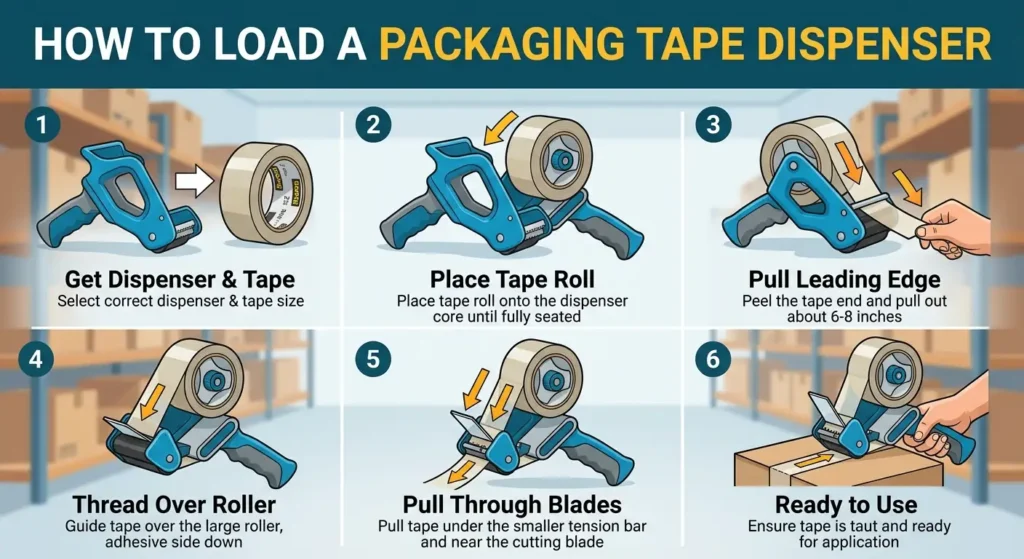
Loading paths vary by model. Follow the diagram supplied with the dispenser rather than copying another tool that looks similar.
A practical loading sequence is:
- Place the dispenser in its safe loading position.
- Confirm tape width, core size and unwind direction.
- Seat the roll securely on the holder.
- Thread the tape through the specified guides.
- Position the adhesive side according to the loading diagram.
- Set a moderate starting tension.
- Test feeding and cutting on scrap material.
For water activated machines, verify the required gum orientation and moistening setup. Manufacturer instructions can include specific roll guides, tape plates, brushes and water tank arrangements.
Applying Tape to Paperboard Cartons
Close the carton flaps without forcing an overfilled package shut. Remove loose dust from the intended bond area and check that the surface is dry.
Start the tape on a supported section of the carton. Keep the dispenser aligned with the intended seal and apply steady contact through the roller.
Seal Length and Position
The necessary length depends on carton style, load and distribution conditions. Shipping case sealing patterns should not be copied automatically onto presentation cartons.
Keep tape away from information that must remain readable. Barcodes, ingredient panels, opening instructions and decorative finishes need space in the layout.
Avoid Overstretching
Stretching tape during application can contribute to lifting after the strip relaxes. High brake resistance and hurried pulling can make this worse.
A smooth application is usually more useful than a fast, uneven pass. It saves rework, and the carton just looks better.
Common Problems and Practical Solutions
A failed seal does not always mean the dispenser is defective. Check tape, surface, carton construction and application conditions together.
Tape Ends Keep Lifting
Possible causes include insufficient contact, stretched tape, dust, an unsuitable adhesive or carton flaps pushing against the seal.
Test another application pressure and inspect the flap fit. Tape formulated for difficult recycled carton surfaces may behave differently from standard tape.
Tape Wrinkles or Feeds Sideways
Check roll seating, guide alignment and roller condition. A damaged roll edge can interfere with smooth feeding.
Keep the application path straight. An operator pulling sideways can create wrinkles that look like a machine fault.
Tape Does Not Cut Properly
Inspect for adhesive buildup, worn cutting parts or incompatible backing material. Reinforced tape may need a dispenser capable of cutting its fibers.
Follow the manufacturer’s service procedure. Do not test blade sharpness with fingers or reach into an operating machine.
Paperboard Tears During Opening
The adhesive may be stronger than the printed surface or coating. This can be acceptable for some destructive security seals but unsuitable for reusable packaging.
Consider a different closure position, adhesive system or opening feature. A stronger tape is not always the right answer.
Water Activated Tape Performance
Correct moistening affects adhesive activation and bond development. Uneven wetting can leave poorly bonded areas.
Check water supply, brush condition and tape contact according to the machine manual. More water does not automatically produce a better seal.
Applying the Dispensed Strip
Apply the strip within the working conditions recommended for the tape. Press it into full contact across the intended bond area.
Water activated tape can reveal disturbance through damage to the tape or receptive carton surface. That provides evidence of interference, not a guarantee against package access.
Maintenance and Safe Handling
Remove paper dust and adhesive deposits using methods approved for the equipment. Inspect rollers, guides, fasteners and cutting components at suitable intervals.
For electric machines, disconnect electricity before servicing as instructed. Observe guards, moving parts and any heated components. Manufacturer guidance may restrict sprays, solvents and unauthorized repairs.
Operator Comfort
Position the carton near a comfortable working height. Avoid repeated reaching across deep benches or twisting the wrist through every application.
Consider tool weight with a full roll installed. A dispenser that feels comfortable empty may become tiring during a long packing session.
Spare Parts and Downtime
A spare dispenser are useful during busy packing periods. Replacement blades, rollers and approved brushes can help keep work moving.
Keep the model information available for ordering parts. Similar looking components may not fit or function correctly.
Costs, Waste and Material Recovery
Compare total operating cost rather than the purchase price alone. Tape consumption, labor, maintenance, damaged cartons and rejected seals all affect value.
Measure tape used per accepted package. Extra strips can hide a recurring application problem and make the package harder to open.
Sustainability Claims
Paper tape is not automatically recyclable or compostable in every construction. Adhesives, reinforcement and local processing conditions affect the available disposal route.
Use a compatible tape at the necessary length. That is a practical starting point for reducing material waste without weakening the closure.
How to Select the Right Dispenser
Bring actual cartons and tape samples into the evaluation. Include the smallest and largest packages used at the station.
Assess feeding, application pressure, cutting, seal appearance and operator comfort. Check the seal after realistic storage and handling rather than judging it immediately after application.
The best dispenser is the one that produces consistent closures with manageable effort and cost. For paperboard packaging, preserving the carton surface belongs in that decision too.
Questions About Packaging Tape Dispensers
Can One Dispenser Handle Every Packaging Tape?
No. Width, core size, backing construction and adhesive type limit compatibility. Water activated tape needs suitable moistening equipment.
Is a Tape Gun Suitable for Small Folding Cartons?
It can be, provided the carton supports the roller and the tape fits the closure area. A desktop dispenser may be more practical for short strips.
Why Does Tape Lift From Printed Paperboard?
Possible causes include surface coatings, contamination, poor contact, stretched tape or flap pressure. Test the complete combination to identify the cause.
Does an Electric Dispenser Seal Boxes Automatically?
Many electric dispensers only measure and cut tape. Automatic application requires equipment built for that function.