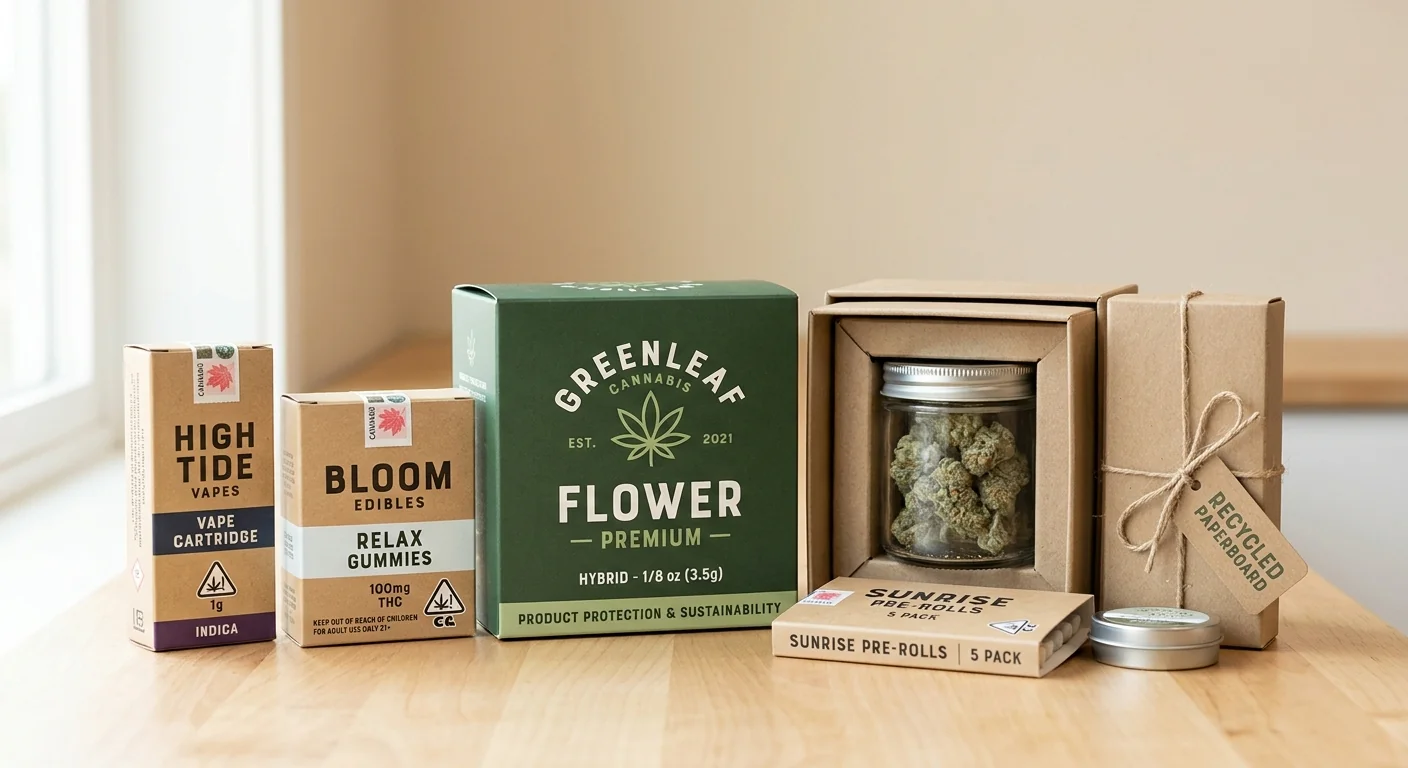
Cannabis packaging must protect the product, communicate accurate information and support the requirements of its intended market. Paperboard brings structure and printable space to that task. Folding cartons, locking boxes, sleeves, and fitted inserts can accommodate products ranging from flower jars to tincture bottles.
A successful carton starts with the complete product package. The bottle, pouch, tube or jar inside determines much of the outer box design. Good packaging connects these components rather than treating the paperboard carton as decoration added at the end.
What Is Paperboard Cannabis Packaging?
Paperboard cannabis packaging includes cartons and structural components made from thick paper based material. Common examples include folding boxes for cannabis oils, cartons for vaporizer cartridges and partitioned boxes for wrapped edibles.
The paperboard may act as secondary packaging around a sealed container. Some engineered structures provide a child resistant opening system. Direct product contact requires a separate assessment of material suitability, coatings, inks and the intended contents.
Primary and Secondary Packaging
Primary packaging directly contains the product. Examples include a sealed flower jar, concentrate container or pouch holding gummies.
Secondary packaging surrounds that container. A paperboard carton can protect against handling damage, provide room for required information and organize accessories. Its role should be clear before material selection begins.
Start With the Intended Cannabis Market
Cannabis packaging requirements vary by jurisdiction and product category. A carton accepted for one market should not be assumed acceptable elsewhere.
California guidance, for example, addresses child resistance, tamper evidence, resealability for packages containing multiple servings and opacity for edibles, with a stated beverage exception. These details illustrate why a universal packaging checklist is insufficient.
Build a Product Specification
Record the destination market, product format, quantity, serving configuration and required packaging functions. Identify which packaging layer provides each function.
Keep this information with approved artwork and supplier records. A change to the product quantity, inner container or opening mechanism may affect the original specification.
Paperboard Materials for Cannabis Cartons
Board selection affects stiffness, folding behavior, print appearance and cost. Thickness alone does not establish how well the finished carton performs.
Solid Bleached Sulfate
Solid bleached sulfate, commonly called SBS, offers a white printing surface. It suits cartons with detailed text, product identification and controlled color reproduction.
A white surface does not establish product contact suitability or child resistance. Those properties require their own supporting documentation.
Kraft and Recycled Board
Kraft paperboard provides a natural brown appearance and useful structural options. Coated unbleached kraft, called CUK, may suit applications where its mechanical properties match the design.
Coated recycled board, or CRB, can work for appropriate secondary cartons. Review surface consistency, odor, stiffness and the relationship between the carton and its sealed inner container.
Caliper and Grain Direction
Caliper describes board thickness. Grain direction influences folding and can affect panel behavior around scores.
The converter should select a combination that supports reliable assembly and closure operation. Excessive thickness can interfere with locking tabs just as insufficient stiffness can weaken them.
Cannabis Packaging for Different Products
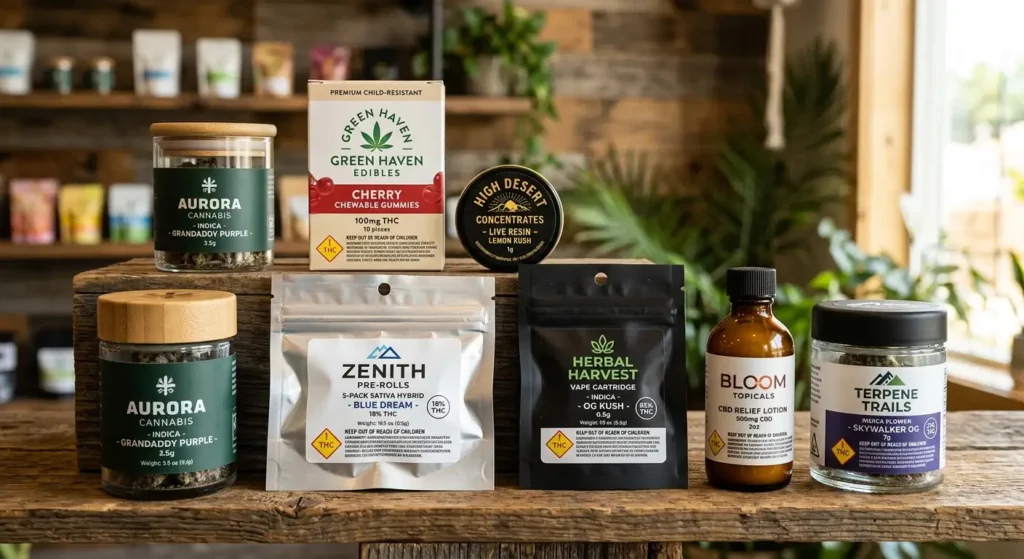
Different cannabis formats create different protective needs. The best carton for a glass bottle may be unsuitable for a flexible pouch or fragile cartridge.
Flower and Ground Cannabis
Flower packaging needs protection against crushing, contamination and undesirable moisture changes. A paperboard carton can support the sealed primary container and reduce light exposure.
Ordinary paperboard is not an airtight aroma barrier. Product preservation and odor containment depend on the complete container and closure system.
Prerolled Products
Prerolled products often use tubes or other protective inner containers. The outer carton should prevent movement without applying pressure that could damage the contents.
A fitted paperboard insert keep the tubes separated. Compartments can organize assortments and help staff check that the correct quantity has been packed.
Edibles and Infused Foods
Gummies, chocolates, baked goods and other infused foods need packaging suited to their food composition. Grease, moisture and temperature sensitivity can influence the inner packaging choice.
Keep cannabis edibles clearly distinguishable from ordinary foods. Avoid artwork or structures that imitate products marketed to children, and review the applicable restrictions before printing.
Concentrates and Extracts
Concentrates may arrive in small jars or other compatible containers. Paperboard inserts should hold those containers securely without loading pressure onto lids or fragile edges.
Container compatibility belongs in the primary packaging assessment. The outer box cannot compensate for a leaking or unsuitable inner container.
Oils, Topicals and Cartridges
Tincture bottles need support around the base and appropriate clearance around droppers. Topical jars and pump bottles may need protection against scuffing and accidental actuation.
Vaporizer cartridges need support around fragile components. Products containing batteries require a separate review of applicable transport and packaging requirements.
Box Styles and Protective Inserts
Tuck end cartons offer straightforward assembly for many secondary packaging applications. Lock bottom and automatic bottom cartons provide other options for supporting the contents.
Sleeves can surround an inner package, but exposed ends need attention. Drawer boxes provide a sliding opening experience and can incorporate engineered locking features.
Fitted Inserts and Partitions
Paperboard inserts limit movement and separate components. Their shape should match the actual filled container, including caps, seals and accessories.
These measurement help establish useful clearances. A package that fits an empty bottle may not fit the same bottle after labeling and sealing.
Product Visibility
Windows can reveal the product or inner container without opening the carton. Their suitability depends on opacity requirements, product sensitivity and the packaging layer involved.
For products requiring an opaque package, a transparent window may conflict with the intended design. Review the complete construction rather than approving the window from appearance alone.
Child Resistant Paperboard Packaging
A difficult opening mechanism is not automatically child resistant. Relevant performance must be established through the applicable testing framework and documentation.
The federal special packaging test procedure includes child and adult testing. Child resistance should make access difficult for young children without making the package impractical for adults to open.
Locking Mechanisms
Paperboard systems may use coordinated pressing, sliding or tab release actions. The mechanism depends on accurate cutting, scoring, gluing and consistent board behavior.
Request evidence covering the actual packaging configuration. Do not assume that a similar looking carton, different size or substituted board is covered by an existing report.
Repeated Opening
For reclosable systems, test operation through the expected use cycle. Bent tabs, worn locking areas and humidity exposure can affect performance.
Opening instructions should be readable and accurate. Child resistant does not mean childproof, and packaging does not replace secure storage away from children.
Tamper Evidence and Secure Closures
Tamper evidence shows whether a package has been opened or disturbed. It serves a different purpose from child resistance.
Suitable approaches can include breakable labels, tear strips or glued features that leave visible damage after opening. The exact method should suit the required packaging layer and product format.
Check the Opening Sequence
A seal should survive normal handling and reveal interference clearly. Avoid placing information where removing the seal would destroy text that must remain available.
Test the whole sequence: receiving the package, breaking the seal, opening it and closing it again. This is really where small design problems become obvious.
Barriers, Freshness and Shelf Life
Light, oxygen, moisture and temperature can affect cannabis products differently. A paperboard carton can provide physical support and reduce light exposure, but it rarely supplies every necessary barrier.
Moisture and Aroma Control
Flower and edible products may need different moisture protection. Too much moisture exchange can affect product quality, texture or condition.
Aroma containment requires a suitable sealed primary package. Claims such as “odor proof” need evidence from the finished packaging system, including seams and closures.
Shelf Life Validation
Do not establish shelf life from the carton material alone. Evaluate the product, inner package, seal integrity and intended storage conditions together.
Testing should reflect realistic distribution and storage. Packaging that looks fine immediately after filling may behave differently after weeks of humidity or temperature exposure.
Cannabis Labels and Information Layout
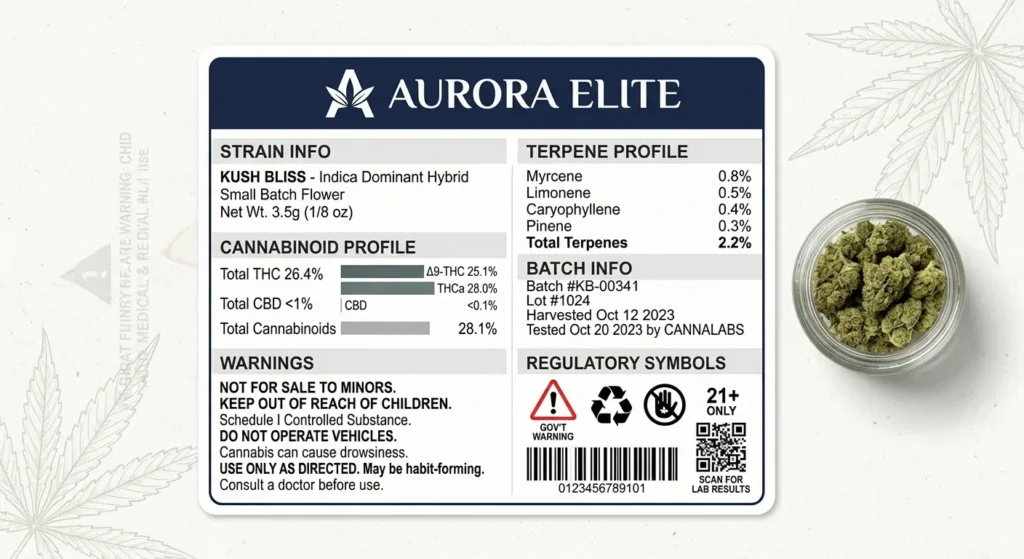
Reserve space for required text before adding decorative graphics. Crowded panels make revisions difficult and can reduce readability.
Depending on the jurisdiction and product, labeling may address product identity, net contents, cannabinoid content, warnings, ingredients, allergens and responsible business information.
Cannabinoid and Batch Information
Tetrahydrocannabinol, commonly called THC, and cannabidiol, called CBD, may need different expressions according to the product type. California guidance for manufactured products, for example, addresses milligrams per package and applicable serving information.
Keep variable batch information connected to the correct production records. Do not interchange laboratory percentages, milligrams per serving and total package amounts.
Useful Layout Elements
Plan space for the information required by the intended market:
• Required cannabis symbols and warnings
• Product identity and quantity
• Applicable cannabinoid declarations
• Ingredients and allergen information
• Batch or lot identification
• Required business or license information
• Storage and use directions
• Barcodes and permitted supplementary links
A QR code should supplement printed information only where permitted. It should not become an assumed substitute for required package text.
Printing and Responsible Presentation
The exterior graphics gives customers a quick way to identify the product. Typography, color and imagery should support accurate identification without misleading claims.
Avoid unsupported health statements. Review youth appeal restrictions, product imagery and promotional language for the destination market.
Printing Methods and Finishes
Digital printing can suit smaller quantities and changing artwork. Offset printing may offer advantages for larger runs with consistent designs.
Coatings can reduce scuffing, but they can affect folding, gluing and material recovery. Request a production sample rather than approving every finish from a flat printed sheet.
Quality Control and Production Testing
Inspect cartons for cutting accuracy, score quality, adhesive placement and legible printing. Locking structures deserve functional checks, not just visual approval.
Test the packed product for compression, vibration and handling damage. Check inserts, seals, barcode scanning and closure operation after those tests.
Keep approved samples and version controlled artwork. A small panel change can create a large problem if an outdated label reaches production.
Sustainability and Packaging Costs
Paperboard can support material reduction and suitable recovery options. Recycled content, removable inserts and practical carton dimensions deserve attention.
Recyclability depends on the finished structure and available collection systems. Coatings, laminates, attached components and product residue can affect disposal options, so environmental claims need support.
Small order often carry a higher unit cost. Compare tooling, printing, inserts, assembly labor, testing and damaged products when assessing total expense.
An affordable carton still needs to perform its required functions. Removing material is useful only if the package remains suitable.
Questions About Cannabis Packaging
Can Paperboard Packaging Be Child Resistant?
Yes. Engineered paperboard systems can provide child resistance when the relevant configuration meets applicable performance requirements. Ordinary folding cartons do not qualify automatically.
Does a Cannabis Carton Prevent Odors?
Not by itself. Odor containment normally depends on a suitable primary container, effective seals and validated performance.
Can One Carton Be Used Across Every Market?
Do not assume so. Requirements for labels, symbols, opacity, packaging layers and child resistance can differ.
What Should a Packaging Order Include?
Provide product dimensions, filled weight, destination market, inner container details, artwork and required performance documentation. Approve a complete packed sample before committing to production.