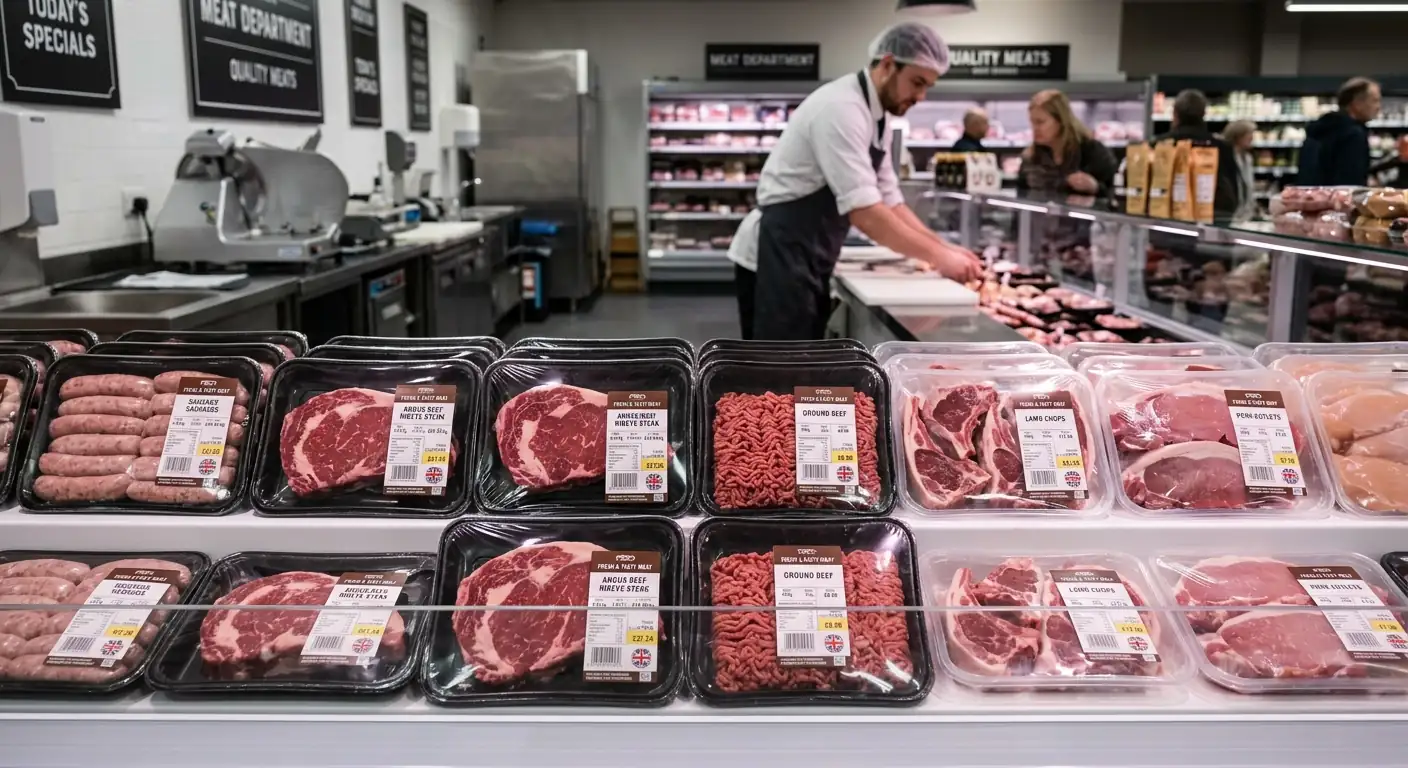
Meat packaging plays an important role in protecting fresh, frozen and processed meat products during storage, transportation and retail display. The packaging must support food safety, reduce contamination risks and maintain product quality from processing facilities to customers. For meat suppliers and retailers, choosing the right packaging is a very important business decision.
Paperboard meat packaging has become a popular choice for butcher shops, meat processors, grocery stores and food distribution businesses. Corrugated cardboard boxes, coated paperboard cartons and custom printed meat boxes provide structural support, product identification and convenient handling. These materials can be combined with suitable food contact liners to protect meat products from moisture and leakage.
Different meat products require different packaging solutions. Fresh beef, poultry, pork, lamb and frozen meat each have their own storage and protection requirements. Packaging manufacturers must consider product weight, temperature, moisture exposure and transportation conditions before selecting the material.
This guide covers meat packaging types, paperboard materials, custom box designs, food safety requirements, printing options, costs and sustainable packaging solutions.
What Is Meat Packaging?
Meat packaging refers to the materials and containers used to protect meat products during processing, storage, shipping and retail distribution. Packaging can include food contact trays, protective films, paperboard cartons, corrugated shipping boxes and insulated containers.
The main purpose is to protect meat from contamination, physical damage and unwanted environmental exposure. Packaging can help maintain quality, but proper refrigeration and hygienic handling remain necessary.
Paperboard packaging is commonly used as secondary or outer packaging for meat products. Direct contact with raw meat requires suitable food contact materials and appropriate barriers.
Why Meat Packaging Matters
Meat is a perishable food product that requires controlled handling and storage.
Poor packaging can cause leakage, contamination, moisture damage and product deterioration. Weak shipping cartons may collapse when exposed to excessive weight or humidity.
Good meat packaging helps businesses:
- Protect meat products during transportation.
- Reduce contamination from external sources.
- Support refrigerated and frozen distribution.
- Improve product organization and identification.
- Reduce physical damage during handling.
- Provide space for labels and product information.
- Support convenient storage and retail presentation.
The right packaging should match the product type and its distribution requirements.
Types of Meat Packaging Boxes
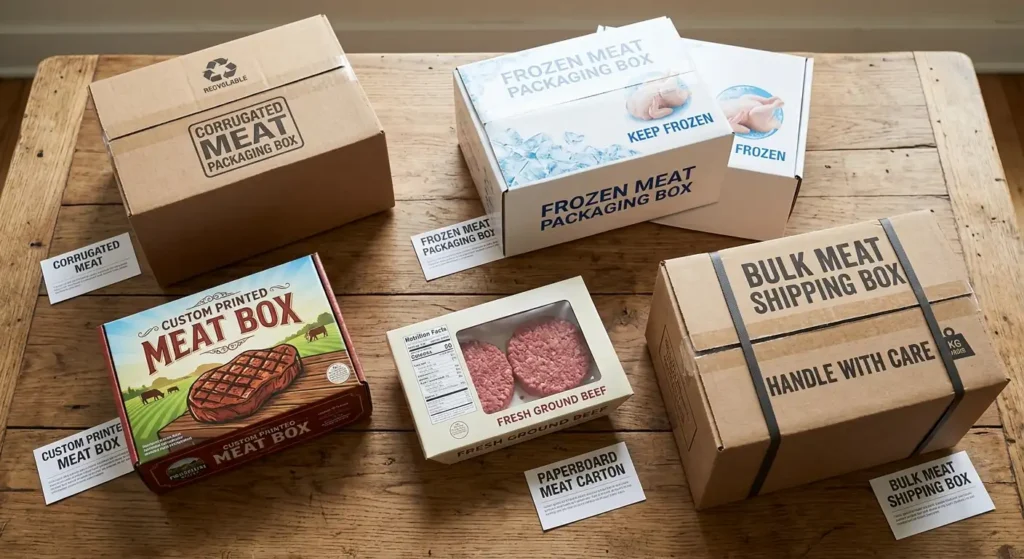
Different paperboard packaging structures are used throughout the meat supply chain. The box selection depends on product weight, moisture conditions and whether the meat is fresh, frozen or processed.
1. Corrugated Meat Packaging Boxes
Corrugated meat packaging boxes are commonly used for bulk transportation and storage.
They contain fluted paperboard positioned between linerboard layers, creating a structure that offers cushioning and compression resistance.
These boxes can hold packaged beef, chicken, pork and other meat products during distribution.
Corrugated cartons are often used with protective liners or moisture resistant treatments in refrigerated environments.
2. Frozen Meat Packaging Boxes
Frozen meat packaging boxes are developed for products stored and transported at freezing temperatures.
They are commonly manufactured from corrugated paperboard selected for the expected moisture and handling conditions.
Frozen meat boxes may contain sealed plastic liners or individually wrapped products to prevent direct contact with ordinary cardboard.
The packaging should maintain sufficient strength during cold storage and transportation.
3. Custom Printed Meat Boxes
Custom meat packaging boxes are manufactured according to specific product dimensions and branding requirements.
These boxes can include printed logos, product information, handling instructions and identification codes.
Custom printing is useful for meat processors, butcher shops and retail suppliers that need recognizable packaging.
4. Paperboard Meat Cartons
Folding paperboard cartons are used for certain processed meat products and retail food packages.
They are often combined with sealed primary packaging that protects the food.
Paperboard cartons provide a printable outer surface and can help organize smaller meat products into retail units.
5. Bulk Meat Shipping Boxes
Bulk meat boxes are designed to hold larger quantities of packaged meat during commercial distribution.
These boxes may require reinforced corrugated construction, strong closures and pallet support.
The box must be selected according to the total product weight and expected transportation conditions.
Materials Used in Meat Packaging
Material selection affects packaging strength, food safety and performance in refrigerated environments.
Corrugated Cardboard
Corrugated cardboard is one of the most widely used materials for meat shipping cartons.
It offers structural support and can be manufactured in different board grades.
Common corrugated constructions include:
- Single Wall Corrugated Board: Suitable for certain lightweight packaged meat products.
- Double Wall Corrugated Board: Provides additional strength for heavier shipping cartons.
- Triple Wall Corrugated Board: Used for some demanding bulk transportation applications.
- Moisture Resistant Corrugated Board: Uses selected treatments or constructions to improve performance in humid environments.
The correct board grade depends on product weight, storage conditions and stacking requirements.
Kraft Paperboard
Kraft paperboard is commonly used in corrugated packaging and selected food packaging applications.
It provides a strong paper based structure and supports printing.
Brown kraft board is popular for industrial meat cartons, and white paperboard surfaces may be selected for retail packaging.
Coated Paperboard
Coated paperboard may provide improved resistance to grease or moisture, depending on the coating material.
For direct meat contact, the complete packaging construction must be suitable for its intended food contact conditions.
Not every coated paperboard material is approved for direct contact with raw meat.
Food Contact Liners
Food contact liners are commonly used inside meat packaging boxes.
They help separate raw meat from ordinary corrugated paperboard and can reduce leakage into the outer carton.
Common liner materials include suitable polyethylene films and other approved food contact barriers.
The liner material must meet applicable food safety requirements.
Meat Packaging for Different Products
Different meat products require packaging suited to their physical characteristics and storage conditions.
Beef Packaging Boxes
Beef packaging boxes are used for fresh, chilled and frozen beef products.
Large beef cuts may be packed in suitable primary packaging before placement inside corrugated shipping cartons.
The outer box provides handling support and space for product identification.
Chicken and Poultry Packaging
Chicken packaging requires careful attention to leakage prevention and hygienic handling.
Fresh poultry products are commonly packed in sealed food contact packaging before being placed in paperboard shipping boxes.
Corrugated poultry cartons should be selected for the expected moisture exposure and shipping weight.
Pork Packaging Boxes
Pork packaging boxes are used for transporting packaged pork cuts, processed pork products and frozen items.
The paperboard carton should provide enough strength to support the contents during distribution.
Lamb and Mutton Packaging
Lamb and mutton products may be shipped in refrigerated or frozen conditions.
Custom corrugated boxes can be manufactured for different product quantities and dimensions.
Processed Meat Packaging
Processed meat products include sausages, bacon, deli meats and other prepared meat items.
These products often use sealed primary packaging with paperboard cartons for grouping, branding and shipping.
Fresh Meat Packaging vs Frozen Meat Packaging
Fresh and frozen meat packaging have different performance requirements.
Fresh Meat Packaging
Fresh meat packaging must support hygienic handling and refrigerated storage.
Primary packaging may include sealed trays, vacuum bags or other suitable food contact materials.
Corrugated outer cartons protect the packaged products and support distribution.
Frozen Meat Packaging
Frozen meat packaging must withstand low temperatures and possible moisture exposure during handling.
For frozen storage, products are commonly maintained at 0°F or below.
Packaging should help protect products from physical damage and excessive moisture loss.
Main Differences
| Feature | Fresh Meat Packaging | Frozen Meat Packaging |
| Storage | Refrigerated | Frozen |
| Outer packaging | Corrugated cartons | Suitable cold storage corrugated cartons |
| Primary protection | Food contact film or bags | Freezer suitable sealed packaging |
| Main concern | Hygiene and leakage | Moisture loss and carton durability |
| Distribution | Refrigerated transportation | Frozen transportation |
Both require suitable temperature control throughout distribution.
Custom Meat Packaging Box Design
Custom meat packaging boxes provide businesses with greater control over packaging dimensions, materials and printed information.
A properly sized carton can reduce unnecessary empty space and support more organized transportation.
Choosing the Correct Box Dimensions
The box should fit the packaged meat products without excessive pressure.
Packaging manufacturers must consider product weight, internal liners and stacking conditions.
Large cartons may require stronger corrugated construction to maintain their shape.
Protective Box Features
Custom meat packaging can include:
- Reinforced corrugated walls.
- Moisture resistant board options.
- Suitable internal food contact liners.
- Strong carton closure systems.
- Printed handling instructions.
- Custom dimensions for product quantities.
- Pallet compatible box designs.
These features helps businesses select packaging for different distribution needs.
Custom Meat Packaging for Butcher Shops
Butcher shops often require smaller packaging quantities and convenient product handling.
Printed paperboard cartons can be used around properly wrapped meat products.
The outer packaging can display business information, product identification and storage instructions.
Meat Packaging Printing and Branding
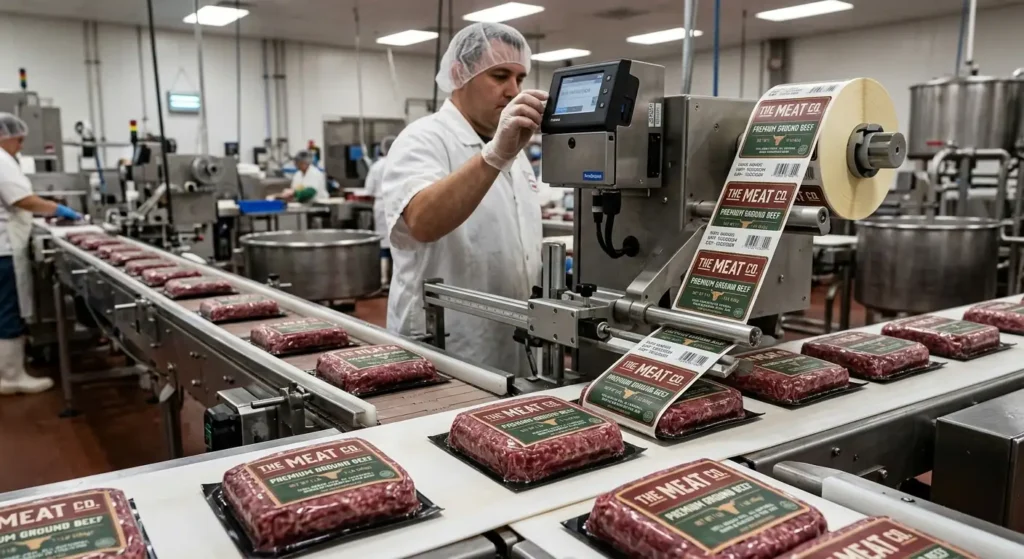
Printed meat packaging boxes provide space for product information and company branding.
Custom printing can help distributors identify products quickly during warehouse operations.
Printing Options
Flexographic printing is commonly used for corrugated meat shipping boxes.
Offset printing and digital printing may be selected for retail paperboard cartons depending on production requirements.
Information on Meat Packaging Boxes
Common printed details include:
- Product name and meat category.
- Net weight and package quantity.
- Storage temperature instructions.
- Packing date and lot identification.
- Product origin information.
- Barcode and tracking information.
- Handling and recycling symbols.
Required food labeling information depends on the product and applicable regulations.
Food Safety Requirements for Meat Packaging
Food safety is one of the most important considerations in meat packaging.
The packaging should protect the product without introducing contamination.
Food Contact Material Compliance
Materials that directly contact meat must be suitable for the intended food contact application.
In the United States, food contact materials are subject to applicable FDA requirements, including relevant provisions of Title 21 of the Code of Federal Regulations.
Meat labeling and inspection requirements may fall under the USDA Food Safety and Inspection Service.
Packaging suppliers should provide relevant material documentation when required.
Preventing Cross Contamination
Raw meat products should be packaged to prevent leakage and contact with unrelated food items.
Sealed primary packaging and suitable outer cartons help support hygienic transportation.
Packaging workers should follow appropriate sanitation procedures.
Temperature Control
Packaging cannot replace refrigeration.
Fresh meat must be maintained at suitable refrigerated temperatures, and frozen products require appropriate frozen storage.
Temperature control during loading, transportation and unloading is very important.
Packaging Hygiene
Paperboard cartons should be stored away from moisture, pests and contamination.
Packaging materials must be handled in a sanitary environment before use.
Damaged or contaminated cartons should not be used for food distribution.
Vacuum Packaging and Modified Atmosphere Packaging
Meat packaging may involve specialized primary packaging technologies.
Vacuum Packaging
Vacuum packaging removes air from a suitable package before sealing.
It can reduce oxygen exposure and support product quality when combined with correct temperature control.
Vacuum packaged meat may then be placed inside corrugated cartons for shipping.
Modified Atmosphere Packaging
Modified atmosphere packaging, commonly called MAP, uses a controlled gas mixture inside sealed packaging.
Gas composition varies according to the meat product and desired quality characteristics.
MAP packaging can influence product color and shelf life, but it does not eliminate the need for refrigeration or food safety controls.
Paperboard Outer Packaging
Corrugated cartons can be used around vacuum packaged or MAP meat products.
This combination provides a protective outer structure and supports product handling during distribution.
Benefits of Paperboard Meat Packaging
Paperboard packaging offers several advantages for meat processing and distribution businesses.
Strong Shipping Protection
Corrugated cartons provide structural support and help protect packaged meat during handling.
The correct board grade can reduce carton deformation under expected shipping loads.
Affordable Packaging Costs
Paperboard boxes are available in different sizes and material grades.
Bulk orders can provide competitive pricing for businesses purchasing large quantities.
Convenient Storage
Corrugated boxes can be supplied flat before assembly, reducing storage space at packaging facilities.
Uniform box dimensions can support organized pallet loading.
Better Product Identification
Printed paperboard packaging provides space for product information and warehouse tracking details.
This can make inventory management more convenient.
Sustainable Meat Packaging Solutions
Many businesses are interested in reducing packaging waste and improving material efficiency.
Paperboard is a common choice for outer packaging due to its established recycling infrastructure.
Recyclable Corrugated Boxes
Ordinary corrugated cardboard can often be recycled when it remains suitable for local collection programs.
Meat juices, grease and heavy contamination may prevent recycling.
Plastic liners and other components should be separated where practical and required.
Reducing Packaging Material
Custom box dimensions can reduce unnecessary paperboard consumption.
Packaging manufacturers can review board grades and structural designs to reduce material use without sacrificing required performance.
Responsible Material Selection
Recycled fiber content, responsible sourcing and suitable packaging design can support sustainability goals.
Food contact compliance and product protection must remain part of the material selection process.
How Much Does Meat Packaging Cost?
Meat packaging costs vary according to box dimensions, board strength, printing requirements and order quantity.
Moisture resistant materials and special liners may increase production expenses.
Custom printed cartons can require additional setup costs depending on the printing method.
Factors Affecting Meat Packaging Prices
- Corrugated paperboard grade.
- Carton size and material quantity.
- Food contact liner requirements.
- Printing colors and design coverage.
- Moisture resistance requirements.
- Bulk order quantity.
- Shipping and storage expenses.
A very cheap box may not provide sufficient protection for heavy or moisture exposed products.
Businesses should evaluate packaging cost together with product damage, handling efficiency and material performance.
How to Choose the Best Meat Packaging Supplier
Choosing the right packaging manufacturer helps maintain consistent quality.
Check Material Specifications
Ask about corrugated board grades, liner materials and moisture resistance.
Packaging materials should match the intended product and storage environment.
Request Packaging Samples
Samples allow businesses to examine carton strength, dimensions and assembly.
Testing with actual packaged meat products can reveal potential problems before bulk orders.
Review Quality Testing
Relevant tests may include edge crush testing, box compression testing and moisture performance evaluation.
Testing requirements depend on the packaging application and distribution conditions.
Compare Customization Options
A packaging supplier should be able to provide suitable box sizes, printing and protective features.
The packaging manufacturer should have clear product specifications and consistent production quality.
Common Meat Packaging Mistakes
Poor packaging decisions can increase product damage and distribution expenses.
Common mistakes include:
- Using ordinary paperboard for direct raw meat contact without a suitable barrier.
- Selecting weak cartons for heavy meat products.
- Ignoring moisture exposure during cold storage.
- Using incorrect carton dimensions.
- Applying unsuitable packaging closures.
- Missing required product identification.
- Failing to maintain proper refrigeration.
These issue can create unnecessary problems for meat suppliers and distributors.
Final Thoughts on Meat Packaging
Meat packaging is an important part of safe food distribution, storage and retail presentation. The right packaging materials help protect fresh, frozen and processed meat products during transportation.
Corrugated cardboard boxes, kraft paperboard cartons, coated paperboard and protective liners serve different purposes throughout the packaging process.
Custom meat packaging provides businesses with options for box dimensions, material strength, printing and shipping requirements.
For meat processors, butcher shops and distributors, selecting suitable paperboard packaging can support product protection, efficient handling and affordable packaging operations.
A good meat packaging solution should balance food safety, structural strength, moisture protection and practical business costs.
Frequently Asked Questions About Meat Packaging
What is the best packaging material for meat?
The best material depends on the meat product and storage conditions. Food contact films or approved trays are commonly used as primary packaging, with corrugated paperboard boxes for shipping.
Can meat be packed directly in cardboard boxes?
Ordinary corrugated cardboard should not be used for direct raw meat contact without suitable food contact protection. Approved liners or appropriate primary packaging are typically required.
What boxes are used for frozen meat?
Frozen meat is commonly shipped in corrugated cartons selected for cold storage conditions, often with sealed primary packaging or protective liners.
Are meat packaging boxes recyclable?
Many corrugated meat shipping boxes can be recycled when they are free from significant food contamination and accepted by local recycling facilities.
What is the difference between vacuum packaging and regular meat packaging?
Vacuum packaging removes air before sealing, reducing oxygen exposure. Regular packaging may contain air and use different protective materials.
Can meat packaging boxes be customized?
Yes. Meat packaging boxes can be manufactured in custom sizes with printed logos, product information, reinforced structures and suitable protective liners.
What information should be printed on meat packaging?
Information may include product identification, weight, lot codes, storage instructions and other details required by applicable food labeling regulations.
How can meat packaging costs be reduced?
Businesses can review carton dimensions, material grades, order quantities and packaging waste. Material savings should not reduce food safety or required shipping protection.