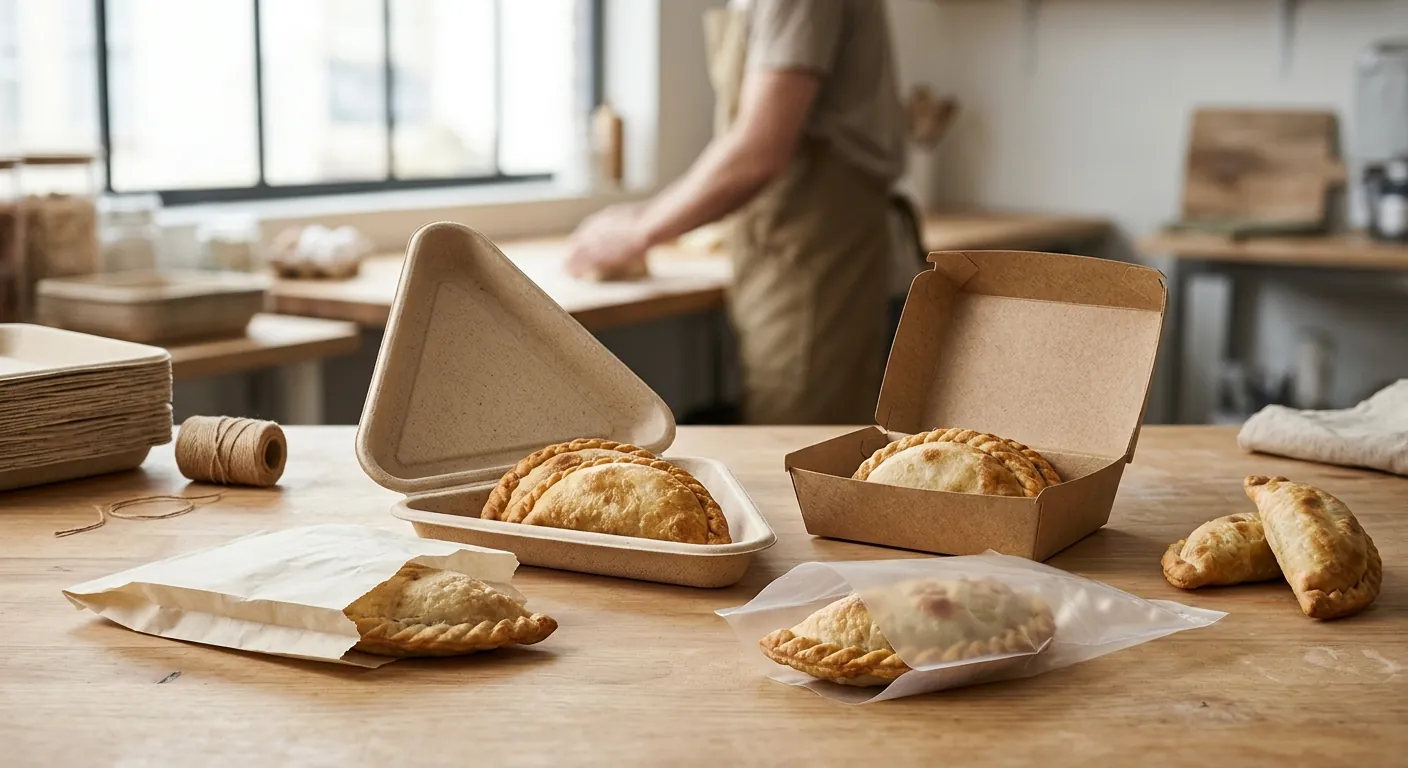
Empanadas are popular across Latin American cuisine, bakeries, food trucks and restaurants throughout the United States. These filled pastries can contain beef, chicken, cheese, vegetables or fruit. Their packaging needs to protect the crust, control grease, retain heat and make serving convenient. For food businesses, sustainable packaging adds another factor to these everyday requirements.
The market is moving toward packaging made from renewable resources, recycled paper, plant based materials and recyclable plastics. Many food brands are reviewing their packaging choices as customers pay more attention to waste, ingredient sourcing and environmental claims. Empanada sellers face a practical challenge: finding materials that protect the product without creating unnecessary packaging waste or increasing operating costs too much.
The best approach is to evaluate the entire package, including its material, food contact safety, transportation, storage conditions and disposal options. A container that looks environmentally friendly may not be compostable in the customer’s area, and a paper package can perform poorly if oil passes through its surface.
1. Why Sustainable Packaging Matters for Empanadas
Changing Customer Expectations
Customers buying empanadas for lunch, catering, parties or delivery expect food to arrive in good condition. They may prefer paper based packaging over unnecessary plastic, particularly when ordering from independent bakeries and restaurants that promote responsible business practices.
Packaging can support that preference through useful features such as recyclable paperboard, minimal coatings and appropriately sized containers. Businesses should focus on measurable improvements instead of making broad environmental promises.
Food Protection Remains the Priority
Empanadas have different packaging requirements depending on their filling and cooking method. Fried empanadas release surface oil, baked varieties may produce steam, and frozen products need protection against moisture and freezer damage.
A suitable package should provide:
- Grease resistance for fried and oily fillings.
- Ventilation for hot products that release steam.
- Adequate strength for stacking and transportation.
- Food contact safety for direct contact with the pastry.
- Suitable temperature performance for hot, chilled or frozen products.
A package that reduces material use but causes food to leak, become soggy or arrive damaged may create more waste overall.
2. Recyclable Paperboard Boxes
A Practical Choice for Bakeries and Restaurants
Paperboard boxes are among the most practical options for selling empanadas. They are lightweight, easy to print and available in different sizes. Small boxes can hold one or two pieces, while larger cartons can accommodate family orders and catering trays.
Uncoated paperboard is often easier to recycle when it remains clean and dry. Grease resistant grades can improve performance, but businesses should check the coating and the recycling requirements of their local facilities.
Printing and Branding Opportunities
Food businesses can use water based inks, simple graphics and paper based labels to communicate product information. A small window may help customers see the empanadas, although plastic windows can complicate recycling if they cannot be separated.
Useful box features include:
- Folding tabs that reduce the need for adhesive.
- Dividers that keep different fillings separate.
- Stackable shapes for delivery drivers.
- Ventilation openings for hot pastries.
- Clear labeling for allergens, ingredients and reheating instructions.
The right paperboard specification depends on the amount of grease, product weight and time spent in transit.
3. Compostable Packaging Made From Plant Based Materials
Bagasse and Molded Fiber Containers
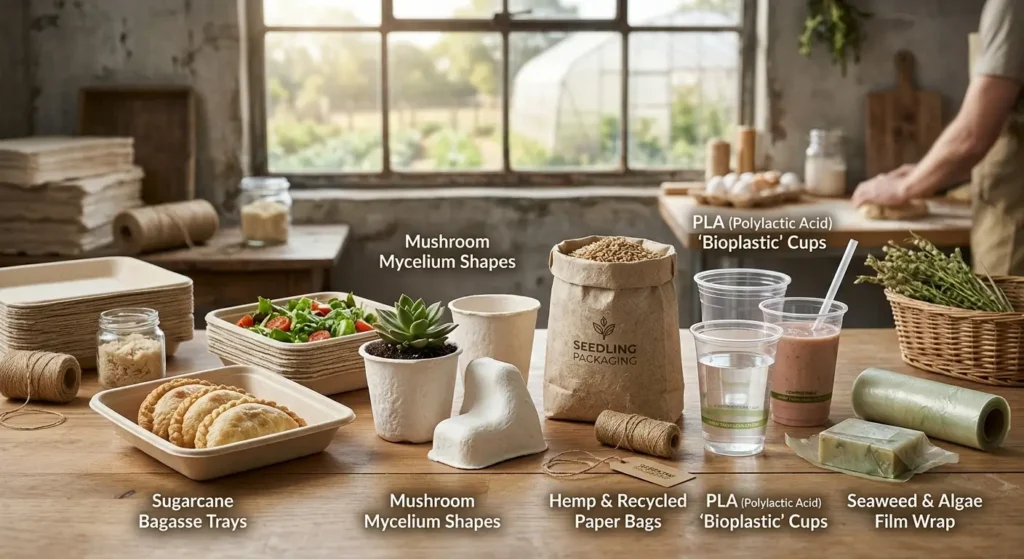
Bagasse is the fibrous material left after sugarcane juice extraction. Packaging manufacturers use this byproduct to produce molded trays, clamshells and food containers. Molded fiber packaging can be a useful option for empanadas sold at events, food trucks and takeaway counters.
Other plant fiber materials include bamboo pulp and recycled paper fibers. Their environmental performance varies with manufacturing methods, additives and the availability of appropriate waste processing facilities.
Compostability Needs Verification
A package labeled compostable does not automatically break down in a home compost pile or a landfill. Some products require industrial composting conditions, and local composting services may not accept food service packaging.
Before purchasing compostable containers, check:
- Whether the product has a recognized certification, such as BPI certification for applicable products in North America.
- Whether the certification covers the complete package or only a component.
- Whether the local waste provider accepts that packaging.
- Whether the material can tolerate hot food and greasy fillings.
- Whether the manufacturer provides documentation for food contact compliance.
Compostable packaging works best when businesses have a realistic plan for collection and disposal. Without that plan, recyclable paperboard may be a more useful option.
4. Grease Resistant Paper Wraps and Bags
Less Material for Single Serving Orders
Paper wraps and bags are suitable for customers purchasing one or two empanadas. They use less material than a rigid box and take up less storage space. Bakeries can use them for counter sales, quick service and takeaway orders.
Grease resistance is a major factor. Traditional paper can absorb oil and weaken during use. Some suppliers offer specialty paper with water based barriers or other treatments that improve resistance without relying on conventional plastic laminates.
Choosing the Right Paper
Food businesses should ask suppliers about the paper’s composition, coating, grease resistance and disposal instructions. A package described as recyclable may still be unsuitable for paper recycling if its barrier layer or food contamination causes problems.
For very oily fried empanadas, a tested grease resistant food wrap may perform better than an untreated kraft paper bag. A paper sleeve combined with a small paperboard tray can provide additional support without using a full size carton for every order.
5. Recyclable Plastic and Paper Hybrid Packaging
When Visibility and Moisture Protection Matter
Some empanada brands sell chilled or frozen products through grocery stores. These products may require packaging with stronger moisture barriers than standard paperboard can provide. Recyclable plastic trays, clear film and paperboard sleeves are possible options, depending on the product’s shelf life and storage conditions.
A clear package helps customers inspect the filling and product condition before buying. For refrigerated empanadas, the packaging must protect against moisture loss, contamination and handling damage. Frozen products may need barriers against freezer burn and changes in texture.
Reducing Mixed Material Waste
Paper and plastic combinations can be difficult to recycle when the materials cannot be separated. Businesses can ask suppliers about mono material packaging, which uses one main material family and may be easier to process through compatible recycling systems.
The decision should be based on actual local recycling capabilities, not just the recycling symbol printed on the package. Food safety and shelf life testing remain necessary for products sold in retail stores.
6. Reusable Packaging for Catering and Food Events
Returnable Containers for Large Orders
Reusable packaging is gaining attention among catering companies, university food services and event operators. An empanada business that supplies offices or recurring events can test a returnable container program for larger orders.
Durable trays or reusable food containers may reduce single use packaging when customers return them consistently. The system needs a collection process, cleaning procedures and clear return instructions.
Reusable packaging is less practical for every takeaway purchase. Customers traveling long distances or buying food from temporary stalls may not return the container. Businesses should test reuse with regular customers before investing in large quantities.
How to Make a Reuse Program Work
A practical program can include:
- A refundable deposit or a simple container return incentive.
- A return point at the store or participating event venue.
- Food safe washing and sanitizing procedures.
- Containers that tolerate repeated use without cracking.
- A tracking method for returned and missing containers.
The environmental benefit depends on the number of successful reuse cycles, washing requirements and transportation distances. Reusable packaging is a business model, not just a different container.
7. Minimalist Packaging and Right Sized Boxes
Reducing Unnecessary Material
Right sized packaging is a growing trend for takeaway food. An empanada sold individually does not need the same box as a dozen pieces ordered for a family gathering. Smaller packages can reduce material consumption, storage needs and delivery volume.
Oversized containers may allow pastries to slide around during transport. Adding extra paper or plastic to prevent movement increases material use. A correctly sized box with suitable dividers may solve both problems.
Packaging for Different Sales Channels
| Sales channel | Suggested packaging | Main benefit |
| Bakery counter | Paper bag or grease resistant wrap | Low material use |
| Takeout order | Small paperboard box | Product protection |
| Food delivery | Ventilated box with secure closure | Better handling |
| Catering | Larger paperboard tray or reusable carrier | Convenient serving |
| Frozen retail products | Tested moisture barrier packaging | Storage protection |
These are starting points rather than universal rules. A supplier should test the actual empanada size, filling, cooking method and expected travel time before finalizing specifications.
8. Smart Packaging, QR Codes and Better Labeling
Smart packaging does not need expensive electronics. For smaller food businesses, a QR code printed on a box or label can provide useful information without adding a separate leaflet.
A QR code can link to:
- Ingredient and allergen information.
- Storage and reheating instructions.
- The source of key ingredients.
- Packaging disposal instructions.
- Details about the business’s sustainability practices.
For frozen and refrigerated empanadas, labels should clearly communicate storage conditions, dates and relevant food safety information. Businesses selling through retail channels must check applicable labeling rules.
Packaging claims require particular care. A statement such as “100 percent compostable” should be supported by evidence for the full package and the conditions under which it composts. General phrases such as “eco friendly” provide little useful information unless the business explains the actual improvement.
9. Sustainable Packaging Trends and Market Pricing
Estimated Packaging Costs in the United States
Packaging prices vary according to material thickness, dimensions, order volume, printing, shipping and supplier location. The figures below are illustrative planning estimates in US dollars, not verified live supplier quotes. Actual quotations can be lower for bulk orders or much higher for custom printed products.
| Packaging type | Estimated unit cost in USD | Typical application |
| Basic kraft paper bag | $0.03 to $0.12 | Single empanada |
| Grease resistant paper wrap | $0.02 to $0.10 | Counter service |
| Plain paperboard food box | $0.10 to $0.35 | Takeout orders |
| Molded fiber container | $0.12 to $0.40 | Hot food service |
| Custom printed paperboard box | $0.20 to $0.70 | Branded retail or delivery |
| Compostable clamshell | $0.15 to $0.50 | Takeout and events |
| Reusable food container | $1.00 to $5.00 or more | Return programs |
These estimates exclude some costs, including printing setup, freight, taxes, storage and waste collection. Custom packaging may require minimum order quantities, and smaller orders typically carry a higher cost per unit.
Comparing Packaging Suppliers and Products
Food brands can compare packaging from wholesale food service distributors, paper packaging manufacturers and specialty sustainable packaging suppliers. Companies such as WebstaurantStore, Uline, Eco Products and World Centric offer different types of food service packaging, although product availability, specifications and pricing vary by item.
When reviewing a merchant’s products, check the following details before placing an order:
- Food contact compliance and temperature limits.
- Grease and moisture resistance.
- Minimum order quantity and delivery fees.
- Recycling or composting certification.
- Custom printing options and setup charges.
- Sample availability and replacement policies.
A lower listed price does not always mean lower total cost. If a package leaks, damages pastries or requires extra wrapping, the business may spend more over time.
Calculating the Cost Per Order
Suppose a restaurant purchases a paperboard box for $0.22 and a grease resistant liner for $0.04. Its direct packaging material cost is $0.26 per order before labor and freight.
For 1,000 orders, the material expense would be $260. If the business changes to a $0.14 box that performs well without a separate liner, the cost becomes $140 for the same order volume. Actual savings depend on whether the cheaper box offers adequate grease protection and product stability.
This type of calculation helps food operators compare alternatives using real operating figures instead of relying on packaging claims alone.
10. How to Choose the Best Sustainable Empanada Packaging
The best packaging depends on the business model, food temperature and customer expectations. A neighborhood bakery selling hot pastries has different needs from a frozen food manufacturer supplying supermarkets.
Before selecting a package, evaluate these factors:
- Product condition: Determine whether the empanadas are fried, baked, chilled or frozen.
- Expected travel time: Test how the crust performs during a typical delivery.
- Material performance: Check grease resistance, ventilation and container strength.
- Environmental impact: Review recycled content, material sourcing and local disposal options.
- Total operating cost: Include unit prices, shipping, storage, labor and damaged food.
- Customer experience: Consider ease of opening, portability and storage convenience.
Request samples from at least three suppliers and test them with the actual menu. A package that performs well for a baked cheese empanada may not work as well for a greasy beef filling.
11. Future Trends in Empanada Packaging
More Recycled Content and Fiber Based Materials
Food brands are expected to keep exploring recycled paperboard and responsibly sourced plant fibers. Packaging manufacturers are developing barrier treatments that aim to improve grease resistance without making paper products difficult to recycle. Performance and local processing capabilities will determine which options become practical for individual businesses.
Reuse, Refill and Return Programs
Reusable takeaway containers may gain ground in catering, workplace dining and other settings with repeat customers. These systems can work particularly well when containers return through established delivery routes.
Better Environmental Claims
Customers and regulators are paying closer attention to environmental marketing claims. Food brands should provide clear information about recycled content, compostability and disposal instead of relying on broad statements that cannot be verified.
For empanada sellers, the strongest long term approach is to measure packaging use, food waste and customer feedback together. A smaller package is useful when it protects the product, and a compostable container has limited value when local facilities cannot process it.
Final Thoughts
Sustainable food packaging trends for empanadas are centered on practical material choices, right sized containers, better grease resistance and improved disposal options. Recyclable paperboard, paper wraps, molded fiber and reusable containers each have a place in the market.
For a small restaurant, the best starting point is usually a packaging audit followed by sample testing and a cost comparison. Larger brands may benefit from custom packaging, frozen product barriers and returnable catering systems.
A successful packaging choice protects the empanada, fits the budget and provides credible environmental benefits. Businesses that test materials carefully and communicate disposal instructions clearly can reduce unnecessary waste while giving customers a reliable food experience.
Frequently Asked Questions
What is the most sustainable packaging for empanadas?
Recyclable paperboard boxes and grease resistant paper wraps are useful starting points for many businesses. The best option depends on food contamination, product temperature and local recycling services. Reusable containers can be suitable for recurring catering orders.
Are kraft paper boxes suitable for fried empanadas?
Yes, provided the paperboard and any barrier coating offer sufficient grease resistance. Untreated kraft paper may absorb oil, weaken or stain. Test the complete package with the actual product before buying in bulk.
Is compostable packaging better than recyclable packaging?
Not in every situation. Compostable packaging may work well where suitable collection and processing facilities accept it. Recyclable packaging can be a better option when local recycling systems can process the material effectively.
How much does sustainable empanada packaging cost?
Basic paper bags may cost approximately $0.03 to $0.12 per unit, while paperboard food boxes may range from $0.10 to $0.35. These are illustrative estimates in US dollars, not confirmed supplier prices. Order quantity, printing, material specifications and freight can change the final cost.
Can sustainable packaging keep empanadas warm?
Paperboard boxes can help retain heat for short periods, but insulation and ventilation must be balanced. Trapping too much steam can soften the crust. For hot delivery orders, test a ventilated box that protects the food without allowing excessive moisture to build up.
Which packaging is best for frozen empanadas?
Frozen empanadas need packaging that limits moisture loss, protects against freezer burn and tolerates cold storage. Paperboard cartons paired with a suitable food grade inner barrier may work. The complete package must be tested for the intended storage period.
How can a small empanada business reduce packaging expenses?
Start by measuring packaging use per order. Standardize a few box sizes, reduce unnecessary liners, purchase suitable quantities in bulk and compare supplier quotations. Avoid removing materials that protect the food, since damaged orders can cost more than the packaging savings.