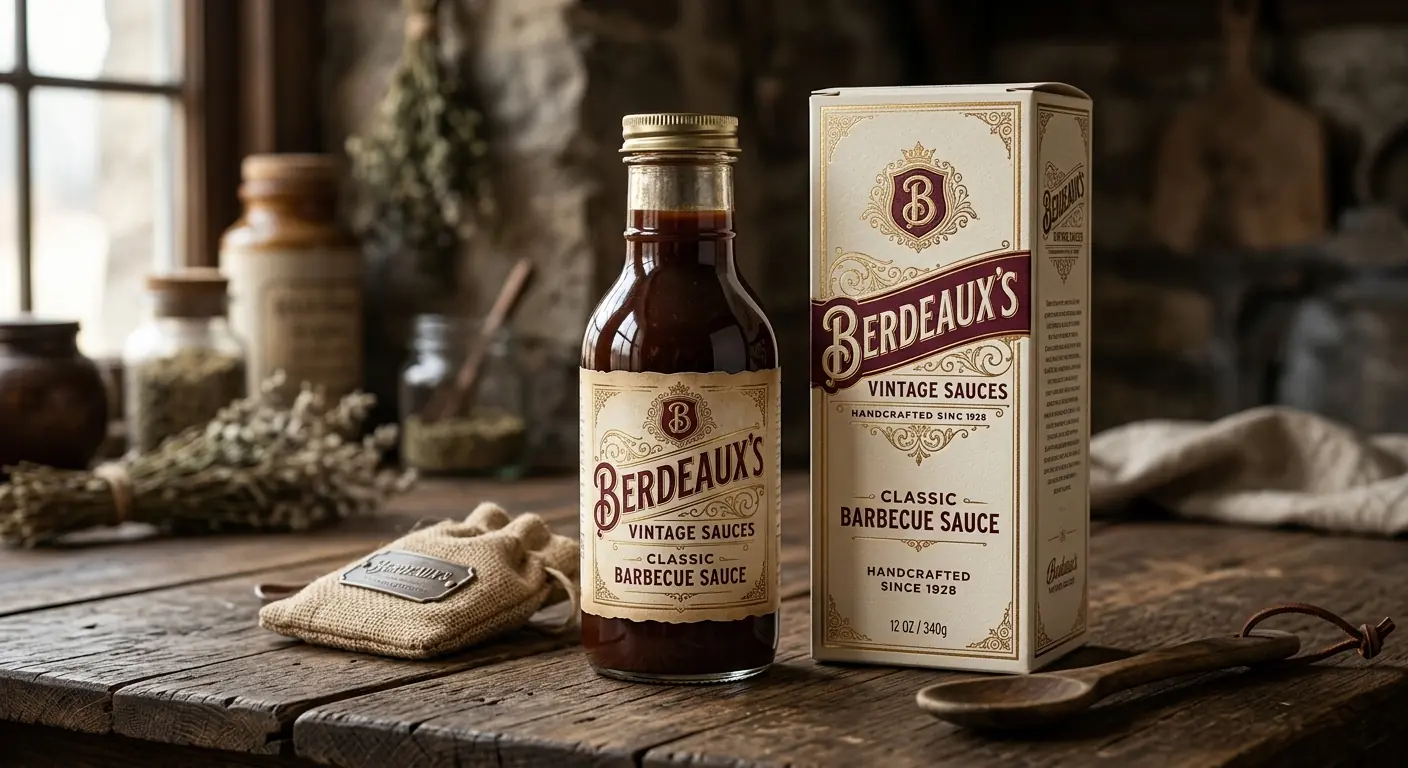
Berdeaux’s vintage sauces packaging is an interesting topic for businesses that want to combine traditional sauce presentation with protective paperboard packaging. Vintage style sauce packaging often features classic typography, warm colors, decorative labels and cardboard boxes that create a traditional appearance. The packaging should look attractive, but it must protect sauce bottles during storage, shipping and retail handling.
Sauce packaging requires careful material selection. Glass bottles can break during transportation, and liquid products need suitable closures to prevent leakage. Corrugated cardboard boxes, folding paperboard cartons and protective inserts can provide additional support around the primary container.
For a product presentation inspired by Berdeaux’s vintage sauces, the outer packaging can follow a traditional design style with printed graphics, product information and organized bottle compartments. The exact commercial packaging specifications of Berdeaux’s products are not established here, so the material and design recommendations below describe suitable packaging approaches rather than confirmed features of its existing packages.
This guide covers vintage sauce packaging materials, custom paperboard boxes, bottle protection, retro printing, packaging costs and practical shipping considerations.
What Is Berdeaux’s Vintage Sauces Packaging?
Berdeaux’s vintage sauces packaging refers here to the packaging concept and presentation associated with Berdeaux’s vintage sauce products. From a packaging perspective, the focus is on protecting sauce containers and presenting them through traditional visual design.
A complete sauce packaging system may include a glass bottle, closure, product label, paperboard carton and corrugated shipping box.
The bottle serves as the primary container, and the paperboard box provides external protection and space for branding.
Why Vintage Sauce Packaging Matters
Packaging has a direct influence on how customers recognize and handle a sauce product. A traditional visual style can communicate a sense of heritage, familiar flavors and classic food presentation.
Good packaging should provide more than decorative appeal. It must support safe handling and product identification.
Important benefits include:
- Protection for glass sauce bottles.
- Attractive retail presentation.
- Space for product and ingredient information.
- Better organization during transportation.
- Convenient storage and product grouping.
- Reduced contact between individual bottles.
For sauce products sold in glass containers, protective paperboard packaging is particularly useful.
Materials Used in Vintage Sauces Packaging
Paperboard packaging materials are available in different grades and constructions. The correct material depends on bottle weight, package dimensions and transportation requirements.
1. Corrugated Cardboard
Corrugated cardboard is commonly used for shipping sauce bottles in bulk.
It contains a fluted paper layer between linerboards, providing cushioning and compression resistance.
Corrugated boxes can accommodate multiple bottles with internal dividers.
For heavier glass bottles, stronger corrugated board grades may be required.
2. Kraft Paperboard
Kraft paperboard provides a natural brown appearance that works very well with vintage packaging designs.
Its earthy surface can complement traditional typography and muted printed colors.
Kraft cartons may be used for secondary packaging, depending on the bottle size and structural requirements.
3. Folding Paperboard Cartons
Folding cartons are suitable for individual sauce bottles and retail gift packaging.
They can be manufactured using solid paperboard with printed artwork and suitable finishing.
Folding cartons provides a convenient outer surface for product information and decorative graphics.
4. Recycled Paperboard
Recycled paperboard can be used in certain secondary packaging applications.
It may be suitable for decorative cartons, protective sleeves and selected box structures.
Material quality and food packaging suitability should be checked according to the intended use.
Types of Berdeaux’s Vintage Sauces Packaging Boxes
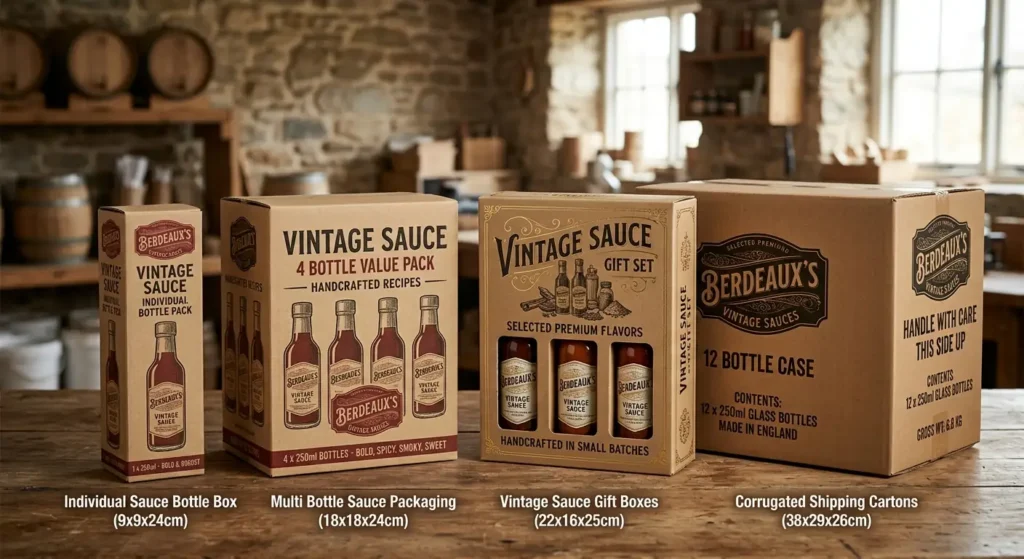
Different paperboard box styles can be considered for vintage sauce products.
Individual Sauce Bottle Boxes
Individual bottle boxes hold one sauce container.
They may include a fitted paperboard insert that keeps the bottle centered inside the carton.
This packaging format is suitable for retail presentation, promotional products and gift packaging.
Multi Bottle Sauce Packaging
Multi bottle boxes hold two or more sauce bottles together.
Corrugated dividers can separate containers and reduce glass contact during transportation.
These boxes are useful for variety packs and promotional sauce collections.
Vintage Sauce Gift Boxes
Gift packaging may use printed rigid paperboard boxes or folding cartons with decorative artwork.
A traditional color scheme can give the package a classic appearance.
Protective inserts should hold the bottles securely and prevent unnecessary movement.
Corrugated Shipping Cartons
Shipping cartons are used to transport sauce bottles from production facilities to distributors and retailers.
They should be selected according to bottle weight, stacking conditions and expected shipping impacts.
Vintage Packaging Design and Visual Appearance
The visual style of vintage sauce packaging often relies on traditional printing elements.
Classic Typography
Serif fonts, decorative lettering and traditional label arrangements are common features of vintage inspired packaging.
Typography should remain readable, particularly for product names and required information.
Traditional Color Combinations
Common vintage color choices include:
- Dark red and cream.
- Brown and beige.
- Forest green and ivory.
- Black and antique gold.
- Mustard yellow and dark brown.
These colors can be applied to printed paperboard cartons and bottle labels.
Decorative Illustrations
Vintage sauce packaging may include illustrated ingredients, ornamental borders and traditional graphic patterns.
Artwork should support the product identity without interfering with mandatory label information.
Matte and Textured Finishes
Matte coatings and textured paperboard surfaces can provide a traditional appearance.
Finishing materials should be selected according to print quality, handling requirements and recycling considerations.
Packaging for Different Sauce Products
Berdeaux’s product history includes steak sauce and barbecue sauce recipes. The business describes a family recipe tradition associated with earlier restaurant operations in Alabama. These product categories provide useful examples for examining vintage sauce packaging requirements.
Steak Sauce Packaging
Steak sauce packaging needs a suitable primary container, dependable closure and readable product label.
Individual paperboard cartons can protect the bottle from surface contact during retail handling. Corrugated inserts provide additional protection for shipping.
Barbecue Sauce Packaging
Barbecue sauce may be sold in different bottle sizes and package quantities.
Custom corrugated boxes can accommodate individual bottles or grouped products. The carton should be selected according to filled bottle weight and distribution conditions.
Gourmet Sauce Gift Packaging
Gift sets can combine multiple sauce varieties in a decorative paperboard box.
A fitted insert helps keep each bottle in position. Printed exterior graphics can create a consistent vintage appearance across the complete package.
How to Protect Glass Sauce Bottles During Shipping
Glass bottle protection is an important part of sauce packaging. A decorative carton alone may not provide sufficient cushioning for parcel transportation.
Use Protective Paperboard Dividers
Corrugated dividers separate bottles inside a shipping box.
They help reduce direct contact between glass surfaces and limit movement during transportation.
Add Cushioning Around Bottles
Paper cushioning, molded pulp inserts and corrugated protective pads can support glass containers.
The cushioning material should be selected according to bottle weight and the expected shipping environment.
Choose the Correct Box Size
A box that is too large allows excessive product movement.
A very tight carton may leave insufficient room for cushioning. Proper internal dimensions help balance protection and material use.
Seal the Shipping Carton
Strong carton sealing tape and suitable closures help keep the package secure.
For heavy shipments, the packaging design may require additional reinforcement.
Custom Printing Options for Vintage Sauce Boxes
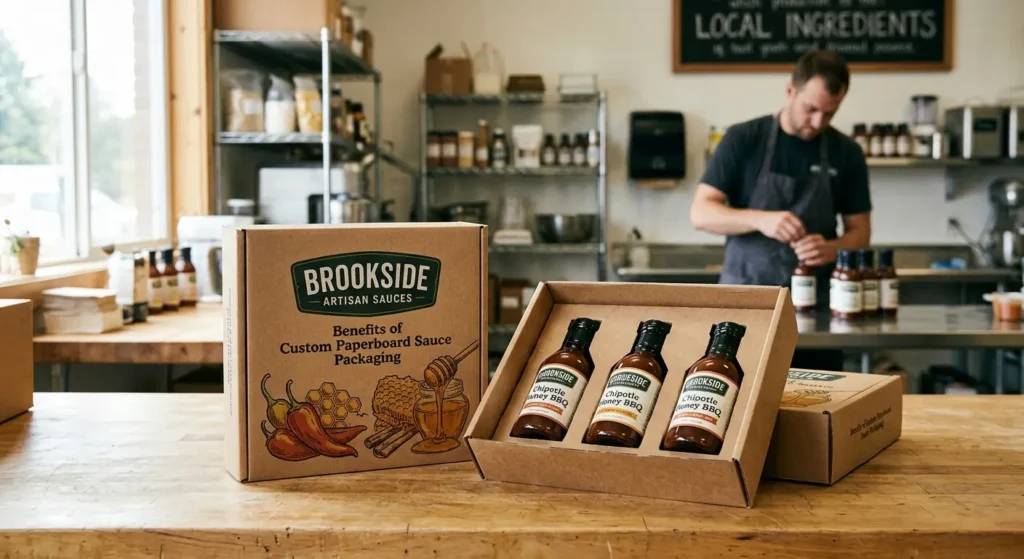
Custom printing gives sauce packaging a more recognizable appearance.
Flexographic Printing
Flexographic printing is commonly used for corrugated shipping boxes.
It can reproduce logos, product names and basic decorative artwork at commercial production volumes.
Offset Printing
Offset printing is suitable for detailed graphics on folding cartons and printed paperboard surfaces.
It can produce traditional illustrations, decorative typography and detailed color combinations.
Digital Printing
Digital printing may be suitable for smaller packaging quantities or artwork that changes between sauce varieties.
It can reduce certain setup requirements for limited production runs.
Decorative Finishing Options
Popular finishing choices include:
- Matte coatings for a softer printed appearance.
- Embossed lettering for raised decorative details.
- Spot gloss for selected design elements.
- Textured paperboard for traditional presentation.
- Printed interior panels for gift packaging.
The selected finish should match the intended carton material and handling requirements.
Food Safety and Labeling Requirements
Sauce packaging must support product safety and comply with applicable food packaging regulations.
Food Contact Materials
The sauce bottle and any material directly contacting the product must be suitable for the intended food contact conditions.
Ordinary paperboard cartons are commonly used as secondary packaging rather than direct liquid containers.
Bottle Closure Protection
Caps and seals should be compatible with the sauce formulation and filling process.
Leakage can damage paperboard cartons and create problems during shipping.
Product Label Information
Food labels may require:
- Product identity.
- Ingredient information.
- Net quantity.
- Allergen declarations where applicable.
- Manufacturer or distributor information.
- Nutrition information where required.
- Lot identification and appropriate storage instructions.
The exact requirements depend on the product and applicable regulations.
Benefits of Custom Paperboard Sauce Packaging
Custom paperboard packaging offers practical benefits for vintage sauce products.
Better Product Presentation
Printed cartons can complement traditional bottle labels and create a consistent appearance.
This can be useful for gift sets, retail displays and promotional packaging.
Improved Shipping Protection
Corrugated paperboard and suitable protective inserts help reduce bottle movement.
The packaging provide additional support around fragile glass containers.
Affordable Bulk Packaging
Paperboard cartons are available in different grades and production quantities.
Bulk orders may reduce the average packaging cost, depending on design and material specifications.
Convenient Storage
Many folding cartons and corrugated boxes can be supplied flat before assembly.
This reduces the amount of storage space needed at packaging facilities.
Sustainable Vintage Sauce Packaging
Paperboard packaging offers opportunities to reduce unnecessary material use.
Recyclable Paperboard
Many ordinary corrugated boxes and folding cartons are accepted by paper recycling programs.
Recycling availability depends on local facilities, coatings and contamination.
Recycled Fiber Materials
Recycled paperboard can be considered for suitable secondary packaging applications.
Packaging manufacturers should review structural strength and intended use before selecting recycled materials.
Reduced Packaging Waste
Custom carton dimensions can reduce unused space and unnecessary cushioning.
Material reduction should not compromise bottle protection.
How Much Does Vintage Sauce Packaging Cost?
Vintage sauce packaging prices depend on material grade, carton dimensions, printing and production quantity.
A simple kraft paperboard carton may cost less than a rigid gift box with decorative finishing.
Corrugated shipping boxes with protective dividers require additional material and assembly.
Main Cost Factors
- Paperboard thickness and construction.
- Number of bottles per package.
- Custom box dimensions.
- Printing colors and artwork coverage.
- Protective inserts and dividers.
- Decorative finishes.
- Order quantity and shipping costs.
Businesses should compare total packaging expenses, including damaged product replacements.
How to Choose the Right Sauce Packaging Supplier
Choosing a packaging manufacturer requires reviewing structural design, material quality and printing capabilities.
Review Paperboard Quality
Ask about available corrugated grades, folding carton materials and protective inserts.
Request Packaging Samples
Sample cartons should be tested with actual filled sauce bottles.
This helps identify movement, weak corners and insufficient cushioning.
Check Printing Capabilities
The supplier should be able to reproduce the intended vintage artwork with consistent colors and readable text.
Test Shipping Performance
Packaging trials may include drop, vibration and compression testing.
Relevant ASTM or ISTA procedures can help evaluate performance under representative transportation conditions.
Common Vintage Sauce Packaging Mistakes
Some packaging designs focus heavily on appearance without providing sufficient bottle protection.
Common mistakes include:
- Using weak paperboard for heavy glass bottles.
- Leaving excessive empty space inside cartons.
- Selecting unsuitable bottle dividers.
- Using decorative text that is difficult to read.
- Ignoring leakage protection.
- Choosing cartons without shipping tests.
- Applying finishes that interfere with recycling.
These problem can increase product damage and packaging expenses.
Final Thoughts on Berdeaux’s Vintage Sauces Packaging
Berdeaux’s vintage sauces packaging provides a useful subject for examining traditional food branding and protective paperboard packaging.
Corrugated shipping boxes, kraft cartons, folding paperboard packaging and protective bottle inserts can serve different functions throughout sauce distribution.
For vintage sauce products, traditional visual design should work together with practical packaging performance. Decorative printing, readable labels and suitable protective materials all contribute to the finished package.
A well planned paperboard packaging solution can support safer bottle transportation, attractive retail presentation and more affordable packaging operations.
Frequently Asked Questions About Berdeaux’s Vintage Sauces Packaging
What is Berdeaux’s Vintage Sauces packaging?
It refers to packaging associated with Berdeaux’s vintage sauce products. From a paperboard packaging perspective, relevant formats include individual bottle cartons, gift boxes and corrugated shipping containers.
What material is best for vintage sauce packaging?
Corrugated cardboard is suitable for many shipping applications. Kraft paperboard and folding cartons can be considered for retail presentation, depending on bottle weight and packaging requirements.
Can vintage sauce boxes be customized?
Yes. Custom paperboard boxes can include printed artwork, decorative typography, special dimensions and protective bottle inserts.
Are corrugated boxes suitable for glass sauce bottles?
Yes. Properly designed corrugated boxes with protective dividers and cushioning can support glass bottle shipping.
What colors work well for vintage sauce packaging?
Cream, brown, dark red, forest green and antique gold are common options for traditional packaging designs.
Can sauce gift boxes hold multiple bottles?
Yes. Custom gift boxes can include fitted paperboard inserts that separate and support multiple bottles.
Is paperboard sauce packaging recyclable?
Many paperboard cartons can be recycled through suitable collection programs. Recycling depends on coatings, material composition and local acceptance.
How can sauce packaging costs be reduced?
Businesses can optimize box dimensions, compare paperboard grades, simplify printing and order suitable production quantities.