Foodstuff packaging does much more than hold a product on a store shelf. It protects food during handling, carries product information and makes storage easier. For bakeries, restaurants, confectioners and packaged food producers, paperboard offers a practical balance of structure, printable space, and convenience.
The right carton starts with the food inside it. Cookies, frozen meals, chocolate and greasy takeout foods create different packaging demands. A successful paperboard package matches those demands without adding unnecessary material or making the box difficult to use.
What Is Foodstuff Packaging?
Foodstuff packaging refers to containers and protective materials used for food products. Paperboard versions include folding cartons, food trays, bakery boxes, sleeves and compartment boxes.
Some paperboard packages touch food directly. Others surround a sealed pouch, wrapped portion or separate container. That distinction affects material selection, barrier requirements and the documentation needed from suppliers.
Primary and Secondary Packaging
Primary packaging directly contains or contacts the food. A suitable paperboard tray holding a pastry is one example.
Secondary packaging surrounds the primary package. A cereal carton containing a sealed inner bag provides structure, printed information and shelf presentation. The inner bag may supply much of the moisture protection.
Why Paperboard Works for Food Products
Paperboard can be cut, scored, folded and glued into many useful structures. Folding cartons often arrive flat, helping businesses manage storage space before assembly.
Its broad printing surfaces provide room for ingredients, nutrition information, preparation directions and product photography. Different carton dimensions can support portion sizes, gift assortments and family packs.
Protection With Practical Handling
A carton helps protect food from crushing, abrasion and unnecessary handling. Inserts and partitions can separate delicate items or prevent contact between decorated surfaces.
A well fitted insert keep individual portions from sliding around. That is really useful for cupcakes, chocolates and bakery gift sets, where appearance affects the customer’s first impression.
Convenience for Customers
Opening tabs, carrying handles and reclosable flaps can make a package easier to use. These features should suit the product and its expected storage period.
A reclosable flap does not automatically create an airtight seal. Foods sensitive to moisture or oxygen may still need an appropriate inner package.
Choosing Paperboard for Foodstuff Packaging
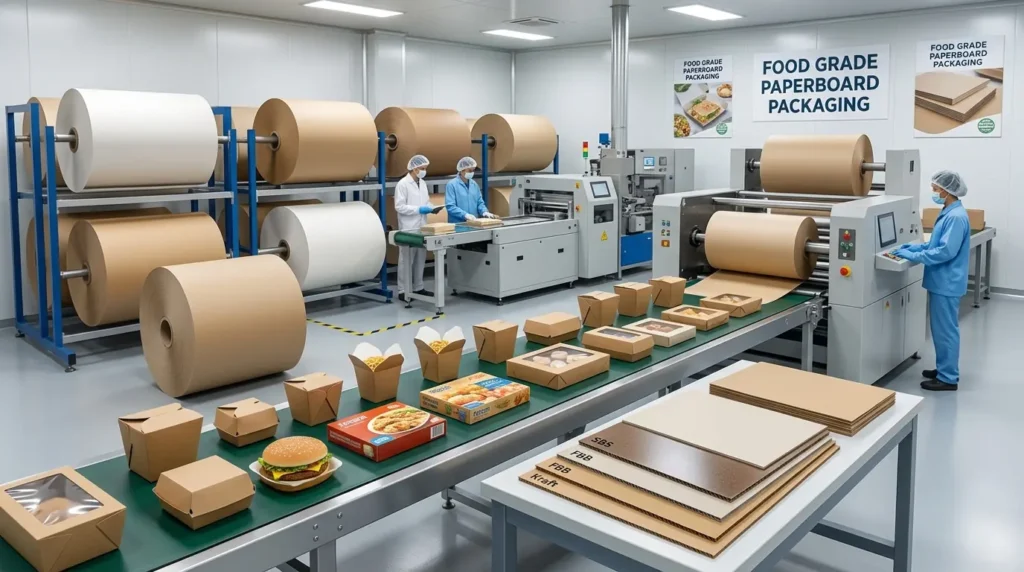
Board selection involves more than color or thickness. Product weight, food composition, storage temperature, printing needs and contact conditions all influence the specification.
Solid Bleached Sulfate Board
Solid bleached sulfate, commonly called SBS, provides a white surface suitable for detailed graphics. It is used for many folding carton applications, including food packaging.
The selected grade and complete packaging construction must suit the intended food contact conditions. A white appearance alone does not establish suitability.
Kraft Paperboard
Kraft paperboard offers a natural brown appearance and useful structural options. It can suit bakery cartons, sleeves and certain foodservice packages.
Brown board is not automatically untreated, recyclable or appropriate for direct contact. Coatings, additives and the specific grade still need review.
Recycled Paperboard
Recycled paperboard can work well for suitable secondary cartons. Direct food contact applications require evaluation of the fiber source, potential contaminants and any necessary barrier.
Do not assume that recycled board is always unsuitable or always acceptable. Request documentation covering the actual construction and intended use.
Thickness and Stiffness
Caliper describes board thickness. Basis weight describes mass per unit area, often expressed in grams per square meter.
Neither measurement tells the entire performance story. Fiber composition, grain direction, carton dimensions and crease quality affect how a box folds and supports its contents.
Food Contact Safety and Supplier Documentation
The phrase “food grade” is too broad to serve as a complete specification. Packaging suitable for dry crackers may not suit oily pastries, hot food or prolonged refrigerated storage.
US regulations distinguish paper and paperboard components used with aqueous and fatty foods from certain dry food applications. Compliance depends on the substances, limitations and intended conditions of use.
What to Request From a Supplier
Ask for documentation identifying the board, coatings, adhesives and other relevant components. The supplier should explain the food types, temperatures and contact durations covered.
• Intended food contact application
• Applicable regulatory basis
• Restrictions on temperature or contact time
• Barrier and coating specifications
• Material traceability information
• Relevant testing or supporting technical data
A generic certificate should not replace a review of the finished package. Changes in coatings, inks or suppliers may require another assessment.
Migration and Odor Transfer
Migration refers to substances moving from packaging into food. Food composition, contact time and temperature can influence that transfer.
Odor and taste transfer need attention too. Chocolate, tea and other sensitive products may absorb unwanted odors from poorly selected or poorly stored packaging.
Barriers for Moisture, Grease and Oxygen
Untreated paperboard is porous and can absorb liquids. A food package may need a coating, liner or separate inner container to provide the required protection.
Moisture Resistance
Cookies and dry snacks can lose their preferred texture after absorbing moisture. Moist foods can lose water or soften nearby paperboard.
A suitable moisture barrier helps manage that exchange. The required performance depends on the food, surrounding humidity and target shelf life.
Grease Resistance
Butter, oils and sauces can stain a carton and weaken affected areas. Grease resistance should be tested using the actual food at its expected temperature and holding time.
Request current information about grease barrier chemistry. The FDA reports that previously authorized PFAS grease proofing substances are no longer authorized for these food packaging uses. Broad claims about an entire package still need supporting evidence.
Oxygen and Aroma Protection
Nuts, coffee and foods containing fats may need protection against oxygen exposure or aroma loss. Paperboard alone usually cannot provide the barrier needed for a long shelf life.
Technical specifications may include oxygen transmission rate, called OTR, and water vapor transmission rate, called WVTR. These figures need stated test conditions to be useful.
Paperboard Packaging for Different Food Products
Product requirements should guide the carton design. One universal box rarely gives the best result across an entire food range.
Bakery and Confectionery Packaging
Cake boxes need suitable bases, lid clearance and carrying strength. Cupcake cartons benefit from inserts that support portions without damaging frosting.
Chocolate boxes may need partitions, protective wraps and odor control. Doughnut and pastry cartons need suitable resistance to fats and moisture.
Dry Food Cartons
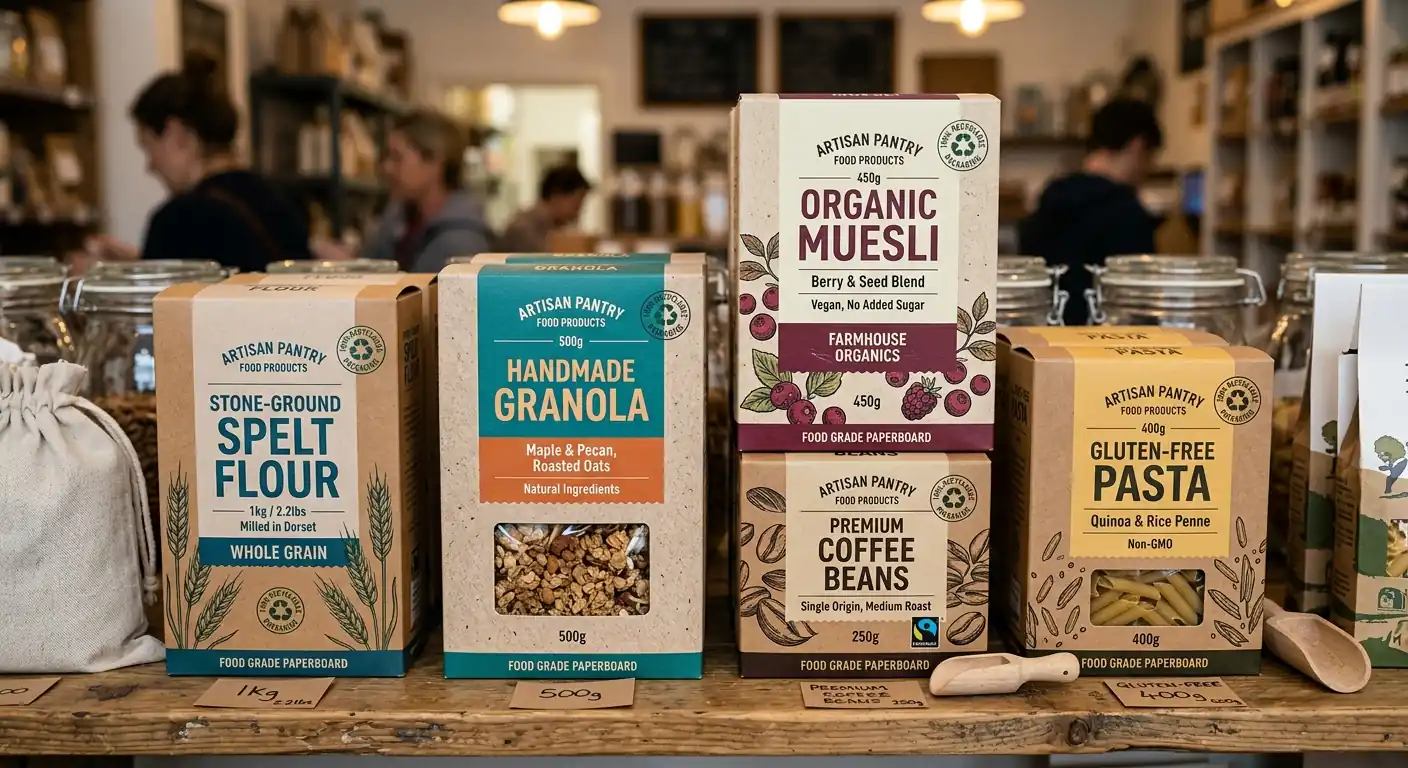
Cereal, pasta, crackers, tea and powdered mixes often use folding cartons around an inner package. The carton supplies structure and information, with the inner package providing the required containment and barrier.
Closure design should match how consumers dispense and store the food. Pour openings need testing with the actual particle size.
Frozen and Refrigerated Food Packaging
Frozen meal sleeves and cartons face condensation, low temperatures and changing humidity. Board and adhesive performance should be checked through the expected storage and handling cycle.
A package that looks fine at room temperature may soften or separate after exposure to moisture.
Takeout and Prepared Foods
Sandwich cartons, snack trays and meal boxes need suitable fit, closure strength and resistance to the food they contain. Ventilation can help release steam from some hot foods.
Vent openings can affect heat retention and leakage. Test the balance rather than adding holes without a clear purpose.
Produce and Specialty Foods
Berry trays and produce sleeves may need ventilation and protection against compression. Gift foods need secure arrangements for jars, wrapped portions or assorted items.
Liquid foods require a suitable liquid containing system. An ordinary folding carton is not a substitute for a sealed liquid carton construction.
Box Styles and Structural Features
Tuck end cartons suit many lightweight packaged foods. Lock bottom and automatic bottom cartons provide other assembly and support options.
Sleeves surround trays or containers, leaving selected areas visible. Glued corner trays and compartment cartons can support ready meals, bakery assortments and foodservice portions.
Windows and Inserts
A window lets customers inspect the food without opening the package. Window film, adhesive and exposed edges need evaluation for the intended application.
Partitions reduce contact between products. Removable inserts may make disposal easier, provided customers receive clear instructions.
Fit and Closure
Measure the filled primary package, including seals, folded edges and irregular shapes. These measurement help prevent cartons that pinch the contents or leave excessive movement.
Test opening force, flap retention and bottom strength. A carton should remain secure without becoming frustrating to open.
Printing and Food Label Information
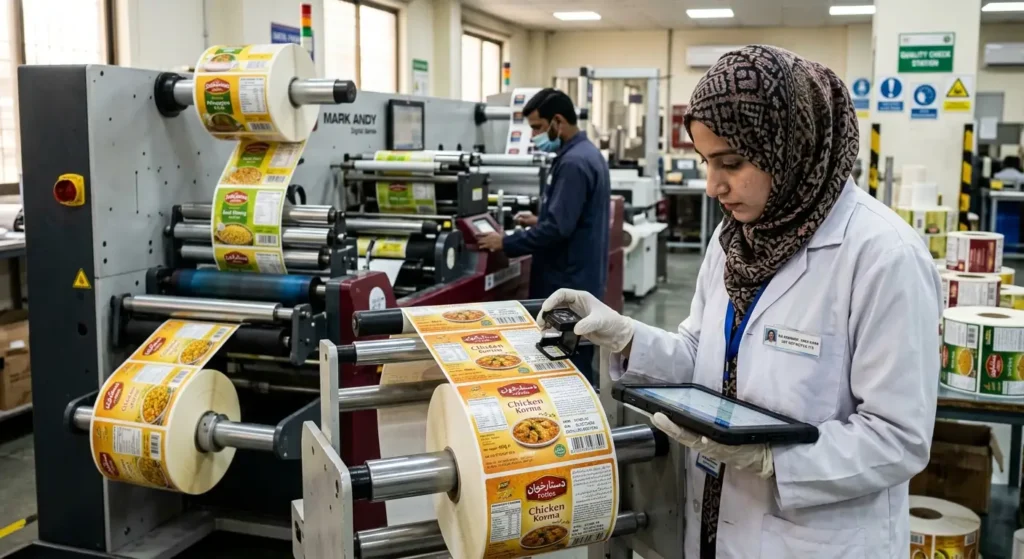
The exterior graphics gives shoppers a quick indication of flavor, quantity and product type. Images should represent the food accurately rather than create unrealistic expectations.
Keep required information readable across folds, seams and curved surfaces. Barcodes need suitable placement and contrast.
Information Planning
Depending on the product and applicable requirements, labeling may include:
- Product identity and net quantity.
- Ingredient information.
- Allergen declarations.
- Nutrition Facts.
- Responsible business information.
- Storage and preparation instructions.
- Lot identification and relevant date information.
Sesame is one of the nine major food allergens recognized under US federal law. Allergen declarations need careful review against the actual recipe and applicable labeling requirements.
Inks and Adhesives
Select inks, varnishes and adhesives suitable for the packaging application. Printing on the outside does not eliminate every potential transfer route.
Finished sheets or cartons can contact one another during stacking. Printing controls, drying and storage practices should address that possibility.
Shelf Life and Temperature Performance
Packaging can support food quality, but shelf life cannot be established from a board specification alone. The recipe, processing method, seals and storage conditions work together.
Run shelf life studies using the finished food and complete package. Check texture, odor, appearance, package integrity and relevant safety measures.
Heating and Freezing
Do not label a carton suitable for microwave or oven use without application specific support. Coatings, adhesives, inks and structural details all matter.
Food contact assessments distinguish conditions such as room temperature storage, refrigeration, freezing and reheating. Suitability for one condition does not establish suitability for another.
Storage, Distribution and Quality Testing
Store empty cartons in a dry, protected area away from strong odors and contamination sources. Keep materials identified by lot and rotate inventory.
Test filled cartons under realistic distribution conditions. Compression, vibration, drops and humidity can reveal weaknesses that a visual inspection misses.
Useful checks include closure performance, grease penetration, coating integrity and barcode readability. Packaging hygiene belongs within the food business’s broader controls for contamination and foreign materials.
Sustainability and Total Packaging Cost
Paperboard can offer useful material recovery options, but coatings, laminates, food residue and local collection systems affect the result. Recyclable and compostable are different claims.
Environmental statements need evidence covering the finished package and relevant disposal conditions. Avoid assuming that paper content makes every carton recyclable everywhere.
Small order often have a higher unit cost. Tooling, printing, assembly labor, storage and damaged food should all enter the price comparison.
An affordable carton is one that performs at a practical total cost. Reducing board thickness is poor value if more food gets crushed.
Questions About Foodstuff Packaging
Can All Paperboard Touch Food Directly?
No. Direct contact suitability depends on the material, food type and conditions of use. Obtain documentation for the actual application.
Is Paperboard Food Packaging Waterproof?
Ordinary paperboard is not waterproof. Suitable barriers or inner containers may be needed for moist foods and liquids.
Can Paperboard Extend Shelf Life?
A complete packaging system can help maintain quality. Shelf life claims need testing with the food, barrier system, closures and intended storage conditions.
What Makes a Good Foodstuff Packaging Specification?
It connects the food, contact conditions, carton structure, barrier needs and distribution route. Physical samples and documented testing turn those requirements into a package that works.