Paperboard packaging does several jobs before a customer opens it. It holds the product, provides space for useful information, supports retail presentation, and helps protect goods during handling. For American businesses, the right carton can make storage, packing and distribution easier without adding unnecessary material.
A good container and packaging decision starts with the product itself. Weight, shape, moisture exposure, sales channel, and shipping conditions all affect the specification. A small skincare carton and a frozen food sleeve may look similar on paper, yet their material requirements can be very different.
What Is Paperboard Container and Packaging?
Paperboard is a thick paper material used to produce folding cartons, sleeves, trays, partitions and certain rigid boxes. It provides stiffness and a printable surface at a relatively low weight. Its performance depends on fiber composition, thickness, construction, coatings, and the direction of the fibers.
A container holds or surrounds a product. Packaging includes the wider system of containers, inserts, closures, labels and shipping protection. One paperboard carton can serve several functions, but its role must be clear before production begins.
Primary, Secondary, and Transport Packaging
Primary packaging directly contains the product, such as a paperboard food tray with an appropriate barrier. Secondary packaging groups or surrounds primary containers, such as a printed carton around a lotion bottle. Transport packaging supports movement through warehouses and delivery networks.
This distinction matters for container packaging design. A retail carton around a glass jar provides presentation and some separation, but it may still need a corrugated shipping box and protective inserts for parcel delivery.
Types of Packaging Containers Made From Paperboard
Folding Cartons
Folding cartons are printed, cut, creased and folded into shape. Many arrive flat, reducing storage space before filling. They suit personal care products, dry foods, small accessories, supplements, and numerous retail goods.
Common styles include:
- Straight tuck cartons with top and bottom closures facing the same direction.
- Reverse tuck cartons with closures facing opposite directions.
- Automatic bottom cartons that form a base during assembly.
- Sleeves that slide around trays, containers or grouped products.
- Window cartons that display part of the contents.
The closure affects assembly speed, product access, and bottom support. A tuck flap may work for a lightweight item; a heavier jar may need a different base construction.

Rigid Boxes and Paperboard Tubes
Rigid boxes use thicker board covered with printed or decorative paper. They hold their shape and suit gift sets or products needing a substantial presentation. Their assembled volume can increase storage and freight expenses.
Paperboard tubes provide a cylindrical format for selected dry goods, gifts, and personal care applications. Liners, end closures and barrier layers determine what they can hold. A paper tube is not automatically suitable for liquids.
Corrugated Shipping Containers
Corrugated board contains a fluted layer bonded between liners. Folding carton paperboard usually lacks that fluted structure, so the two materials should not be treated as interchangeable.
For online orders, combining a printed folding carton with a suitable corrugated shipper often provides a practical balance. The inner carton presents the product, and the outer container handles distribution demands.
Choosing the Right Container Packaging Material
Common Paperboard Grades
Solid bleached sulfate, commonly called SBS, offers a white surface often selected for detailed graphics and retail cartons. Coated unbleached kraft, or CUK, has a brown fiber base and is used where strength and appearance requirements support that choice.
Coated recycled board, or CRB, contains recovered fiber and serves many dry product applications. Folding boxboard, or FBB, commonly uses multiple layers with mechanical pulp in its middle. Grade names alone do not establish performance; request the actual mill specification.
Thickness, Stiffness and Fiber Direction
Caliper measures board thickness. In US purchasing, points are common, with one point representing one thousandth of an inch. Basis weight measures mass over an area and answers a different question.
Two boards with similar thickness can behave differently during folding or stacking. Fiber direction affects stiffness and crease behavior. The carton dimensions is another factor in panel strength, particularly across broad unsupported surfaces.
Coatings and Barriers
Unprotected paperboard absorbs moisture and can lose stiffness. Grease, condensation, abrasion and product ingredients may require coatings or separate liners. Select the barrier around the real exposure conditions.
A coating that helps resist moisture may affect recycling acceptance or repulping performance. Ask about the finished structure, including films, adhesives, windows, and closures. The substrate alone does not tell the whole story.
Container Packaging for Food
Match the Material to the Food
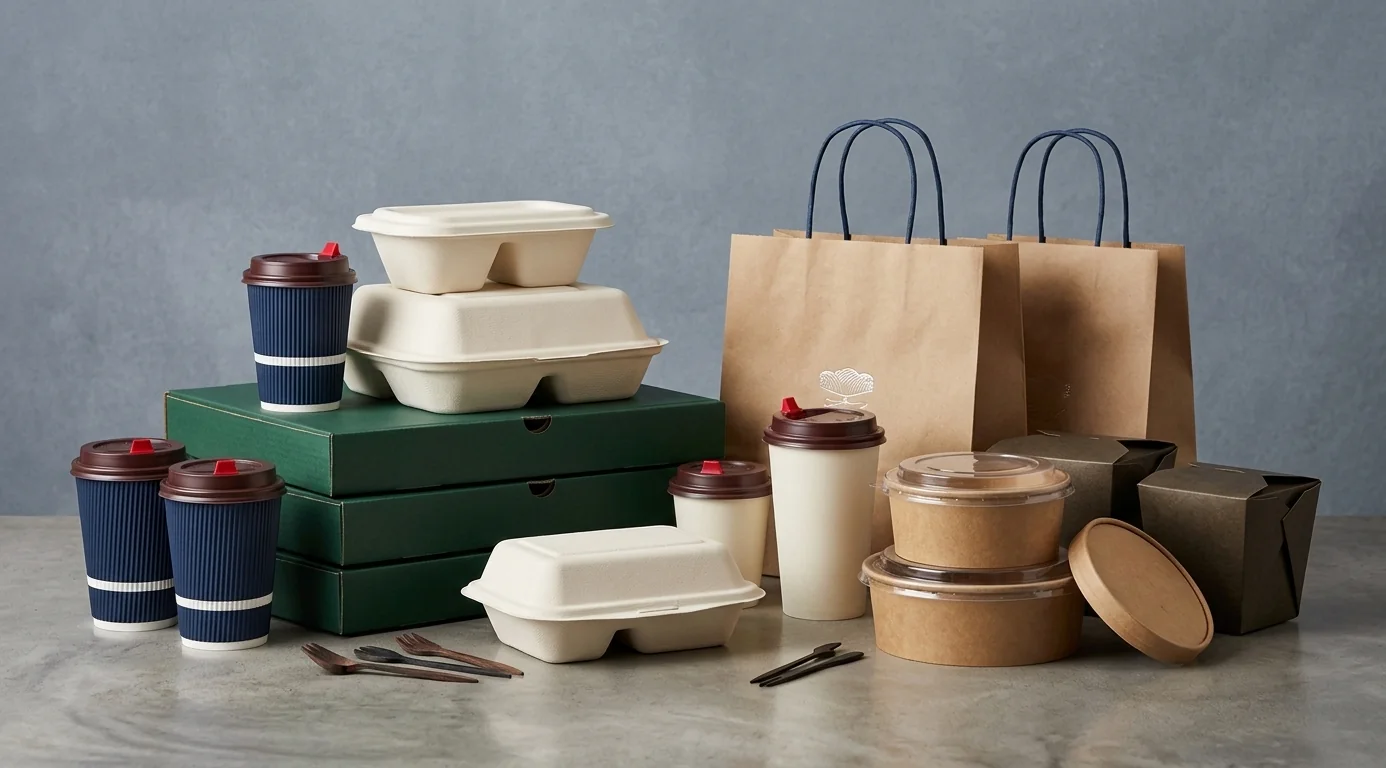
Types of containers for food packaging include bakery cartons, cereal boxes, frozen meal sleeves, food trays and takeout cartons. Dry crackers, greasy pastries, chilled meals, and hot foods create different contact conditions.
Request documentation covering the intended food, temperature and contact duration. Federal provisions address paper and paperboard components for aqueous and fatty foods under 21 CFR 176.170, with a separate provision for specified dry food uses under 21 CFR 176.180. Suitability depends on the applicable conditions.
Food Safety and Practical Performance
A statement such as “food grade” needs supporting detail. Ask which components contact the food and what documentation supports their use. Printing inks, adhesives, coatings and recycled fiber sources deserve attention.
Use actual food during performance trials. Check grease migration, condensation, odor transfer, closure security, and holding time. Some carton need a separate liner to provide the required barrier.
For bakery and takeout businesses, ventilation matters too. Trapped steam can soften food and weaken board. A vented structure may help, but it must still contain the product during normal handling.
Containers and Packaging for Cosmetics
Cartons for Bottles and Jars
Bottles and jars packaging supplies frequently require matching paperboard cartons. The bottle contains the formula; the carton provides labeling space, grouping and presentation. Inserts or partitions can reduce movement inside the package.
For a 4 oz bottle or 4 oz jar, measure the filled container with its closure attached. Fluid capacity does not establish external dimensions. Two bottle with the same stated capacity can require different cartons.
Inserts and Product Protection
Folded paperboard inserts can support a neck, separate accessories or hold a jar away from the carton walls. Their shape should accommodate manufacturing tolerances and normal packing variation.
Compare box and foam packaging with fiber based options using actual product tests. A paperboard insert may work for one application and provide insufficient cushioning for another. Glass products still require suitable protection throughout shipping.
Box and Packaging Design That Works
Structure Before Artwork
Start with internal dimensions, product orientation, closure style and packing sequence. Leave working clearance without allowing excessive movement. An oversized carton wastes material and can require extra filler.
A container packaging mockup helps reveal assembly problems before printing. Physical samples gives the packing team a chance to check fit, opening resistance and shelf presentation. Test the filled sample, not an empty shell.
Printing and Finishing
Offset printing suits many folding carton applications. Digital printing can be useful for smaller quantities or frequent artwork changes. Flexographic printing serves selected packaging structures and production setups.
Ask about color tolerances, scuff resistance, varnishes, embossing and foil applications. Finishes should support the product and budget. A very attractive surface that scratches during packing creates extra work and rejected stock.
Useful Labeling Space
Reserve room for product identity, quantity statements, instructions, warnings and other applicable information. Keep folds and glued seams away from text that customers must read. Barcode placement needs adequate space and testing on the finished carton.
A Packaging Manager may focus on assembly speed, and a marketing manager may focus on appearance. Both need to approve the same sample. That really helps prevent late artwork changes.
Buying Container and Packaging Supply in the USA
Compare Suppliers on the Same Specification
A container and packaging company should quote against a written specification. Include dimensions, board grade, caliper, print coverage, finishes, quantity and delivery destination. Ask whether tooling and freight appear separately.
Useful questions include:
- What is the minimum order quantity?
- Who owns the cutting die and approved artwork?
- What quantity variation is permitted?
- How are damaged or incorrect cartons handled?
- What are the sample and production lead times?
- Can repeat orders use the same material specification?
The supplier provide more useful pricing when these details are settled. Vague requests often produce quotes that look comparable but cover different materials or services.
Local Supply and Regional Delivery
US buyers may search for container and packaging supply in Idaho, Utah or Kentucky. Businesses near Boise, Eagle, Salt Lake City, Louisville and Fairdale may prioritize delivery distance, warehouse access or convenient sample review.
Verify the actual production and shipping locations. A nearby sales address does not establish where cartons are made. Ask about transit time, freight arrangements, storage conditions, and the availability of repeat inventory.
Reviews and Discount Offers
Useful container and packaging reviews discuss order accuracy, material consistency, communication and problem resolution. Look for feedback about products similar to yours. A review about bottles may tell very little about custom paperboard cartons.
A promo code, coupon code, discount code or free shipping offer can reduce an initial bill. Check exclusions, expiration dates, minimum spending and any small order fee. Compare the complete delivered price rather than the advertised discount alone.
Packaging Costs, Machines and Quality Checks
Calculate the Cost Per Usable Carton
Board usage, order volume, printing, tooling and finishing affect the purchase price. Assembly labor, storage, freight, and rejected cartons affect the operating cost. The cheapest unit price can become expensive at the packing table.
For example, a carton costing $0.40 plus $0.10 in allocated freight costs $0.44 before packing labor. Add inserts and expected waste to compare complete options. Affordable packaging should perform at the required level.
Match the Carton to the Packing Process
Manual assembly and an automatic cartoning machine need different checks. Machine feeding depends on board behavior, fold position, glue quality and consistent dimensions. A container packaging machine price alone cannot establish the total project expense.
Request a line trial before committing to a large production run. Product changeovers, operator access and reject rates matter. Packing requirements changes as order volume grows, so leave room for the next production stage.
Check incoming cartons for print defects, damaged edges, poor glue bonds and incorrect counts. Store them away from damp floors and large humidity changes. Test finished shipping packs for the distribution conditions they will face.
Recycling Paperboard Packaging in the United States
Read US Recycling Data Carefully
EPA reported an 80.9 percent recycling rate for paper and paperboard packaging in 2018. That category includes corrugated boxes, which account for much of the recovered material. It does not establish the recycling rate of an individual folding carton or coated food container.
Local collection rules and the complete package construction affect disposal options. Food residue, attached components, and barrier layers can change acceptance. Ask for guidance applicable to the communities receiving the product.

Support Environmental Claims
Recycled content and recyclability describe different attributes. A carton can contain recovered fiber without being accepted by every recycling program. Compostability requires separate evidence and suitable disposal conditions.
FTC guidance calls for qualifying recyclable claims when appropriate facilities are unavailable to at least 60 percent of consumers or communities where the product is sold. Keep claims specific and supported rather than relying on broad environmental promises.
Questions About Paperboard Container and Packaging
What Is the Best Container for Packaging Goods?
The best choice matches product weight, contact conditions, presentation needs and distribution risks. Folding cartons suit many retail products. Parcel shipments often need additional transport protection.
Can Paperboard Hold Liquids?
Certain engineered paperboard structures can contain liquids using suitable barriers and sealed construction. An ordinary folding carton cannot. Confirm compatibility, leakage performance, and intended storage conditions.
Is Box and Bag Packaging a Useful Combination?
Yes. A suitable inner bag can contain food or loose components, with an outer carton providing shape and information. Evaluate both parts for compatibility, cost, opening convenience and disposal.
How Can a Small Business Reduce Packaging Costs?
Start with standard structures, fewer sizes and a clear material specification. Order quantities should match realistic demand. Just removing excess space can reduce material use, filler requirements and storage pressure without sacrificing product protection.