
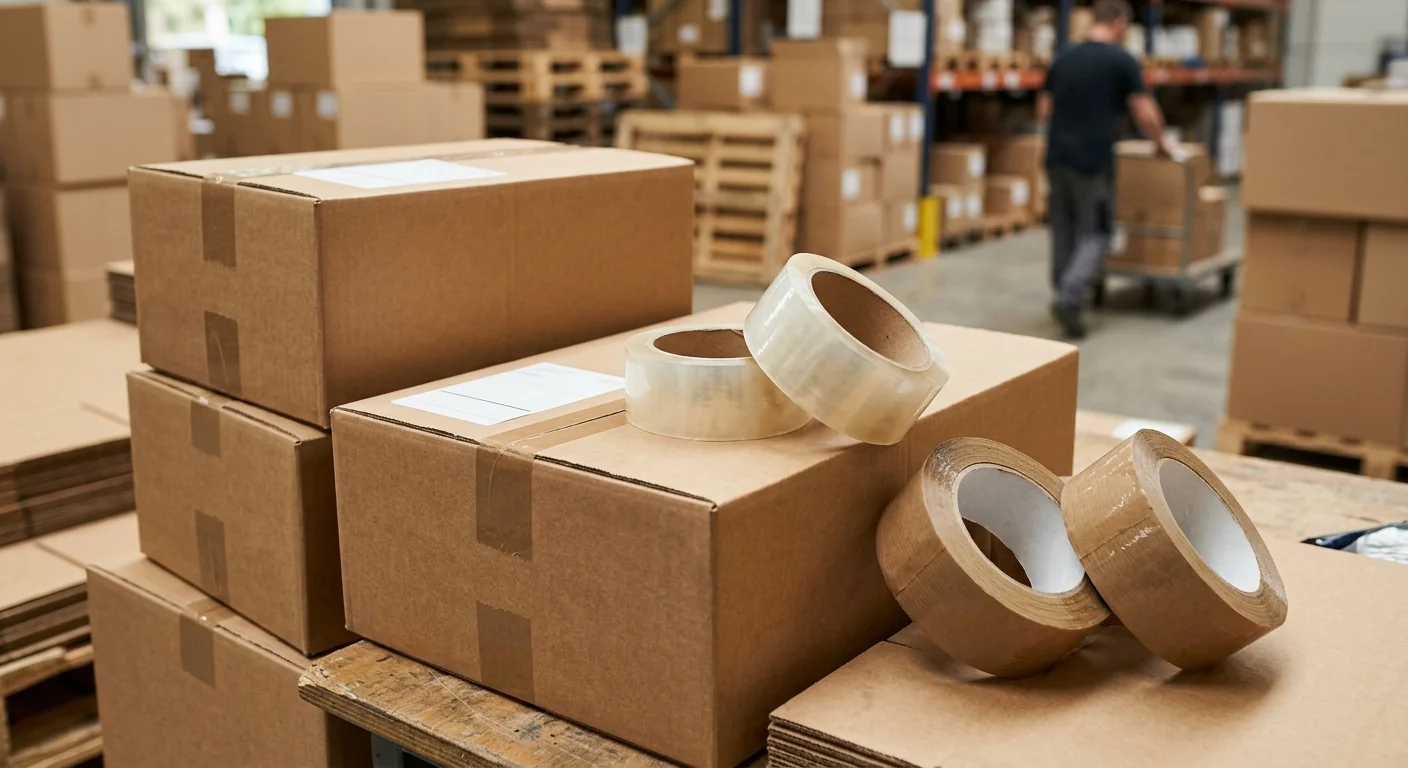
A paperboard package needs a closure that holds through handling, storage, and delivery. Packing tape and packaging tape often describe the same carton sealing product, yet the adhesive, backing and application method can differ greatly. The name on the roll tells only part of the story.
For US businesses and households, the right tape starts with the box surface, packed weight, and shipping conditions. This guide explains the differences between common tape names, the materials inside a roll, and practical ways to seal paperboard packaging without wasting supplies.
1 Packing Tape vs Packaging Tape Explained
Is it called packing tape or packaging tape
Both names are widely used. Packing tape usually refers to tape for closing moving boxes and shipping cartons. Packaging tape is a broader term that can include carton sealing tape, security tape, printed tape and specialty closures.
There is no universal performance difference between packing tape and packaging tape based on the name alone. Compare the product specifications. A thin packaging tape may hold less effectively than a heavy duty packing tape, or the reverse may be true.
Packing tape vs shipping tape and parcel tape
Shipping tape, mailing tape and parcel tape often refer to the same family of box sealing products. Parcel tape is a term frequently used outside the United States. A roll labeled shipping tape is not automatically stronger than one labeled packing tape.
The best packaging tape is the grade that suits your actual carton and distribution route. Adhesion measures attachment to a surface. Tensile strength measures resistance to pulling. Holding ability matters when packed contents push against closed flaps.
Paperboard cartons and corrugated shipping boxes
Solid paperboard is commonly used for folding cartons, gift boxes, and retail packaging. Corrugated fiberboard has a fluted layer between liners and is commonly used for shipping. These materials need different closure decisions.
A printed folding carton may have a varnish, coating or laminate that changes adhesion. Tape can damage graphics during removal. For shipping, place a delicate retail carton inside a suitable corrugated outer box with cushioning rather than expecting tape to make the retail carton strong enough.
Packing tape and packing paper serve separate jobs. Tape closes seams. Packing paper wraps products and fills empty space. Very heavy items need suitable bracing and a properly rated box, not just extra paper.
2 Tape Materials Types and Strength
What packing tape is made of and how it works
Common clear or brown packing tape uses biaxially oriented polypropylene film, often shortened to BOPP, with an adhesive coating. Polyester film and paper backings are other options. Manufacturing includes preparing the backing, applying adhesive, and converting wide material into finished rolls.
Pressure sensitive tape bonds when firm pressure brings the adhesive into contact with the carton. It does not require water. Water activated paper tape uses moisture to activate its adhesive before application. Pressing it against compatible paper fibers produces a strong bond.
Tape color does not establish strength. Clear, brown, beige, white and colored products can use different adhesive formulas. Brown plastic tape is not the same material as brown kraft paper tape.
Acrylic and hot melt packaging tape
Acrylic tape is often selected for storage applications and resistance to aging. Hot melt tape is often selected for its immediate grip during carton sealing. Tape formulated for highly recycled cartons can help with challenging liner surfaces.
Natural rubber adhesive is another option for demanding bonding needs. Adhesive families contain different grades, so avoid treating every acrylic or rubber product as identical. Application temperature and service temperature are separate ratings: one concerns applying the tape, the other concerns conditions after bonding.
Paper tape filament tape and security tape
Water activated kraft tape is available with or without reinforcement. Reinforced grades commonly contain glass fibers for added strength. Their bond can leave visible fiber damage when removed, which helps reveal opening but does not prevent every form of tampering.
Filament tape contains reinforcing fibers and can support bundling or carton reinforcement where the packaging specification calls for it. It does not replace a suitable shipping carton. Security tape can display an opening message or pattern after removal.
Paper tape with a pressure sensitive adhesive needs no water dispenser. It behaves differently from gummed tape. Cloth tape, electrical tape, painter tape and drywall joint tape are separate products; their intended tasks do not establish suitability for parcel sealing.
Packing tape widths thickness and roll dimensions
Common carton tape widths are about 2 inches and 3 inches. Some nominal 2 inch rolls measure 1.88 inches. Thickness is often listed in mils, with one mil equal to one thousandth of an inch. Total tape thickness includes backing and adhesive.
A thicker film can resist tearing, yet thickness alone cannot predict adhesion. Compare backing material, adhesive coat, tensile data and carton recommendations. Do not assume a steel adhesion test guarantees the same result on recycled paperboard.
The roll dimensions is worth checking before buying. Width, length, core diameter, and outside diameter must fit the dispenser. A longer machine roll may be unsuitable for a hand tape gun.
3 How to Use Packing Tape for Shipping and Moving
Prepare the box and use the H method
Use a dry carton with intact edges and flaps that meet without bulging. Brush away loose dust. Avoid applying tape over oily surfaces or loose layers of old tape. Keep cartons and rolls within the product application temperature range.
US postal guidance recommends tape about 2 inches wide, reinforcement of seams, and suitable clear, brown, reinforced or paper packaging tape. It excludes masking tape and ordinary cellophane tape for this task. [1]
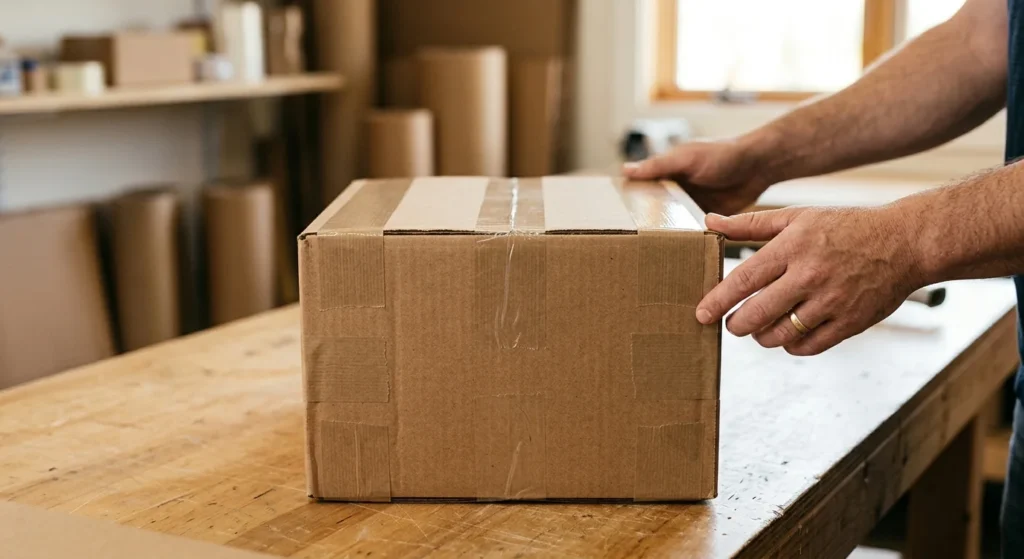
For a conventional corrugated box, the H method covers the center seam and the two edge seams on each face that needs sealing:
1. Close the bottom flaps and center one strip over the main seam.
2. Extend the strip onto the end panels according to the packaging specification.
3. Apply two strip across the edge seams to form an H.
4. Pack and cushion the contents, then repeat the pattern on top.
5. Press down the full tape area, especially the ends and corners.
Follow the carton and carrier instructions for the shipment. Avoid stretching tape tightly across a gap. That tension can pull the ends loose. One should check each box flap before the package leaves the packing station.
Tape guns holders and water dispensers
A hand tape dispenser holds the roll, guides application and cuts the strip. Adjustable tension helps control unwinding. Too much resistance can stretch tape or tire the operator. For shared workspaces, quiet unwind tape may make repeated sealing less distracting.
Load the roll according to the dispenser instructions, with the adhesive facing the carton along the application path. Check the roller and cutting blade if tape keeps jamming. A desktop holder suits smaller jobs. A water activated tape dispenser wets and measures gummed strips.
Keep fingers away from cutting blades. Use a carton opener with controlled blade depth to reduce product damage during opening. A packing kit can combine tape, a dispenser, packing paper and labels for a move.
Why packing tape is not sticking
Loose seals can result from dust, moisture, cold application, unsuitable adhesive, insufficient pressure or flaps under strain. Recycled liner texture and surface coatings can change the result. These detail deserve a quick check before adding more tape.
Try a small application trial on the actual carton. Press the tape firmly, wait according to the product guidance, and inspect the ends. Repeat under expected storage conditions. Avoid heating a roll with an open flame or guessing at safe temperature limits.
For shipping labels, keep addresses readable and barcodes unobstructed. Follow the label system instructions before applying clear tape over printed areas. Glare, wrinkles and unsuitable overlays can interfere with scanning. Place decorative tape away from the main label.
How much packing tape per box
Tape use depends on carton dimensions and the closure pattern. For example, take a box measuring 12 inches long by 10 inches wide. Assume each strip extends 3 inches onto the adjoining panels.
One center strip uses 18 inches. Each edge strip uses 16 inches. An H closure uses 50 inches per face, or 100 inches for top and bottom. A 60 yard roll contains 2160 inches, enough for about 21 boxes before allowance for waste. Different carton designs need a different calculation.
4 Buying Storing and Recycling Packaging Tape
Bulk buying quality checks and custom printing
Compare wholesale packing tape by usable length and cost per sealed carton. A pack of 6 short rolls may cost more per yard than fewer long rolls. Cheap tape can become expensive if it requires repeated application or causes sealing delays.
Ask the supplier provide samples and a technical data sheet. Check these details before a bulk order:
- Adhesive and backing suitable for your paperboard surface
- Roll width, length and dispenser compatibility
- Application and service temperature limits
- Shelf life and storage instructions
- Minimum order quantity, lead time, freight and lot consistency
Custom packaging tape with a logo can identify packages and support brand presentation. Confirm print legibility, ink durability and minimum quantities. A QR code needs adequate size and a flat placement; test scanning before production. Product codes identify tape grades, not universal strength classes.
Shelf life heat and yellowing
Packing tape can deteriorate in storage. Adhesive may lose performance, rolls may unwind poorly, and some materials may discolor. There is no single expiration period for every tape. One published acrylic tape specification recommends use within 12 months of shipment, which illustrates why the individual data sheet matters.
Store rolls in their original packaging away from sunlight, moisture and excessive heat. Use older stock first. Check storage temprature before leaving supplies in a garage or delivery vehicle. Yellowing alone does not prove seal failure, and a clear appearance does not prove good adhesion.
Can packaging tape be recycled
Plastic packing tape is usually not accepted as a separate item in curbside recycling. Acceptance of taped paperboard depends on the local program and the tape construction. Paper backing does not automatically make a product recyclable, compostable or biodegradable.
Empty boxes, remove loose packing materials, and follow local preparation instructions. New York City guidance accepts corrugated cardboard and several paperboard box types, illustrating the need to check the rules for the destination community.
Use enough tape for a secure closure without wrapping the entire box unnecessarily. Reducing wasted strips can save supplies and simplify unpacking. It is really a practical place to start.
Common questions about packing tape and packaging tape
Is packing tape good for moving boxes?
Yes, a suitable carton sealing grade works for moving. Match it to packed weight, box condition and storage conditions. Close both the bottom and top securely.
Will packing tape stick to plastic or fabric?
Some grades bond to certain plastics. Fabric is porous and flexible, making results less predictable. Test the exact surface; do not treat a paperboard tape rating as approval for another material.
Can packing tape be used on walls?
It can lift paint or leave adhesive residue. Use a product intended for the wall finish and removal period instead.
Which packing tape is best for shipping?
Choose tape that bonds reliably to your carton, fits your dispenser and withstands the expected handling and temperatures. A secure package comes from the full system: suitable paperboard packaging, proper cushioning, and a tested closure.