Flow wrap packaging is a widely used packaging method for protecting individual products with flexible film. From candy bars and bakery items to medical supplies, personal care products and hardware components, this packaging format helps businesses prepare products for storage, shipping and retail display. It offers practical benefits for manufacturers that need consistent packaging, attractive product presentation and efficient production.
Businesses can use a manual setup, a semi automatic machine or a fully automatic flow wrap packaging machine depending on production volume, product dimensions and budget. The right combination of packaging equipment and film helps reduce material waste, maintain seal quality and support dependable daily operations.
What Is Flow Wrap Packaging?
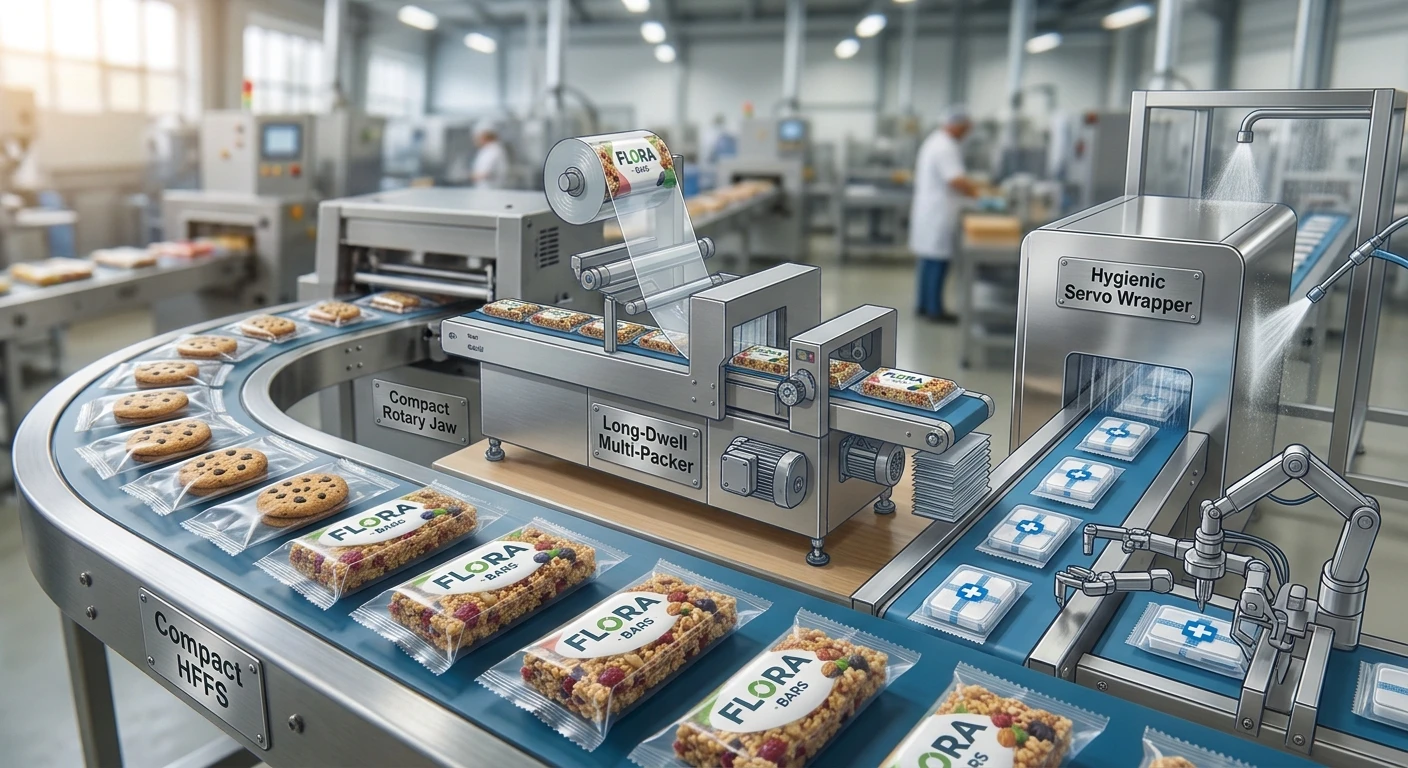
Flow wrap packaging is a process in which a product moves through a packaging machine and gets enclosed in a continuous sheet of flexible film. The machine forms the film around the product, seals the longitudinal seam and closes both ends to create an individual package.
The finished package often resembles a small pillow, which is why manufacturers sometimes call it pillow packaging. The product remains inside a protective film layer that can carry printed branding, product information, barcodes and other retail details.
Common products packaged through this method include:
- Chocolate bars, candies, cookies and snack foods.
- Bread rolls, pastries and other bakery products.
- Soap bars, cosmetic accessories and personal care items.
- Medical devices, disposable supplies and selected healthcare products.
- Stationery, small hardware parts and household accessories.
Flow wrapping works particularly well for products with regular shapes and sizes. Special machine configurations can accommodate irregular products, but their feeding and sealing requirements need closer evaluation.
How Does a Flow Wrap Packaging Machine Work?
A flow wrap packaging machine uses a controlled sequence of product feeding, film forming, sealing and cutting. Automatic systems coordinate these operations to produce individual packages at a consistent rate.
Product Feeding and Film Loading
The process begins when products enter the machine through an infeed conveyor or feeding mechanism. Operators load a roll of packaging film onto the film holder and thread it through the machine according to the equipment instructions.
A product sensor or timing system may control the spacing between products. Correct spacing is important because products placed too close together can interfere with end seals or cause machine stoppages.
Film Forming and Sealing
The packaging film passes through a forming box or forming shoulder, which guides the material around the product. The two film edges meet beneath or behind the product and form a longitudinal fin seal or lap seal.
Rotary sealing jaws or another suitable end sealing system then close the package at both ends. The cutting mechanism separates one finished package from the continuous film tube.
Package Inspection and Collection
Finished packages move onto an outfeed conveyor for collection, inspection or transfer to a cartoning system. Operators can check the seals, printed information, package dimensions and product positioning.
A well adjusted machine produces consistent packages with minimal film waste. Poor temperature settings, incorrect film tension or uneven product spacing can lead to wrinkles, weak seals and damaged packaging.
Types of Flow Wrap Packaging Machines
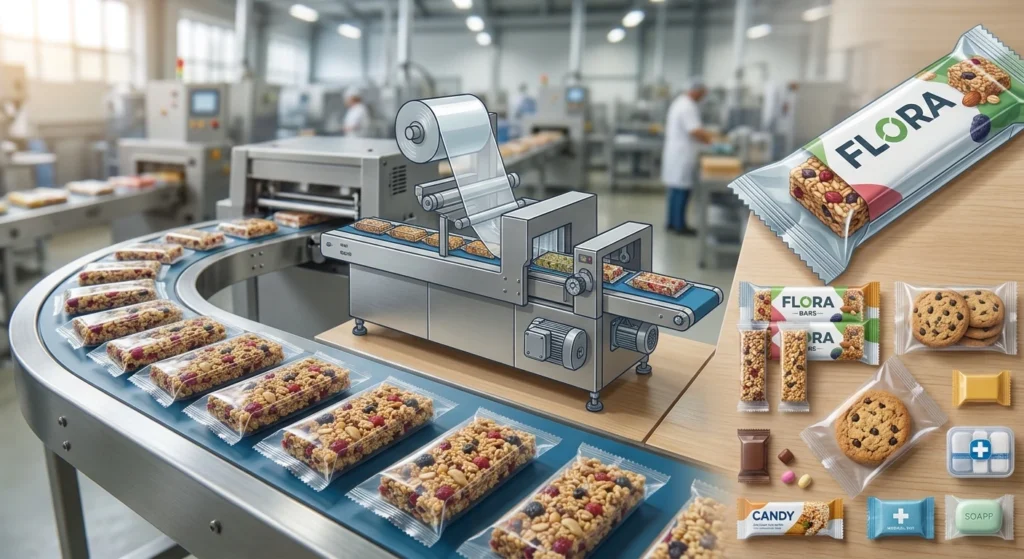
Different production environments require different equipment. Selecting a machine based on actual production needs helps avoid unnecessary spending and operating difficulties.
Horizontal Flow Wrap Packaging Machine
A horizontal flow wrap packaging machine is commonly used for solid products that can travel along a conveyor. Products move horizontally through the film forming and sealing sections.
Typical applications include confectionery, biscuits, bakery products, soap and small consumer goods. Horizontal flow wrapping machines are available in compact configurations for smaller businesses and high speed versions for industrial production lines.
Automatic Flow Wrap Packaging Machine
An automatic flow wrap packaging machine feeds products, forms the film, seals the package and cuts individual units with limited manual intervention. Some systems include automatic product spacing, print registration, film monitoring and production counters.
These machines are useful for factories that process large quantities of similar products. Their actual output depends on product size, film type, package length, sealing requirements and the feeding system.
Semi Automatic and Specialized Machines
Semi automatic equipment may require workers to place products manually or assist with product feeding. This arrangement can suit smaller manufacturers, startup businesses and operations with frequent product changes.
Specialized machines are available for fragile bakery items, multiple product packs, long products and selected food applications. A machine supplier can recommend suitable configurations after reviewing the product sample and production target.
Flow Wrap Packaging Film and Materials
Film selection affects package appearance, seal strength, shelf life and total packaging cost. The material must match the product, machine settings and storage conditions.
Polypropylene Film
Polypropylene film is widely used for snacks, confectionery, biscuits and other retail products. Biaxially oriented polypropylene, commonly called BOPP, offers good clarity, printability and moisture resistance for many applications.
Metallized polypropylene film can provide a stronger barrier against moisture, light and certain gases. Its actual barrier performance depends on the film structure and manufacturing quality.
Polyethylene Film
Polyethylene film is flexible and provides useful sealing characteristics in suitable packaging structures. It is used for selected food products, multipacks and industrial applications.
Different grades of polyethylene offer different strength, flexibility and sealing properties. The film must be compatible with the machine and the intended package design.
Laminated and Barrier Films
Multilayer laminated films combine materials to achieve properties that a single layer may not provide. A structure might combine printability, mechanical strength, sealability and improved barrier protection.
Barrier films are particularly useful for products that are sensitive to oxygen, moisture or light. Food manufacturers should assess shelf life requirements and product safety before selecting a film structure.
Benefits of Flow Wrap Packaging
Flow wrapping offers several practical advantages for manufacturers, retailers and packaging companies.
Production Efficiency
Automatic feeding and sealing can support high production volumes with less repetitive manual work. Machines can produce individual packages continuously when product supply and equipment settings remain stable.
Production efficiency depends on the complete packaging line, not just the advertised machine speed. Frequent product changes, film roll replacement and cleaning can affect actual output.
Product Protection and Shelf Life
The film creates a barrier between the product and its surroundings. Suitable packaging can help protect against dust, handling damage and moisture exposure.
For food products, an appropriate barrier structure and reliable seals can support the intended shelf life. Flow wrapping alone does not guarantee food safety or prevent spoilage. Product formulation, storage conditions and any required gas flushing process remain important.
Branding and Retail Presentation
Printed flow wrap film can display logos, product names, ingredients, barcodes and promotional information. Businesses can select transparent, colored, white or metallized film according to their packaging requirements.
Individual wrapping can make products easier to handle, distribute and display in supermarkets, convenience stores and online order fulfillment operations.
Material and Operating Costs
Flow wrapping can use relatively little packaging material per unit compared with some rigid packaging formats. Actual savings depend on package dimensions, film thickness, product protection requirements and equipment efficiency.
Businesses should compare the total cost per finished package rather than the purchase price of film alone.
Industries That Use Flow Wrap Packaging
Flow wrapping serves a broad range of commercial sectors.
Food and confectionery: Chocolate bars, candy, chewing gum, biscuits, crackers and snack products are common applications. Bakery manufacturers use suitable films to package rolls, pastries and selected bread products.
Personal care and household goods: Soap bars, cleaning accessories, small consumer products and disposable items can be individually wrapped for handling and distribution.
Healthcare and medical supplies: Selected medical products and disposable supplies use flow wrapping when the packaging material and sealing process meet the applicable hygiene and barrier requirements. Sterile medical packaging requires validated materials and processes rather than ordinary retail wrapping.
Manufacturing and electronics: Small components, hardware items and accessories can be wrapped to keep units together and reduce exposure to dust during storage and shipping. Products requiring static protection need suitable packaging materials.
How to Choose a Flow Wrap Packaging Supplier
A suitable supplier should provide equipment that matches your product, packaging film and production requirements. Price matters, but service support and compatibility can affect long term operating costs.
Review the following points before purchasing:
- Product compatibility: Ask whether the machine can handle your product dimensions, weight, shape and surface characteristics.
- Production capacity: Request demonstrated output using a product similar to yours rather than relying entirely on the maximum advertised speed.
- Film compatibility: Confirm which film widths, thicknesses and material structures the machine supports.
- Seal quality: Request sample packages so you can inspect the end seals, longitudinal seam and overall appearance.
- Maintenance and spare parts: Check the availability of sealing jaws, belts, cutting blades, sensors and other replacement components.
- Technical support: Ask about installation, operator training, troubleshooting and warranty coverage.
- Expansion options: Consider whether the machine can connect to weighing equipment, product feeders, date coders, checkweighers or cartoning systems.
When comparing flow wrap packaging manufacturers, request a detailed quotation that separates machine price, installation, shipping, training and optional equipment.
Flow Wrap Packaging Machine Cost
The cost of a flow wrap packaging machine varies by automation level, production capacity, construction, control system and included accessories. Compact equipment typically requires a smaller initial investment than a high speed industrial line with automatic feeding and advanced inspection features.
Packaging film creates a recurring operating expense. Its cost per unit depends on film width, package length, thickness, printing, order quantity and supplier pricing.
To estimate the cost per package, include:
- Film consumption per unit.
- Labor and electricity.
- Machine maintenance and replacement parts.
- Production losses caused by rejected packages and startup waste.
- Equipment depreciation and financing costs.
Ask suppliers for sample production results and a realistic estimate of operating expenses. A lower priced machine may not deliver the lowest total cost if it requires frequent repairs or produces excessive film waste.
Common Flow Wrap Packaging Problems and Solutions
Packaging defects often result from incorrect settings, unsuitable film or inconsistent product feeding.
Wrinkled film: Check film tension, alignment and forming equipment. Incorrect roll positioning can cause the film to fold as it travels through the machine.
Weak or open seals: Review sealing temperature, pressure and dwell time. Product crumbs, oil or other contamination can interfere with sealing, particularly in food production.
Incorrect cutting position: Inspect the product spacing, cutting timing and printed registration marks. The machine settings may need adjustment when changing package length or film design.
Film tearing: Check the film specification, roll alignment and tension. A film that is too thin or poorly matched to the machine may tear during operation.
Inconsistent package sizes: Review feeding speed, product spacing and cutting settings. Regular maintenance and operator training can reduce recurring problems.
Final Buying Guidance
Flow wrap packaging offers a practical solution for businesses that need individual product wrapping, consistent seals and flexible film options. The best results come from matching the packaging machine, film structure and product feeding method to the actual production requirements.
Before buying equipment, test your product with the proposed film and request finished samples from the supplier. Review production output, seal quality, material consumption and maintenance support together. This gives your business a clearer picture of the long term operating cost and helps you select a packaging system that fits your daily needs.
Frequently Asked Questions
What is flow wrap packaging used for?
Flow wrap packaging is used to wrap individual products in flexible film. Common examples include candy, biscuits, bakery products, soap, medical supplies and small manufactured items.
What is the difference between flow wrapping and shrink wrapping?
Flow wrapping seals a product inside a continuous film wrapper using longitudinal and end seals. Shrink wrapping uses heat to make a suitable film contract around a product or group of products. The two methods serve different packaging requirements.
Which film is best for flow wrap packaging?
BOPP, polyethylene and multilayer barrier films are common choices. The right option depends on product sensitivity, seal requirements, machine compatibility, appearance and storage conditions.
Can flow wrap packaging be used for food?
Yes. Flow wrapping is widely used for food products. The film, sealing process and storage conditions must suit the specific food and applicable food contact regulations.
Where can I buy a flow wrap packaging machine?
You can contact packaging machinery manufacturers, industrial equipment distributors and specialized packaging suppliers. Compare technical specifications, sample packaging results, warranty terms and after sales support before placing an order.
Is flow wrap packaging suitable for small businesses?
Yes. Smaller businesses can use compact or semi automatic machines when their production volumes do not justify a large automated line. Expected growth, available space and labor costs should guide the decision.