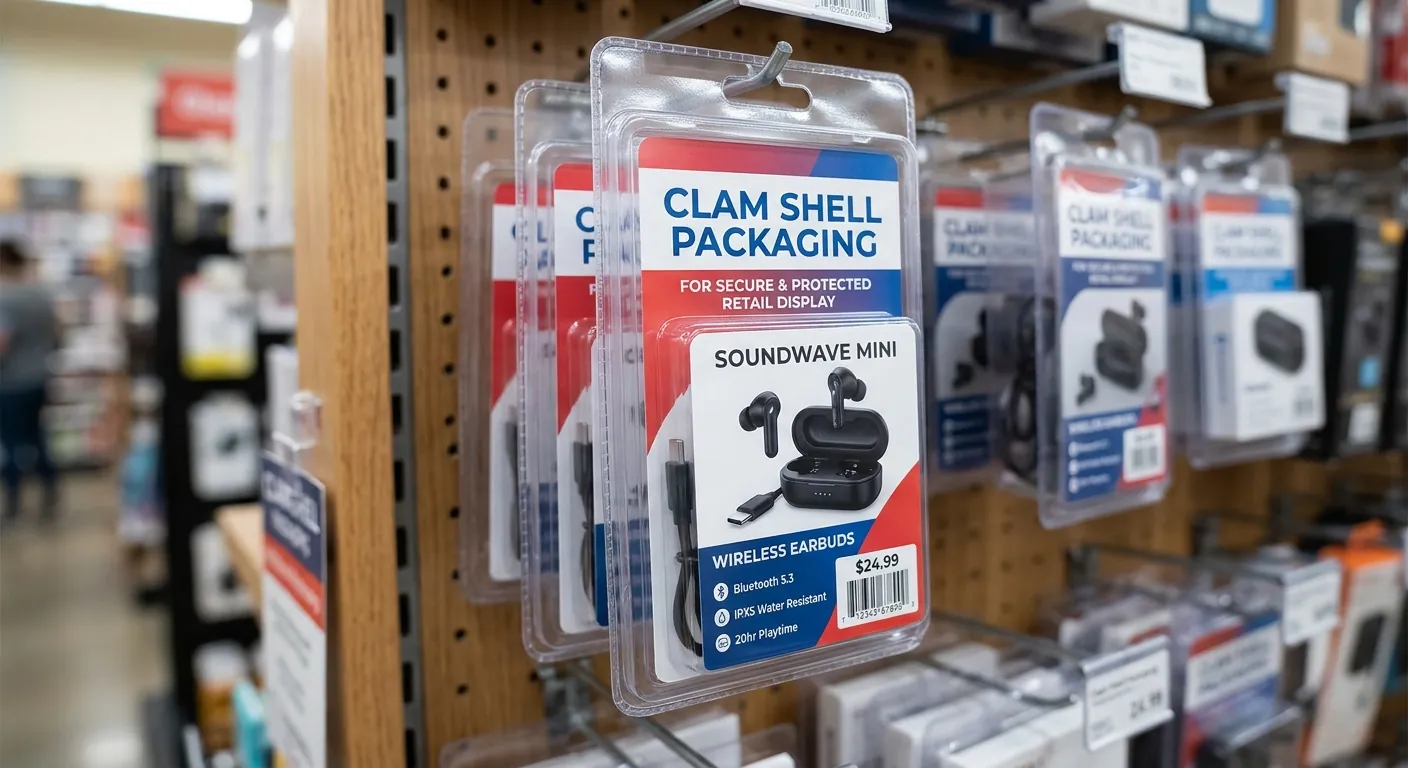
Clam shell packaging is a popular packaging option for products sold in retail stores, supermarkets, online shops and electronic stores. It gets its name from the shape, which looks like an open clam shell. Two connected sections fold together to hold a product inside. The package can open and close with a hinge, or it may have a sealed edge that keeps the contents secure.
Businesses use clam shell packaging to protect products, display them clearly and provide customers with useful product information. The transparent plastic style is common for batteries, toys, small tools, cosmetics and electronic accessories. Food companies use special versions for fruits, bakery items, salads and takeout meals.
Custom clam shell packaging is available in different sizes, materials, colors and styles. Companies can choose simple packaging for everyday items or printed versions for branded retail products.
What Is Clam Shell Packaging?
Clam shell packaging is a container made with two sections that connect along one edge. The two sides open like a book and close around the product. Many designs have a molded shape that holds the item in place.
The packaging can be made from plastic, paperboard or other materials. Plastic clam shell containers often use clear material to let customers see the product before buying it. Paperboard options provide a more natural appearance and support printing.
Some clam shell packages have a locking tab, while others use heat sealing or adhesive to keep the contents closed. The right closure depends on the product, retail requirements and shipping conditions.
Types of Clam Shell Packaging
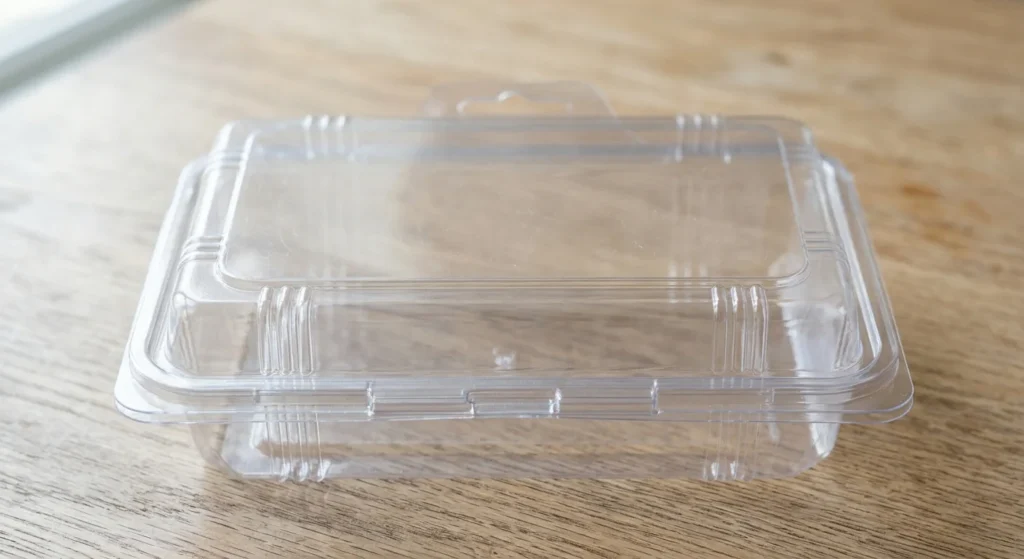
Plastic Clam Shell Packaging
Plastic clam shell packaging is widely used for retail products. It provides a clear view of the item and can offer good protection from dust, moisture and handling.
Common plastic materials include:
- PET, which offers good clarity and is often used for retail and food packaging.
- RPET, which uses recycled PET material and can support recycled content goals.
- PVC, which has been used for many retail packages but may face recycling and environmental concerns.
- PP, which is suitable for certain food containers and products that need flexibility.
Plastic packaging is available in different thicknesses. Thicker material may provide more support, but it can increase cost and material use.
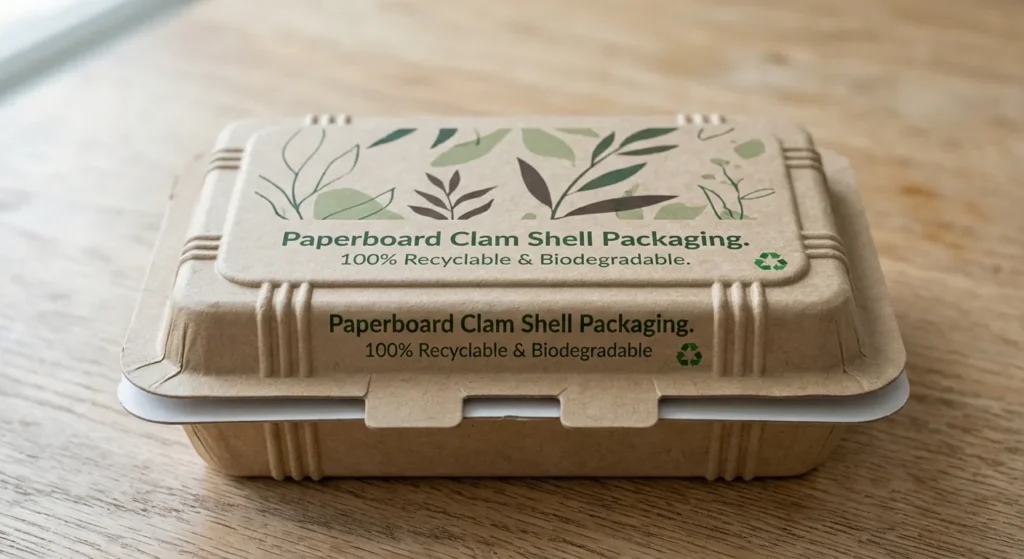
Paperboard Clam Shell Packaging
Paperboard clam shell packaging is a useful option for companies looking to reduce plastic use. It can include printed cardboard sections with a folded structure that holds the product.
Some designs use a paperboard backing with a transparent window. Others use fully enclosed paper packaging with a molded interior.
Paperboard packaging supports printing, branding and product details. It is often used for cosmetics, gifts, small accessories and retail items.
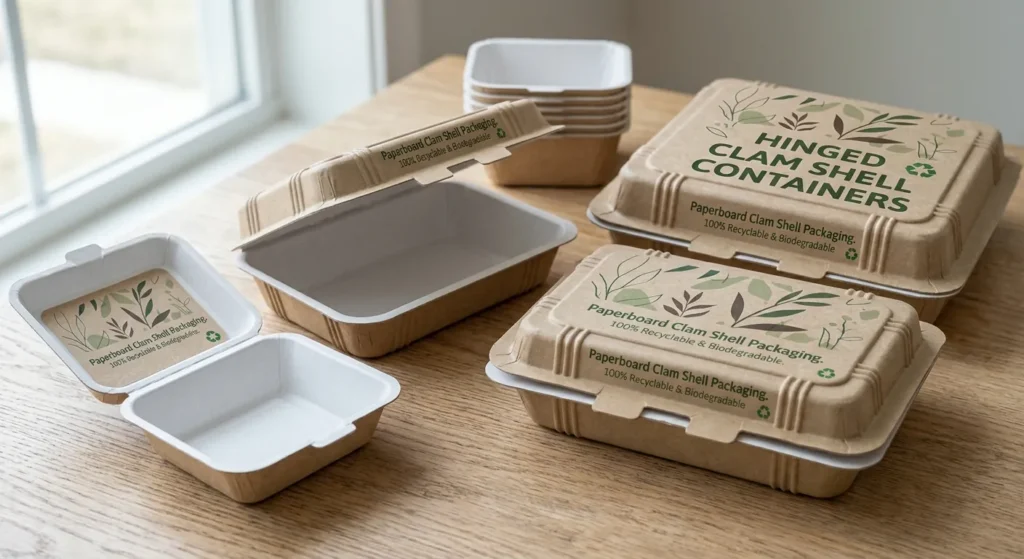
Hinged Clam Shell Containers
Hinged clam shell containers have two connected sections that open and close. The hinge may be part of the molded plastic structure or a separate component.
These containers are common in food packaging, including berries, salads, sandwiches and baked goods. Retail businesses use hinged containers for small products that need easy access.
A secure locking feature can help keep the container closed during storage and transport.
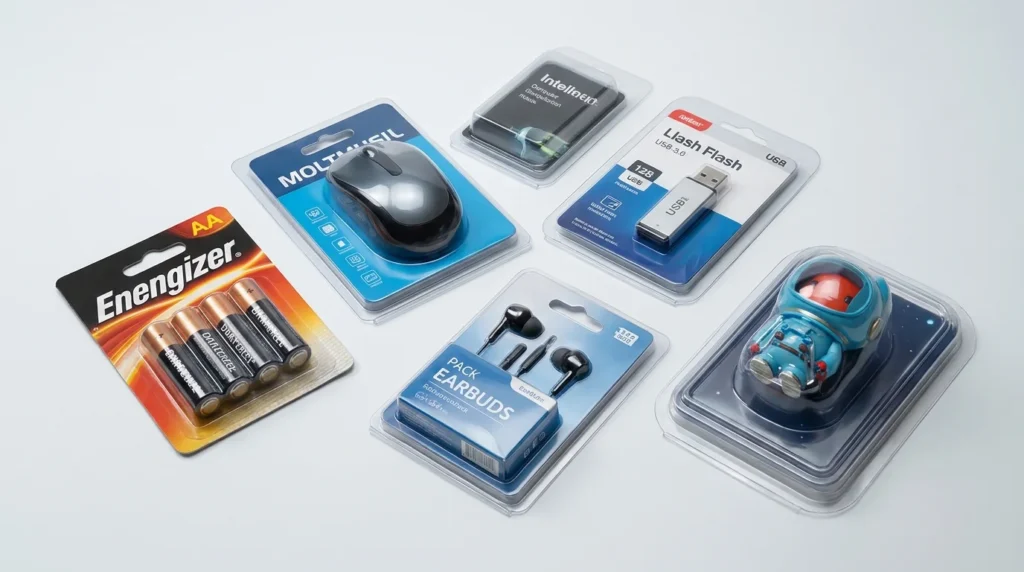
Blister Style Clam Shell Packaging
Blister style clam shell packaging uses molded plastic sections to hold products inside. Some versions include a cardboard insert or printed backing.
This type is often used for hardware, toys, batteries, personal care items and electronic accessories. The packaging can provide a strong retail display and make product handling more difficult without opening the package.
Benefits of Clam Shell Packaging
Product Protection
Clam shell packaging helps protect products from dust, scratches and minor damage during handling. A molded interior can hold an item in place and reduce movement inside the package.
The level of protection depends on material thickness, package shape and closure quality. Fragile products may need additional inserts or cushioning.
Clear Product Display
Transparent clam shell packaging allows customers to view the product before purchase. This can help shoppers check the color, shape, size and general appearance.
For retail products, visibility can support buying decisions. A clear package may reduce the need for extra product images or display samples.
Better Retail Organization
Clam shell packaging can include hanging holes, flat backs or stacking features. These options help stores arrange products on shelves, hooks and display racks.
Retail staff can organize products more easily when packages have consistent sizes and shapes.
Tamper Resistance
Some clam shell designs require cutting or breaking the package to access the product. This can help show whether the package has been opened.
Tamper resistant packaging is useful for electronics, tools, personal care products and other items sold in busy retail stores. It should not be treated as a complete security solution, since packaging can still be damaged or opened.
Common Uses of Clam Shell Packaging
Clam shell packaging serves many industries. The material and shape can change based on product requirements.
Food Packaging
Food businesses use clam shell containers for items such as:
- Strawberries, blueberries and other fresh fruits
- Salads and prepared meals
- Sandwiches and wraps
- Cookies, muffins and pastries
- Vegetables and cut fruit
Food packaging needs suitable material, hygiene controls and proper ventilation when required. The container should be selected based on the food type, storage conditions and applicable food contact rules.
Electronics Packaging
Electronic accessories often require protection from dust, handling and static electricity. Clam shell packaging is used for USB cables, chargers, headphones, batteries and small computer accessories.
Products that are sensitive to electrostatic discharge may need special anti static materials. Standard plastic clam shell packaging does not automatically provide ESD protection.
Cosmetics and Personal Care
Clam shell packaging is used for makeup accessories, brushes, skincare tools, small bottles and beauty products.
Printed inserts can include product details, instructions, ingredients and brand information. A transparent front helps customers see the item.
Hardware and Automotive Products
Small tools, screws, bolts, fittings, replacement parts and automotive accessories are often sold in clam shell packages.
The package can hold small components together and support hanging displays. Strong closures help reduce the risk of parts falling out during handling.
Custom Clam Shell Packaging Options
Custom packaging gives businesses more control over product fit, appearance and retail presentation.
Custom Sizes and Shapes
A clam shell package should fit the product without leaving too much empty space. A molded cavity can hold the item in a fixed position.
Custom sizes are useful for products with unusual shapes or different component parts. Accurate product measurements help packaging manufacturers select the right dimensions.
Printing and Branding
Businesses can add branding to paperboard inserts, labels or packaging surfaces.
Common printing options include:
- Logo printing
- Product names and descriptions
- Instructions and warnings
- Barcode and QR code printing
- Product colors and promotional graphics
Printing requirements depend on the selected material and manufacturing process.
Closures and Hanging Features
Custom clam shell packaging may include snap closures, locking tabs, heat seals or adhesive seals.
Retail packages can include a euro slot or hanging hole for peg displays. Flat surfaces may support labels and product information.
How Clam Shell Packaging Is Manufactured
The manufacturing process depends on the material and packaging style.
Plastic Thermoforming
Plastic clam shell packaging is often produced through thermoforming. A plastic sheet is heated until it becomes flexible, then shaped over a mold.
The main steps include:
- Selecting a suitable plastic sheet.
- Heating the material.
- Forming the sheet over a mold.
- Cooling the molded package.
- Trimming the extra material.
- Adding closures, inserts or printed components.
Thermoforming supports different shapes and cavity sizes. Manufacturers can produce large quantities for retail businesses.
Paperboard Production
Paperboard clam shell packaging is made by cutting, printing, folding and assembling paperboard sheets.
Some packages include a molded paper insert to hold the product. Others use a folded cardboard structure with a locking tab.
Clam Shell Packaging Price and Market Analysis
The price of clam shell packaging depends on material, size, design, quantity, printing and manufacturing method. Custom molds can add a setup cost, especially for new product shapes.
The following prices are illustrative US market estimates, not verified live merchant quotations. Actual prices can change based on order quantity, supplier, shipping and customization.
| Packaging Type | Estimated Price Per Unit |
| Basic plastic clam shell | $0.05 to $0.30 |
| Retail clam shell with insert | $0.15 to $0.75 |
| Custom printed clam shell | $0.25 to $1.50 |
| Food grade hinged container | $0.05 to $0.40 |
| Paperboard clam shell packaging | $0.20 to $1.50 |
| Heavy duty custom clam shell | $0.50 to $3.00 or more |
Factors That Affect Packaging Prices
Order quantity: Large orders often reduce the cost per package. Small orders may have a higher unit price.
Material selection: PET, RPET, PP and paperboard have different costs and performance features.
Custom tooling: A new mold can increase the initial investment. Standard sizes may cost less than fully custom shapes.
Printing: Extra colors, complex artwork and special finishes may raise the cost.
Shipping: Large packaging products can take up significant space during shipping. Freight cost can affect the final price.
Market Demand and Supplier Comparison
Clam shell packaging remains useful in retail, food service, electronics and consumer goods. Businesses compare suppliers based on material quality, price, order quantity, delivery time and customization.
Some suppliers focus on standard stock packaging, while others provide custom thermoformed packages. Standard stock containers can be more affordable for small businesses. Custom packages may offer better product fit and branding for larger orders.
When comparing merchants, request a sample and confirm the material specification, package dimensions, minimum order quantity and shipping cost. A low unit price may not represent the lowest total order cost.
Clam Shell Packaging vs Other Packaging Types
Clam shell packaging is different from folding cartons, blister packs and flexible bags.
Clam Shell vs Folding Cartons
Folding cartons are usually made from paperboard and offer strong printing options. Clam shell packaging provides a molded shape and may allow customers to see the product.
Folding cartons can be easier to recycle in many local systems, depending on coatings and inserts.
Clam Shell vs Blister Packaging
Blister packaging often uses a molded plastic cavity attached to a cardboard or plastic backing. Clam shell packaging typically has two connected sections that fold together.
Both options are common in retail. The best choice depends on product size, display needs and opening requirements.
Clam Shell vs Flexible Bags
Flexible bags use less space and material for many products. Clam shell packages offer more shape support and may protect items from crushing.
Bags are often useful for soft goods and lightweight products. Clam shell packaging is more suitable for items that need a structured display.
Environmental Impact and Recycling
Environmental concerns are a major part of packaging decisions. Plastic clam shell packaging can be difficult to recycle when it uses mixed materials, labels or certain additives.
PET and RPET packaging may be accepted by some recycling programs, but local rules differ. Consumers should check local recycling guidance before placing packaging in a recycling bin.
Paperboard clam shell packaging can offer a recyclable option when it does not contain unsuitable coatings or mixed materials.
Businesses can reduce material use by selecting the right package size, avoiding unnecessary layers and choosing materials that fit local recycling systems. Reusable containers may be suitable for certain food service and industrial applications.
How to Choose the Right Clam Shell Packaging
Choosing packaging requires attention to product needs, budget and sales channels.
Use the following checklist when comparing options:
- Measure the product and identify its fragile areas.
- Select a suitable material based on protection and display requirements.
- Check whether food contact or ESD protection is required.
- Choose a closure that matches the product and customer needs.
- Confirm the package fits retail shelves or shipping cartons.
- Compare supplier prices and minimum order quantities.
- Request a sample before placing a large order.
- Review recycling and disposal requirements.
A package that looks good but does not protect the product can increase returns and customer complaints. Testing the packaging before production can help avoid these problems.
Frequently Asked Questions
What is clam shell packaging used for?
Clam shell packaging is used for food, electronics, cosmetics, toys, hardware, automotive parts and retail accessories. It protects products and supports product display.
Is clam shell packaging recyclable?
Some clam shell packaging made from PET or RPET can be recycled in suitable recycling programs. Recycling acceptance depends on local rules and material composition.
Is clam shell packaging food safe?
Food grade clam shell packaging can be suitable for food contact when the material and manufacturing process meet applicable requirements. Always check supplier specifications.
How much does clam shell packaging cost?
Basic packages may cost around $0.05 to $0.30 per unit in large quantities. Custom packaging may cost $0.25 to $1.50 per unit or more, depending on material, size, printing and order volume.
Can clam shell packaging be customized?
Yes. Businesses can customize dimensions, shapes, printing, material, closures and hanging features. Custom tooling may be required for unique designs.
Is clam shell packaging suitable for shipping?
Clam shell packaging can protect products inside shipping cartons. For direct shipping, additional cushioning and outer packaging may be needed.
Final Thoughts
Clam shell packaging offers product protection, clear visibility and useful retail display features. It is suitable for many industries, including food, electronics, cosmetics and hardware.
Businesses can choose plastic, paperboard or custom designs based on their products and budget. Comparing material quality, supplier pricing, package fit and environmental requirements helps companies find a practical packaging solution.