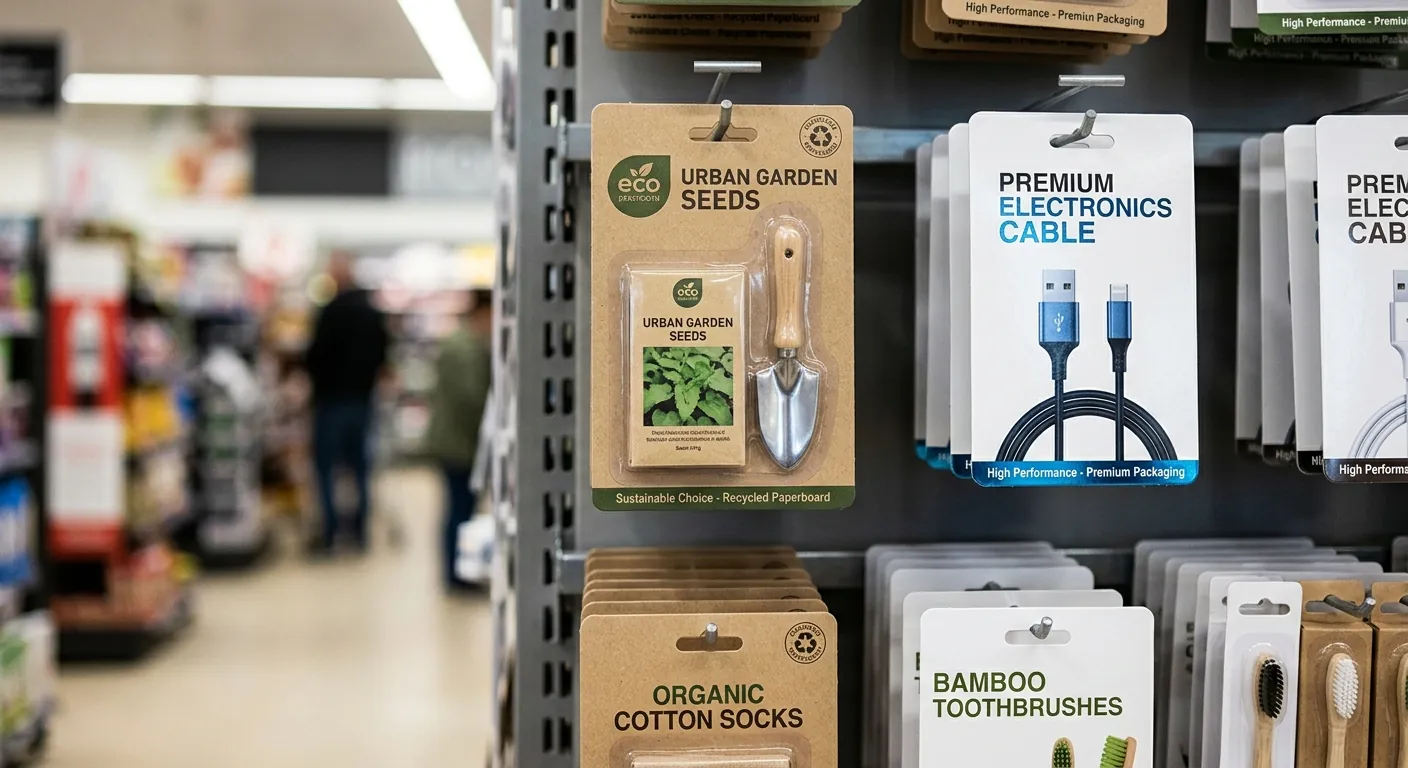
Blister packaging combines product protection with a clear view of the merchandise. For many retail products, a formed cavity holds the item against a printed paperboard card. This structure gives businesses space for instructions, product details and attractive graphics without hiding everything inside a closed carton.
Paperboard backed blister packs suit products ranging from toothbrushes and craft supplies to hardware and small electronic accessories. Their performance depends on more than appearance. Board stiffness, cavity geometry, seal compatibility, and opening features all deserve attention before production begins.
What Is Blister Packaging?
Blister packaging holds a product inside a shaped pocket or cavity attached to a backing or closure. In a typical retail carded blister, the cavity is transparent plastic and the backing is printed paperboard. The cavity contains the item, and the card supports display and communication.
The term covers several packaging structures. Pharmaceutical blister packs may use formed plastic or aluminum cavities with foil lidding, rather than paperboard as the immediate closure. This article focuses on paperboard based retail blister packaging and its related formats.
The Role of Paperboard
The backing card provides stiffness, printable space and a surface for attaching the blister flange. A flange is the flat edge surrounding the formed cavity. Its contact with the card helps establish the package bond.
The card can carry directions, warnings, barcodes, quantity information and disposal instructions. It must remain readable and reasonably flat through packing, shipping and retail handling.
Main Types of Paperboard Blister Packaging
Different blister formats balance material use, security, opening convenience, and production cost. A suitable format follows the product weight, display requirements and expected handling.
Face Seal Blister Packaging
A face seal blister attaches its flange directly to the front surface of a coated paperboard card. The cavity covers part of the card, leaving the remaining area available for graphics and information.
This format suits many lightweight retail items. Seal strength depends on the card coating, plastic material, flange condition and sealing process.
Full Face Blister Packaging
A full face blister extends across most or all of the card front. Its larger formed area can provide broader product coverage and support certain structural features.
More plastic does not automatically mean better protection. The flange area, cavity shape and card stiffness still determine how well the package handles its contents.
Trapped Blister Packaging
A trapped blister captures the plastic flange between two paperboard layers. An opening in the front card allows the cavity to project outward. The surrounding board hides the flange and can create a useful printed frame.
Some versions bond the paperboard layers together without directly sealing the plastic flange to the card. These formats needs careful alignment during assembly.
Slide Blister Packaging
A slide blister uses folded plastic edges or channels that receive a paperboard card. Depending on the construction, the card may slide out for opening.
This approach can simplify component separation. Without an added security feature, a sliding card may provide limited evidence of prior access.
Paperboard Materials for Blister Cards
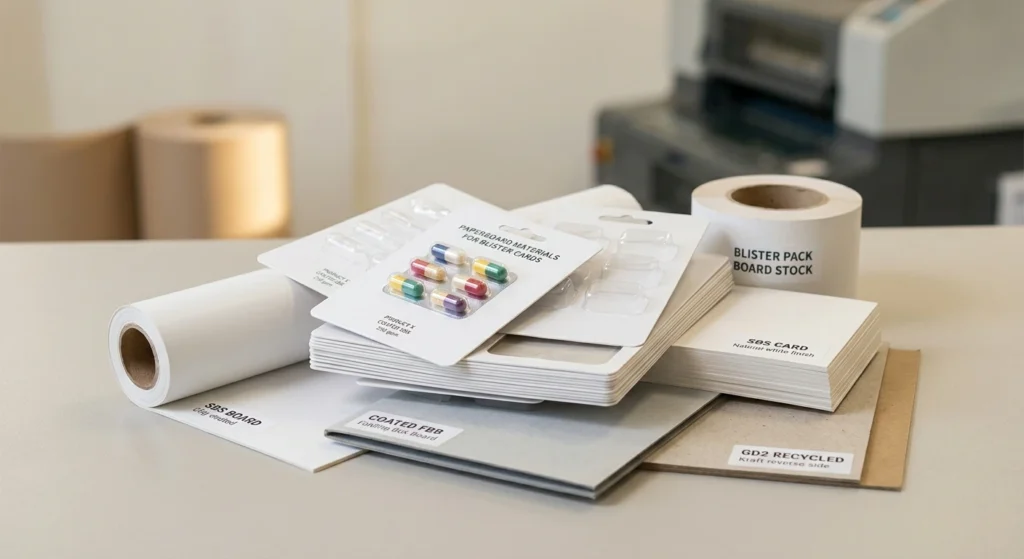
Paperboard selection affects print appearance, stiffness, folding and seal behavior. Material names alone cannot establish package suitability. Request the actual grade, caliper and coating specification.
SBS and Recycled Paperboard
Solid bleached sulfate, commonly called SBS, offers a white surface suited to detailed printing. Coated recycled board provides another option for suitable applications, often with a different appearance on the reverse side.
Solid unbleached sulfate can provide strength with a brown fiber base. Grade selection should account for product weight, graphic requirements, moisture exposure and purchasing goals.
Thickness and Surface Coatings
Card thickness is commonly described in points, with one point equal to one thousandth of an inch. A thicker card may provide more stiffness, but fiber composition and grain direction matter too.
Heat seal coatings create a bond with compatible blister materials under controlled conditions. Varnishes, inks and other finishes must work with that coating system. A very attractive printed card can still fail if its surface interferes with sealing.
Plastic and Fiber Based Blister Materials
The cavity material controls visibility, forming behavior and part of the protective performance. Its compatibility with the backing system should be checked before tooling approval.
Common material choices include:
- PET: Polyethylene terephthalate, used for transparent formed packaging.
- RPET: PET containing recycled material, with performance dependent on the specified grade.
- PETG: A modified polyester used in selected forming applications.
- PVC: Polyvinyl chloride, used in some blister formats with application dependent purchasing and disposal considerations.
- Formed fiber: A paper based cavity option that usually sacrifices transparency.
A fiber cavity paired with paperboard can reduce plastic content. Calling the complete pack plastic free requires checking coatings, adhesives and any attached components.
How Blister Packaging Is Manufactured
Production usually involves card printing, cavity forming, product loading, sealing and inspection. Some operations take place separately, with components delivered to a contract packager for assembly.
Thermoforming the Cavity
Thermoforming heats plastic sheet until it can be shaped over or into tooling. Vacuum, pressure or a combination forms the pocket. The finished cavities are then trimmed.
Deep draws and tight corners can create uneven wall thickness. Tooling should allow the material to form without excessive thinning around product contact points.
Sealing the Blister Card
Heat sealing brings the blister flange and coated card together using controlled temperature, pressure and dwell time. Dwell time means the period spent under the sealing conditions.
Too little heat can leave a weak bond. Excessive heat may distort the blister, damage graphics or curl the card. The sealing settings affects both appearance and package strength.
Benefits of Paperboard Backed Blister Packs
Blister packaging provides a useful combination of visibility and organized presentation. Shoppers can inspect product shape, color or included accessories without opening the package.
The cavity limits movement and helps keep small components together. The card provides a stable display surface and room for information that might be difficult to print directly on the product.
Retail Display and Merchandising
Hang holes support peg displays, and suitable structures can stand on shelves. Consistent card dimensions help retailers arrange products in orderly rows.
Good visibility can support purchasing decisions, but packaging cannot guarantee sales. The package still needs readable information, suitable pricing and a product people need.
Product Applications and Protective Limits
Paperboard blister packaging serves many retail categories. Protection requirements vary considerably between a lightweight craft item and a sharp metal tool.
- Personal care products: Toothbrushes, grooming accessories and cosmetic tools.
- Hardware: Fasteners, small tools, replacement parts and fittings.
- Electronics accessories: Cables, connectors and small adapters.
- Craft supplies: Beads, sewing accessories, art tools and repair kits.
- Household products: Hooks, clips and small maintenance items.
Sharp edges may require protective caps or thicker contact areas. Sensitive electronics may need verified electrostatic protection. An ordinary transparent cavity does not establish moisture barrier performance, sterility or protection from every shipping hazard.
Structural Design and Product Fit
Start with an accurate product sample, including every accessory supplied in the pack. The cavity should hold the item without excessive pressure on fragile features.
Leave enough clearance for manufacturing variation and efficient loading. Excessive clearance permits movement; insufficient clearance can scratch products or slow assembly.
Flanges, Hang Holes and Opening Features
A continuous flange gives the sealing process a usable bonding area. Tight corners, contamination and wrinkles can interrupt the bond.
Hang holes should match display hardware and expected product weight. The hang hole need enough surrounding board to resist tearing. Test the loaded package rather than relying on the card alone.
Provide opening instructions where needed. Tear areas and peel features should make access manageable without exposing fingers to sharp plastic edges.
Printing and Labeling for U.S. Retail
Paperboard supports offset, digital and other printing methods suited to different quantities and artwork requirements. Surface finish, color coverage and registration influence the final appearance.
Keep barcodes on a readable surface away from folds, hanging openings and distorted areas. Product identification, quantity statements, warnings and responsible business information should follow the rules applicable to that product.
Food Contact Packaging
A blister holding food needs materials suitable for the intended contact conditions. Food type, storage temperature and contact duration can change the material assessment.
FDA guidance explains that a food contact material’s regulatory status depends on its individual component substances. Review relevant plastics, paperboard, coatings and adhesives rather than assuming that a “food grade” description settles every question.
Tamper Evidence and Child Resistance
Tamper evidence and child resistance describe different functions. A visibly torn card may indicate prior opening, but that does not establish child resistance.
A strong seal can discourage casual opening. Its usefulness depends on whether access leaves recognizable damage and whether shoppers can identify that damage.
U.S. Child Resistant Packaging Requirements
Certain products fall under special packaging requirements associated with the Poison Prevention Packaging Act and 16 CFR part 1700. Applicable packages must satisfy relevant child resistance and adult use testing requirements. A blister format does not qualify automatically.
Select the applicable requirements before approving the structure. Changes to opening instructions, card construction or sealing may require further evaluation.
Quality Testing and Common Defects
Testing should represent actual distribution and retail conditions. Review the package immediately after production and after appropriate storage or conditioning.
A practical inspection program may cover:
- Seal consistency around the flange.
- Card curl, cracking and layer separation.
- Cavity damage and product movement.
- Hang hole strength under the intended load.
- Barcode readability and printed information.
Common defects include incomplete seals, blister distortion and paper fibers separating unexpectedly. Our trial samples shows where the process needs adjustment. A photograph rarely tells the whole story.
Shipping and Storage Performance
Retail blister packs often need an outer corrugated carton for distribution. Individual cards can bend or scuff if packed loosely.
Humidity can affect paperboard dimensions and stiffness. Heat can affect some formed plastics and bonding systems. Test the complete shipping arrangement, including dividers and carton packing patterns.
Recycling and Material Separation
Paperboard and plastic may enter different recovery systems. Joining them permanently can make recycling more difficult, especially if consumers cannot separate the components.
Designing for separation can improve disposal convenience, but local collection rules remain relevant. A recycling symbol on the plastic does not prove that the complete package is accepted locally.
Making Accurate Environmental Claims
The FTC’s Green Guides advise marketers to qualify recyclable claims where suitable facilities are unavailable to at least 60 percent of consumers or communities where the item is sold. Claims should identify the relevant package or component.
State recycled content with a clear basis. Avoid broad claims such as “completely green” without evidence covering what shoppers would reasonably take that to mean.
Blister Packaging Costs and Supplier Selection
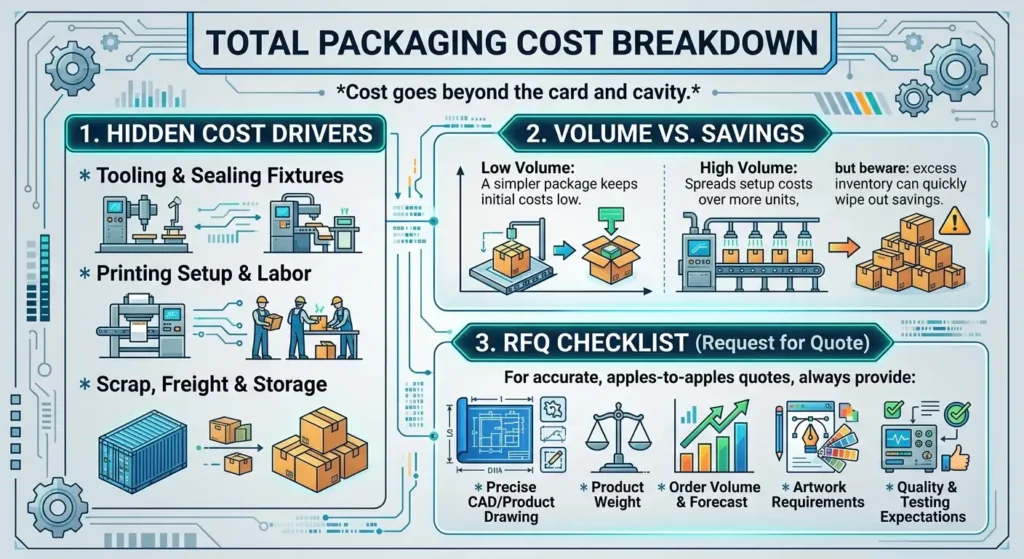
Cost includes more than the card and cavity. Tooling, printing setup, sealing fixtures, labor, scrap, freight and storage all contribute.
A simpler package can be affordable at modest quantities. Higher production volumes may spread setup costs across more units, but excess inventory can cancel those savings.
Request quotes using the same specifications. Include an accurate drawing, product weight, order volume, artwork requirements and testing expectations.
What to Approve Before Ordering
Review physical samples for fit, display strength and opening experience. Confirm who supplies the cards, formed cavities, tooling and final packing.
Ask for a accurate breakdown of setup charges and repeat order costs. Keep approved samples as production references. It is just easier to resolve a disagreement with the actual package in hand.
Frequently Asked Questions
Is blister packaging made entirely from paperboard?
Traditional carded blister packaging combines a paperboard backing with a formed plastic cavity. Fiber based cavity options exist, but every component should be reviewed before making material claims.
Can blister packaging be resealed?
Most heat sealed retail blisters are intended for a single opening. Slide formats and certain reusable structures may permit repeated access.
Does a blister pack provide an airtight seal?
Not automatically. Ordinary retail paperboard backed blisters should not be treated as airtight or suitable for sensitive medicines without application specific validation.
What is the best blister packaging format?
The best format fits the product, survives handling and provides a practical opening experience at an acceptable total cost. Compare tested samples rather than choosing from appearance alone.