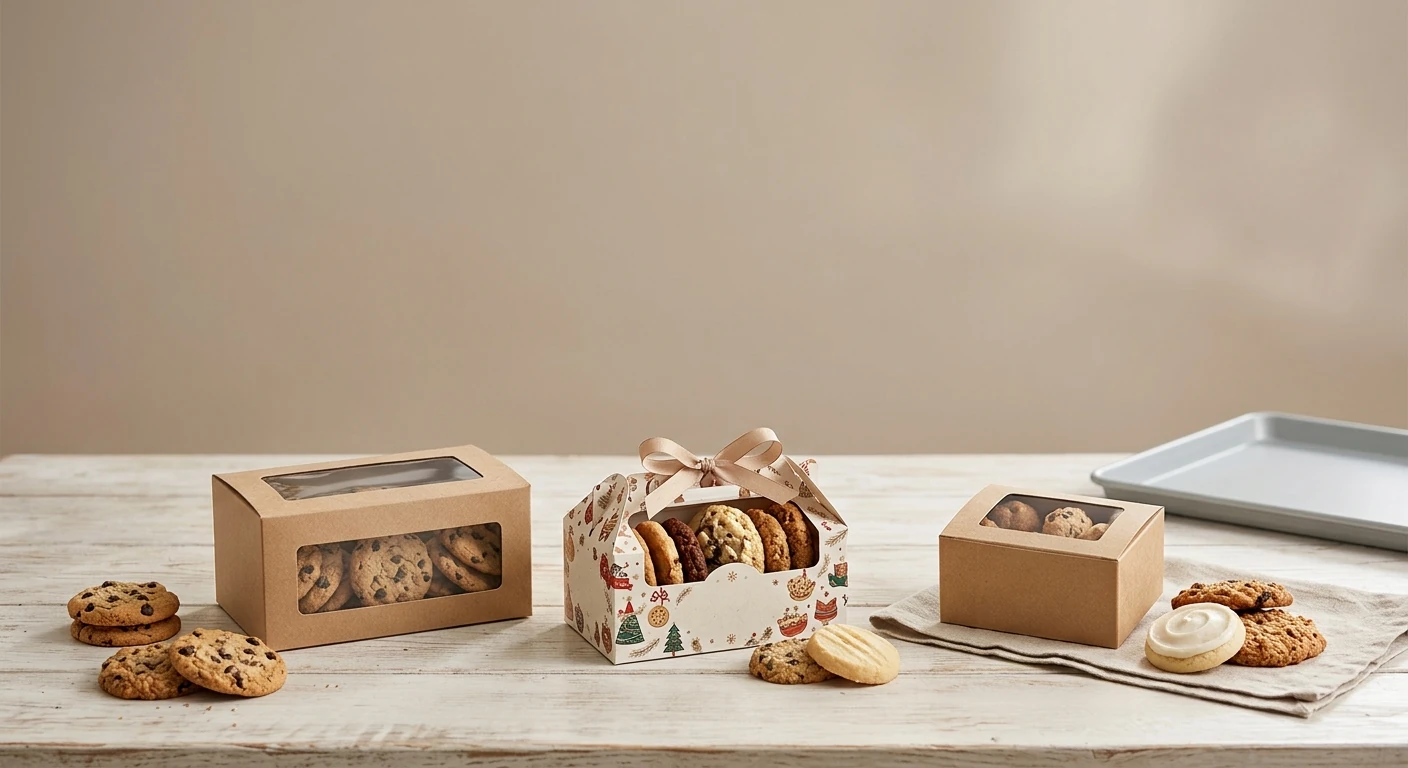
Cookie packaging protects the product, supports freshness, and gives customers useful information before their first bite. For bakeries, home baking businesses and gift sellers, paperboard offers a practical balance of presentation, printing flexibility and manageable storage.
The right package starts with the cookie itself. A soft chocolate chip cookie, a delicate butter cookie, and a decorated sugar cookie need different protection. Cookie size, fat content, icing, sales channel and expected storage time all influence the final packaging choice.
This guide covers paperboard materials, box structures, protective liners, custom printing, gifting, shipping and purchasing decisions for businesses serving the American market.
What Makes Paperboard Suitable for Cookie Packaging?
Structure and Everyday Convenience
Paperboard is a relatively thick paper material that can be printed, scored, folded and glued into cartons. Folding cookie boxes often arrive flat, reducing storage space before assembly.
A paperboard carton gives cookies more structural support than a loose wrapper alone. Its panels provide room for ingredients, product names, storage directions, and promotional messages. Customers get a package that is easy to carry and simple to open.
Paperboard still has limits. An ordinary folding carton is not airtight, waterproof or automatically suitable for direct food contact. Its performance depends on the board grade, construction and any protective materials inside.
Common Paperboard Materials
Solid bleached sulfate, often called SBS, provides a white surface suited to detailed printing. Natural kraft paperboard offers a brown appearance that works well with simple bakery graphics.
Coated recycled paperboard can suit certain outer packaging applications. Direct contact with cookies requires a material specification appropriate for that particular food and use.
Ask suppliers about:
- Board composition and thickness.
- Suitability for greasy or dry cookies.
- Coatings, adhesives and printing inks.
- Storage conditions and food contact documentation.
Board thickness is commonly expressed in points in the United States. Thickness alone does not determine strength. Fiber quality, grain direction, folds and box dimensions affect how the carton performs.
Choosing Cookie Box Packaging by Product Type
Folding Cartons and Window Boxes
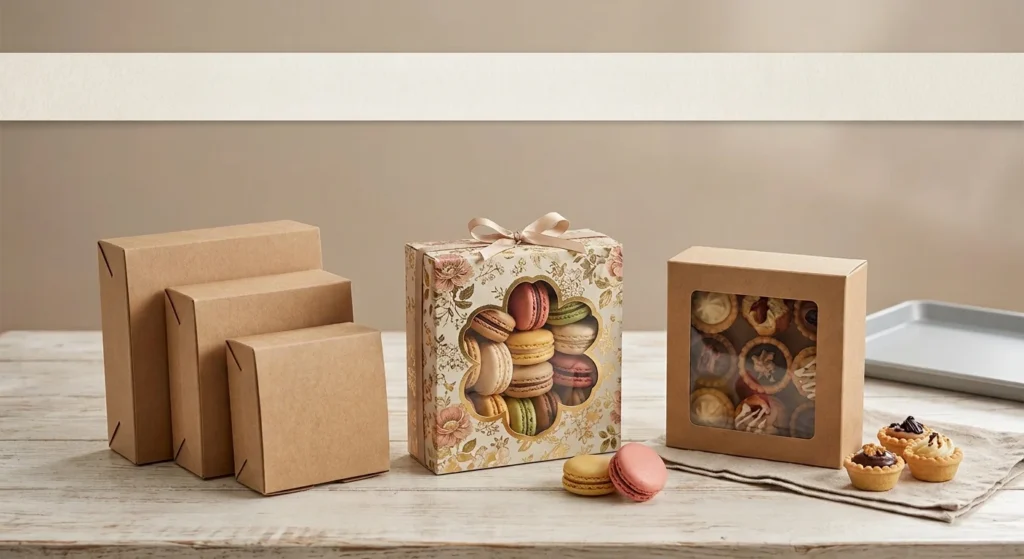
Tuck end cartons suit many everyday bakery orders. Automatic bottom cartons can reduce assembly time during busy packing periods. A secure base matters for heavier assortments.
Window cookie box packaging lets customers view the product without opening the lid. Keep enough paperboard around the window to support the structure. A very large opening can weaken the top panel.
Window film introduces another material into the package. Ask about its food contact suitability, attachment method and disposal instructions rather than assuming every transparent window behaves the same.
Trays, Sleeves and Gift Structures
A paperboard tray with an outer sleeve can hold cookies in a single layer. This format suits decorated cookies that need space above the icing.
A separate lid and base creates a familiar gift presentation. Rigid paperboard boxes provide a substantial feel, though they often cost more and occupy more storage space than folding cartons.
A snug insert reduce movement during handling. Dividers, folded partitions and paperboard cavities can separate flavors or prevent neighboring cookies from rubbing together.
The best structure is the one that protects the actual assortment without unnecessary material.
Freshness, Grease Resistance and Protective Liners
Match the Barrier to the Recipe
Paperboard supplies structure, but moisture and oxygen protection often comes from an inner package.
Cookies with a dry, brittle texture can soften as they absorb moisture. Soft cookies can become hard as they lose moisture. Butter, chocolate and nuts may develop quality problems through oxidation or absorb unwanted odors.
Grease resistance is a separate property. A liner that stops butter marks may provide limited protection against oxygen or water vapor. Ask for performance information relevant to the recipe rather than relying on the phrase “bakery paper.”
Where Cookie Packaging Bags Fit
Cookie packaging bags can serve as inner protection inside a paperboard box. Sealed bags may help limit moisture exchange and reduce direct handling, depending on the material and seal quality.
For a paperboard focused presentation, the carton remains the main visible package. Individual bags, barrier pouches or suitable liners perform a supporting role.
Cool cookies fully before packing to reduce condensation. Let icing set before adding covers or stacking layers. Keep strongly flavored varieties separated if aroma transfer affects the assortment.
Test Shelf Life With the Finished Package
A thicker box does not automatically provide a longer shelf life. Test the actual recipe in its complete packaging under expected storage and delivery conditions.
Check texture, aroma, grease staining, seal condition and product appearance at planned intervals. Shelf life decisions should include food safety assessment where the recipe requires it, especially for cookies with moist fillings.
It is really worth testing the ordinary delivery experience, not just a box sitting undisturbed on a bakery shelf.
Custom Cookie Packaging That Supports Sales
Build a Useful Visual Hierarchy
Custom cookie packaging should help customers identify the product quickly. Put the product name, flavor and quantity where shoppers can find them without turning the box several times.
Use readable lettering and enough contrast between the background and text. Chocolate brown, cream, red and natural kraft tones can work well, but the palette should match the bakery’s identity.
These box need room for practical information too. Reserve label space before filling every panel with artwork.
A short phrase such as ‘Baked for sharing’ can add warmth. “Made for your cookie break” creates a more casual tone. Keep product claims accurate and relevant.
Printing Methods and Finishes
Digital printing can suit smaller quantities and frequent artwork changes. Offset printing may offer favorable unit costs at larger quantities, depending on the job.
Matte coatings, gloss coatings, embossing and foil decoration create different visual effects. Request a physical sample to judge the result. A finish that looks attractive on a screen may show fingerprints, scuff during delivery or interfere with folding.
Your artwork file should include the dieline, bleed, safe areas and correct panel orientation. Keep lettering away from scores and glue areas. Approve structural and printed samples before a order moves into full production.
Cookie Gift Box Packaging for Special Occasions
Everyday Gifts and Events
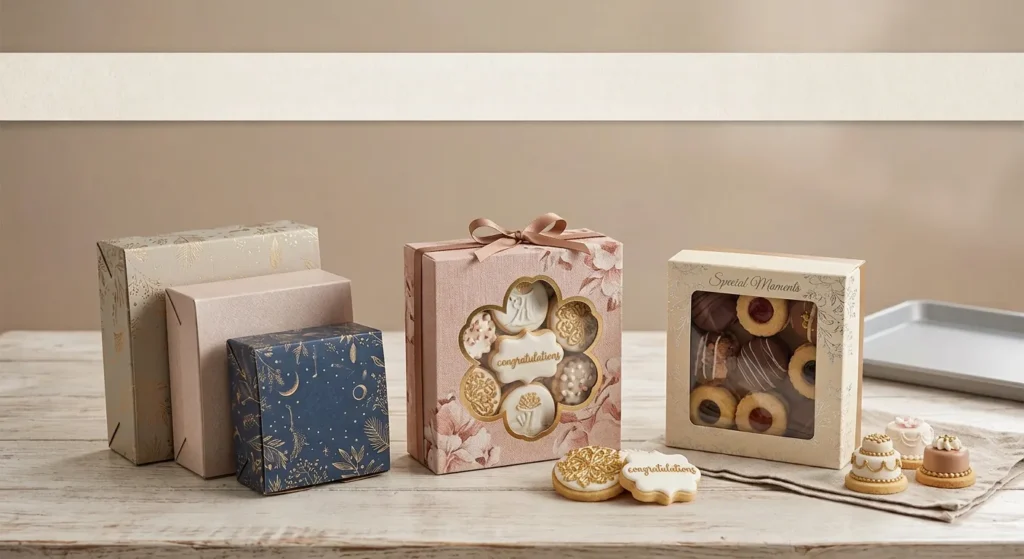
Cookie gift box packaging should feel complete without making the product difficult to reach. A secure lid, organized interior and message card can make a simple assortment feel thoughtful.
Weddings, birthdays, employee gifts and customer appreciation orders may need different quantities or presentation styles. Standard box sizes with interchangeable sleeves can support several occasions without requiring separate inventories of fully printed cartons.
Protect edible decorations from tissue paper, ribbons and decorative filler. Materials that touch cookies need to suit food contact.
Christmas Cookie Box Packaging
Christmas cookie box packaging often holds mixed shapes, textures and toppings. Plan the internal arrangement before approving the outer dimensions.
Snowflake cookies, gingerbread figures and round butter cookies rarely stack in the same way. Compartments can prevent delicate pieces from being squeezed between heavier products.
Seasonal sleeves, printed bands and removable gift tags let a standard carton serve holiday orders. This can reduce leftover packaging after December.
Do not miss cookie packaging details such as closure strength, grease resistance and label visibility during holiday planning. Festive printing cannot compensate for cookies arriving broken.
Food Contact and Labeling for the U.S. Market
Request Documentation for the Actual Use
Food contact suitability depends on the materials, food type, temperature and contact conditions. U.S. regulations include separate provisions addressing paper and paperboard components used with certain dry foods and with aqueous or fatty foods. A buttery cookie should not automatically be treated like every other dry food.
Ask the packaging supplier to identify the applicable basis for the intended use. Include liners, coatings, window films and adhesives in that discussion. A generic statement that an entire box is “FDA approved” does not explain its suitability.
Keep inked surfaces and decorative finishes away from direct cookie contact without appropriate supporting documentation.
Plan Label Space Early
For packaged retail cookies subject to federal labeling requirements, plan space for the product identity, net quantity, ingredient statement, business information and applicable nutrition and allergen information. Label placement and type size matter, too.
Some small businesses qualify for a nutrition labeling exemption. That exemption does not remove other mandatory label information, and nutrition claims can affect eligibility.
The nine major U.S. food allergens are milk, eggs, fish, crustacean shellfish, tree nuts, peanuts, wheat, soybeans and sesame. Cookie recipes frequently contain several of them. Accurate declarations deserve space in the initial layout.
Home baking businesses should check the cottage food requirements applicable to their location and sales activities.
Packing Cookies for Shipping and Delivery
Separate Product Presentation From Transit Protection
A folding paperboard carton may work for counter sales yet need a corrugated outer shipping box for parcel delivery. The outer shipper handles stacking pressure, impacts and distribution conditions.
Use dividers or suitable cushioning to limit movement. Leave clearance above icing and fragile decorations. Test whether the lid close without pressing against the cookies.
For mixed assortments, place heavier cookies where they cannot crush lighter ones. Separate layers with suitable food contact materials rather than relying on loose stacking.
Run Practical Packaging Trials
Two sample is a useful starting point, but several packed samples give a better view of consistency. Test the complete package at its intended fill weight.
A practical trial should check:
- Cookie movement after handling.
- Breakage following representative drops and vibration.
- Grease marks after storage.
- Carton strength under stacking.
- Customer access after delivery.
Record what failed and adjust the insert, carton or shipper. A packaging change should solve a documented problem.
Sustainability, Costs and Supplier Selection
Make Environmental Claims Specific
Paperboard can support recycling goals, but coatings, attached windows, food residue and local collection systems affect the result.
The FTC Green Guides call for qualifying recyclable claims when suitable recycling facilities are unavailable to at least 60 percent of consumers or communities where the product is sold. Avoid promising universal recyclability without support.
Use clear disposal directions for separate components. Claims about recycled content, compostability or certified fiber need supporting evidence relevant to the actual package.
Reducing unused space is another practical step. A smaller package can use less board and require less storage, provided the cookies still receive adequate protection.
Compare Total Packaging Cost
The cheapest empty carton may create expensive packing delays or product damage. Compare the full cost per saleable order.
Include cartons, liners, inserts, printing, tooling, freight, assembly labor and storage. Ask about minimum order quantities, production schedules, overruns and repeat order consistency.
A stock carton with a printed label can be affordable for a new bakery. Custom sizes may become economical as order volume grows.
Give suppliers a written specification covering internal dimensions, board grade, cookie weight, artwork, packing method and acceptance criteria. A clear specification makes competing quotations easier to compare.
Questions About Cookie Packaging
What Is the Best Paperboard Box for Cookies?
The best choice depends on cookie fragility, quantity and distribution. Folding cartons suit many local orders. Divided trays help decorated assortments. Gift boxes support special occasions, with separate transit protection for shipping.
Can Cookies Go Directly Into a Paperboard Box?
Only use direct contact when the board and its components suit the intended food and conditions. Many applications benefit from a suitable liner or inner bag for grease control and product protection.
How Do You Determine the Correct Box Size?
Arrange the actual cookies with their liners and dividers, then measure the occupied space. Add working clearance for packing and removal. Excess room permits movement; insufficient room puts pressure on the product.
Does Custom Printing Keep Cookies Fresh?
Printing contributes to presentation and identification. Freshness depends on the recipe, barrier materials, seals, storage and handling. A beautiful carton still needs a packaging system that matches the cookie.
How Can a Small Bakery Control Packaging Costs?
Start with a limited range of carton sizes. Use shared structures for several assortments and change labels and sleeves for seasonal orders. Track damage and packing time so savings are measured across the whole order.